Growth (biology)

Definition and stakes

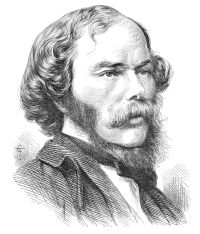
Portrait of T. W. Rolleston T. W. Rolleston,  Parallel Paths: A Study in Biology…

“ These are Growth and Development. The mark of growth is that an organism, by assimilation from the outside world, becomes larger than it was. But in development it becomes different from what it was. The history of an embryo in the womb presents a succession of phenomena which, when one comes to realize them, almost stagger thought; for, while remaining the same thing all through, it is continually becoming a different class of thing—first two cells, then one cell, then a fish, a quadruped, ultimately a human being. ”
Source: Gutenberg

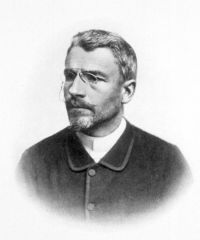
Portrait of Herbert Spencer Herbert Spencer,  The Principles of Biology — Chapter II.1 (1898)

“ But why should the growth of every organism be finally arrested? Though the rate of increase may, in each case, be necessarily restricted within a narrow range of variation—though the increment that is possible in a given time, cannot exceed a certain amount; yet why should the increments decrease and finally become insensible? Why should not all organisms, when supplied with sufficient materials, continue to grow as long as they live? ”
Source: Wikisource

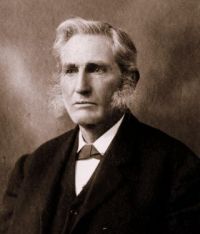
Portrait of Herbert Spencer Herbert Spencer,  The Principles of Biology, Volume 1…

“ We noted when studying the phenomena of growth inductively, that organisms of the larger and higher types commence their separate existences as masses of organic matter having tolerable magnitudes. Speaking generally, we saw that throughout each organic sub-kingdom the acquirement of great bulk occurs only where the incipient bulk and organization are considerable; and that they are the more considerable in proportion to the complexity of the life which the organism is to lead. ”
Source: Gutenberg

Get perspective with Kwize: daily news enlightened by great literature