Head tax

Definition and stakes

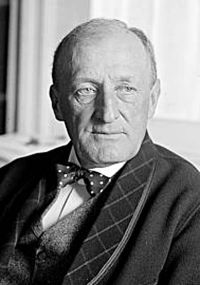
Edward Douglass White,  Pollock v. Farmers' Loan Trust Company…

“ Summing up, it said: 'It follows necessarily that the power to tax without apportionment extends to all other objects. Taxes on other objects are included under the heads of taxes not direct, duties, imposts, and excises, and must be laid and collected by the rule of uniformity. The tax under consideration is a tax on bank circulation, and may very well be classed under the head of duties. Certainly it is not, in the sense of the constitution, a direct tax. ”
Source: Wikisource

Edward Douglass White,  Henderson Bridge Company v. Commonwealth of Kentucky…

“ It being beyond dispute, therefore, that the sum of taxation in this case was fixed almost exclusively by the gross earnings from interstate commerce, who, may I ask, can point out the distinction between taxing the gross earnings derived from interstate commerce and taxing a valuation based on such earnings? The elementary principle so often applied by the court, that a tax which may not be imposed directly cannot be levied indirectly, is decisive. ”
Source: Wikisource

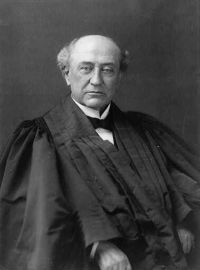
Ward Hunt,  United States v. Railroad Company…

“ That tax is to be returned by, and collected from, the corporation as his agent and instrument.
A tax is understood to be a charge, a pecuniary burden, for the support of government. Of all burdens imposed upon mankind that of grinding taxation is the most cruel. It is not taxation that government should take from one the profits and gains of another. That is taxation which compels one to pay for the support of the government from his own gains and of his own property.
”
Source: Wikisource

Get perspective with Kwize: daily news enlightened by great literature