Heliotropism

Definition and stakes

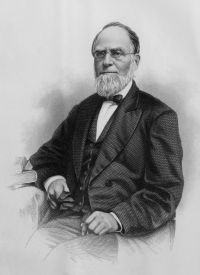
Portrait of Charles Darwin Charles Darwin,  The Power of Movement in Plants

“ Relation between Circumnutation and Heliotropism.—Any one who will look at the foregoing diagrams, showing the movements of the stems of various plants towards a lateral and more or less dimmed light, will be forced to admit that ordinary circumnutation and heliotropism graduate into one another. When a plant is exposed to a dim lateral light and continues during the whole day bending towards it, receding late in the evening, the movement unquestionably is one of heliotropism. ”
Source: Gutenberg

Various,  Popular Science Monthly (1911)

“ This change in the heliotropic sensitiveness, produced by certain metabolic products in the animal body is of great biological significance. I have already shown that it even serves to save the lives of the above-mentioned young larvæ of Chrysorrhœa. When the young larvæ are awakened from their winter sleep by the spring sunshine they are actively positively heliotropic. The positive heliotropism leaves them no freedom of movement, but forces them to creep (eindeutig) straight upward to the top of a tree or branch. ”
Source: Wikisource

Various,  Popular Science Monthly (1911)

“ The reason that heliotropism may occasionally, as we have seen, be of use, while galvanotropism has no biological significance, is because the electric current does not exist in nature. It can, however, be shown also that heliotropism is just as useless to many animals as galvanotropism. For instance, I pointed out twenty years ago that some varieties of animals which do not live in the light at all, for instance, the larvæ of the goat moth, which live under the bark of trees, may show positive heliotropism. ”
Source: Wikisource

Get perspective with Kwize: daily news enlightened by great literature