“ If the horse, however, is old and very quiet—so that one can throw the reins on his neck and allow him to jog on for himself, then horseback riding may mean very little. Where the care of the animal is entirely taken off the rider's shoulders by a groom who brings him to a particular place and takes him afterwards, then, also, much of the benefit of horseback riding is lost. ”
Horseback riding
Definition and stakes
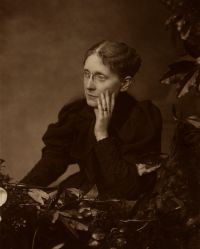
Horseback riding, a practice encompassing recreation, transport, and therapy, has long been celebrated for its physical, mental, and social aspects. Authors like Frances E. Willard highlighted its accessibility and appeal for those without horses, while James J. Walsh emphasized its restorative impact on the mind, noting how it provides a mental diversion.
Rasmus Larssen Alsaker praised its invigorating effects, blending physical activity with the beauty of nature, and Sarah Raymond Herndon depicted its sense of autonomy, particularly for women. From practical travel to therapeutic relaxation, horseback riding reflects a diverse human connection to both animals and the natural landscape.
Quotes about “horseback riding”
 Frances E. Willard,
A wheel within a wheel
“ Already I knew well enough that tens of thousands who could never afford to own, feed, and stable a horse, had by this bright invention enjoyed the swiftness of motion which is perhaps the most fascinating feature of material life, the charm of a wide outlook upon the natural world, and that sense of mastery which is probably the greatest attraction in horseback-riding. ”
 Rasmus Larssen Alsaker,
Maintaining Health (Formerly Health and Efficiency…
“ Horseback riding is also a fine exercise. The companionship with an intelligent animal, the freedom, the fresh air, the scenery, all give enjoyment of life, and the constant movement acts as a most delicious tonic. There is only one correct way to ride for both sexes, and that is astride. ”
“ Horseback Biding.—It is because of the complete diversion of mind that is necessarily involved in it, that horseback riding makes such a magnificent exercise for the busy man. The old expression "the outside of a horse is the {205} best thing for the inside of a man" is founded even more on the mental influence of horseback riding than its physical quality. ”
 Albert Bushnell Hart,
The Southern South
“ In some parts of the back country and in many parts of the Black Belt the roads are undrivable several months of the year, and people have to find their way on horseback. So common is the habit of horseback riding that a mountain girl to whom a Northern lady lent a book on etiquette returned it with the remark: “Hit seems a right smart sort of a book, but hit is so simple ”
 Charles Dudley Warner,
On Horseback
“ It had been stipulated that the horses should be good walkers, the one essential thing in a horseback journey. Few horses, even in a country where riding is general, are trained to walk fast. We hear much of horses that can walk five miles an hour, but they are as rare as white elephants. Our horses were only fair walkers. We realized how necessary this accomplishment is, for between the Tennessee line and Asheville, North Carolina, there is scarcely a mile of trotting-ground. ”
George Whitfield Ray, Through Five Republics on Horseback…
“ Those acquainted with dwellers on the prairie know that this was indeed a great task, horses being so cheap and riding so universal. Mrs. Flower was unaccustomed to walk even the shortest distance. I myself can bear witness to the fact that even strong men find it hard to walk a mile after spending years in equestrian travel. The native tells you that God formed your legs so that you might be able to sit on a horse rather than to walk with them. A favorite expression with them is, "I was born on horseback." ”
Sarah Raymond Herndon, Days on the Road: Crossing the Plains in 1865
“ When horses are harnessed, oxen yoked—and everything ready to start, we girls18 proceed to saddle our ponies; some of the boys usually come and offer assistance, which is politely declined, as we are going to wait upon ourselves on this trip.The wagons start, leaving us to follow at our leisure. We don our riding-habits, made of dark-brown denim, that completely cover, and protect us from mud and dust, tie on our sun-bonnets, mount our ponies unassisted, and soon overtake and pass the wagons.We started this morning at seven o’clock. It is delightful riding horseback in the early morning. ”
 Achmed Abdullah,
The Man on Horseback — Chapter 11
(1903)
“ A moment later, with savage rapidity, the full force of the hurricane struck the Augsburg, and she pitched crazily to leeward, taking a drunken lurch into the inky void, straightening again, again tripping like a bulky matron on a waxed dancing-floor, then riding up with a certain measure of heavy, challenging grace. ”
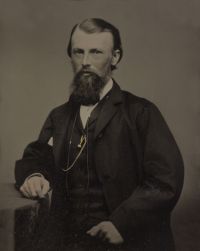 William John Wills,
Successful Exploration Through the Interior of Australia
“ I have been agreeably disappointed in my idea of the camels. They are far from unpleasant to ride; in fact, it is much less fatiguing than riding on horseback, and even with the little practice I have yet had, I find it shakes me less. ”
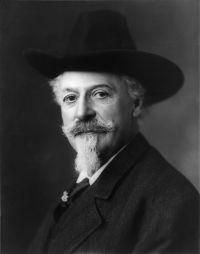 Buffalo Bill,
The Life of Hon. William F. Cody…
“ My great forte in killing buffaloes from horseback was to get them circling by riding my horse at the head of the herd, shooting the leaders, thus crowding their followers to the left, till they would finally circle round and round. ”
Edward L. Anderson, Riding and Driving
“ If, as is very unlikely, for the horse will be taken by surprise, though not frightened, the animal makes a jump or a plunge, the rider must maintain his seat, keep up the head of the horse, and dismount when the animal has become quiet. The horse will not rear at this stage; that is an accomplishment it learns from bad hands, and it is probable that it will be perfectly quiet. Each day the riding lesson will be lengthened, and the rider will gradually obtain some control over its movements by the reins and accustom it to bear the pressure of his legs against its sides. ”
Edward L. Anderson, Riding and Driving
“ I am no advocate for any paces other than the walk, the trot, and the gallop, these being the only movements in which the rider can obtain immediate and precise control over the actions of the horse. The riding-horse must be managed by reins and heels; no motions or signs are so exacting, so unmistakable in their demands, and it is impossible readily to obtain movements from a horse that is confused by eight or even five gaits, particularly when some of these gaits require an extension of the animal's forces incompatible with the union required in quick turns and in immediate obedience. ”
Edward L. Anderson, Riding and Driving
“ In bringing the horse to a halt from the walk, the rider should close his legs against the animal's sides, lean back slightly, and raise the bridle-hand. This will bring the horse to a stop in a finished manner, with its hind legs under the mass, ready to furnish impulses for further movements. The tension upon the reins should then be relaxed and the legs of the rider withdrawn. ”
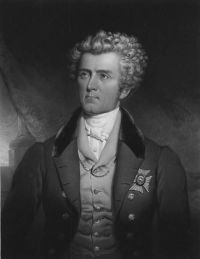 Sir Francis Bond Head,
The Horse and His Rider
“ On man and horse coming cheerily to a fence, with what mathematicians call "an unknown quantity" on the other side, if the rider sits justly on his saddle, it is the horse and not he that receives the concussion of any fall that may ensue, simply because the spring of his animal in taking the leap had thrown his shoulders backwards, and consequently his head out of danger; whereas the nose of the gentleman who had been riding alongside of him in the bent attitude of a note of interrogation, is seen to plough into its mother earth the instant the muzzle of his horse impinges upon it. ”
Sir Francis Bond Head,
The Horse and His Rider
“ Every horseman, every coachman knows and feels that the difference between riding or driving, especially a thoroughbred horse from or towards his stable is so great, that while in the one case it is often necessary to spur or flog him from his home, the animal invariably pulls hard, and on any trifling occurrence will start or kick with joy, all the time he is returning to it; and his neighs, responded to by his comrades within, express, in horse language, how pleased he is to get back to them, and how glad they are to recover him. ”
Elizabeth Karr, The American Horsewoman
“ If the animal's movements are light, supple, and elegant, the lady rider presents a very graceful appearance when riding this gait, as the reactions in it are very mild; it is the gait par excellence, for a country ride.On a breezy summer morning, there is nothing more exhilarating than a ride at a hand gallop, on a willing, spirited horse; it brightens the spirits, braces the nerves, refreshes the brain, and enables one to realize that "life is worth living." ”
Edward L. Anderson, Riding and Driving
“ Then the increased tension upon the reins is relieved, and the legs of the rider withdrawn from the horse, and the slower trot having been obtained, the halt may be made from it; in the latter case the animal should be first put into the walk, and then brought to a stop as before described.Nearly every horse will shy if "a bit above himself" from want of work, and many horses, otherwise quiet, shy habitually at some favorite object, either flying paper, a high wagon, an automobile, or some such thing. ”
Edward L. Anderson, Riding and Driving
“ But if the horse has already risen, the rider must loosen the reins and lean forward; and as soon as the forehand comes down, he should drive the horse forward in any pace or action that it will take, to procure better regulated movements later. If the rider finds by a sinking of the croup that a rearing horse [100] is falling backward, he should release his feet from the stirrups, seize the mane and pommel, drop from the saddle, and throw himself away from the animal as it topples over. ”
Edward L. Anderson, Riding and Driving
“ After facing the horse to the jump, the rider should give the animal freedom of action, not by making such a change on the tension of the reins as might bring the animal down, but by giving his arms such play that the horse may extend itself. When the animal alights, it must find some support from the bit, so that in case of a peck or of a stumble the forehand can rise until a bearer comes under the centre of gravity and saves a fall. The bending back of the rider's body as the forehand reaches the ground is, of course, of great assistance in recovering from a misstep. ”
J. S. Rarey, A New Illustrated Edition of J. S. Rarey's Art of Taming Horses
“ Every man and woman, girl and boy, who has the opportunity, should learn to ride on horseback. It is almost an additional sense—it is one of the healthiest exercises—it affords amusement when other amusements fail—relaxation from the most severe toil, and often, in colonies or wild countries, the only means of travelling or trading. ”
Edward L. Anderson, Riding and Driving
“ In making short turns, the horse should first be collected a little more closely, and as soon as the animal enters upon the new direction it should be put straight and be ridden in exactly the same form as it had before the turn was made. The turn to the left will be made in the same manner,—the left rein, guarded in its effects by the right, demanding the turn, the right leg of the rider keeping the croup upon the path. ”
Edward L. Anderson, Riding and Driving
“ Then the otherwise weary days of winter may be made enjoyable to the horseman by musical rides, for many pretty and intricate figures may be formed by ten or twelve riders. My riding-house is 28 feet by 60, and it is quite large enough for my purposes, as I always work my horses singly and without an attendant. In London I saw Corradini training a manège horse in the gangway of a stable, behind a row of stalls ”
“ This is the perfection of a walking pace. By degrees any nervousness wears off, the rigid trussed appearance gives place to one of pliancy and comparative security, the body loses its constrained stiffness, and begins to conform to and sway with the movements of the horse. The rider, sitting perfectly straight and erect, approaches the correct position, and lays the foundation of that ease and bearing which are absolutely indispensable. ”
Edward L. Anderson, Riding and Driving
“ There are many competent horsemen who maintain, and with reason, that the long tail is dangerous, particularly where women and children drive; that a tail over the rein may mean a mishap, and probably injury; that it is dirty, bedraggles and wets the legs, and with the fast-moving, well-cared-for carriage horse is unnecessary, even to his comfort. ”
Donald Walker, Walker's manly exercises (1855)
“ The general art of riding, sometimes called manège riding, to distinguish it from its modifications in road-riding, hunting, racing, &c., teaches us to place every part of the body so that it can act upon the horse in every emergency, shows the effect of all the aids or modes of guiding him, and enables us to render him obedient to the slightest touch. By never suffering the ascendancy to be transferred to the horse, by in general preventing him from making all his speed, and by exhausting him the sooner the more he exerts himself without permission, it bestows upon the rider perfect security. ”
Belle Beach, Riding and Driving for Women
“ If you have occasion to ride for any considerable distance, and particularly if the weather is hot, bear in mind that the weight of the rider and saddle on his back for a long period of time tires the horse quite as much as forcing him beyond his gait. It is better, therefore, to keep a horse at a sharp walk or, if you are trotting, at a sharp trot, so as to cover the ground and then to rest him at intervals for ten or fifteen minutes, than it is to keep going for the whole time at a slow walk or trot. ”
Edward L. Anderson, Riding and Driving
“ A very quiet horse should be saddled and bridled and taken to some retired place, if it be a bit of soft ground there would be no harm, or be brought into the riding-house where there are no other horses except those being used for a like purpose. ”
Edward L. Anderson, Riding and Driving
“ In passing upon two paths to the left, the head of the horse will be bent to the left, the forehand being led to the left, and the rider's right leg, its effects measured by the left, will carry the croup upon a parallel path, so that the body of the horse shall be diagonally disposed across the line of progress. ”
“ If there be a ditch between the rail and the fence, so much the better, for the more the horse spreads himself the easier it will be to the rider, the jerk or prop on landing the less severe. Some horses sail over the largest obstacle, land, and are away again without their appearing to call upon themselves for any extra exertion; they clear it in their stride. Hunters that know their business can be trotted up to five-barred gates and stiff timber, which they will clear with consummate ease ”
Edward L. Anderson, Riding and Driving
“ I have cured a horse, apparently confirmed in this vice of throwing itself backward, by a thorough course of suppling; and it was afterwards ridden in various games and exercises which involved the pirouette, but the reformed animal never attempted to rise higher than was demanded. Whether the horse falls back intentionally or not I cannot say. But horses that have a habit of rearing so that they fall over are not rare. In the far West those that fight the air are called sunfishers, and none are more resolute or more dangerous. ”
 Gilbert Haven,
Our Neighbor-Mexico
(1875)
“ Some are on horseback. Two trotting near the track get frightened at the cars, and back their steeds from the path. A broad ditch is behind the narrow way, and one of the horses plunges therein and tips his clean rider over into the black mush. A loud laugh is all the consolation he gets for the splash and its ruin of his holiday costume. ”
Charles Dudley Warner,
Our Italy
“ And no country is more agreeable for riding and driving, for even at mid-day, in the direct sun rays, there is almost everywhere a refreshing breeze, and one rides or drives or walks with little sense of fatigue. The horses are uniformly excellent, either in the carriage or under the saddle. I am sure they are remarkable in speed, endurance, and ease of motion. ”
Edward L. Anderson, Riding and Driving
“ The horse should be ridden on two paths in straight lines, in turns, and in large and small circles, sometimes the forehand on the outer circumferences, sometimes the croup following the longer paths, in the walk, in the slow trot, and in the united trot. ”
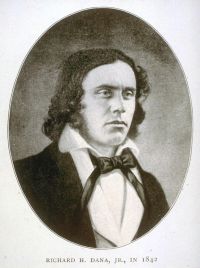 Richard Henry Dana,
Two Years Before the Mast — Chapter XIII
“ When they go on long journeys, they ride one horse down, and catch another, throw the saddle and bridle upon him, and after riding him down, take a third, and so on to the end of the journey. There are probably no better riders in the world. They get upon a horse when only four or five years old, their little legs not long enough to come half way over his sides ”
Belle Beach, Riding and Driving for Women
“ It is then that all the niceties of the art of riding are called into play, not so much as regards the seat, for his gaits are easy, but the hands must be more than usually light, more than usually firm, and more than usually quick in their communication between the mind of the rider and the mouth of the horse. In fact, I am going to say the mind of the horse too, for of good gray matter the thoroughbred possesses an ample share. ”
Related terms
Authors who wrote about “horseback riding”
Elizabeth KarrFrances E. WillardEdward L. AndersonH. L. de BussignyBelle BeachJ. S. RareySarah Raymond HerndonSir Francis Bond HeadCharles Dudley WarnerGeorge Whitfield RayClaude Harris MillerDonald WalkerBuffalo BillJames J. WalshAchmed AbdullahRasmus Larssen AlsakerAlbert Bushnell HartWilliam John WillsRichard Henry DanaGilbert Haven
Frances E. WillardEdward L. AndersonH. L. de BussignyBelle BeachJ. S. RareySarah Raymond HerndonSir Francis Bond HeadCharles Dudley WarnerGeorge Whitfield RayClaude Harris MillerDonald WalkerBuffalo BillJames J. WalshAchmed AbdullahRasmus Larssen AlsakerAlbert Bushnell HartWilliam John WillsRichard Henry DanaGilbert Haven