Horseless carriage

Definition and stakes

Henry Charles Moore,  Omnibuses and cabs (1902)

“ The event aroused the greatest interest, and the failure of the vehicle to realise the expectations formed of it by no means disheartened the horseless carriage enthusiasts. They declared that before long a reliable horseless carriage would certainly be invented. In 1790 there was a belief that their prophecy had been fulfilled, for invitations were sent out to members of the Society of Arts, engineers, and all interested in mechanics and vehicular tratlie to attend a certain place on a stated day to inspect a horseless carriage, which possessed the additional novelty of having one wheel only. ”
Source: Wikisource

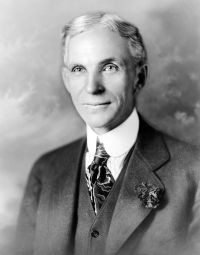
Portrait of Henry Ford Henry Ford,  My Life and Work (1922)

“ A horseless carriage was a common idea. People had been talking about carriages without horses for many years back—in fact, ever since the steam engine was invented—but the idea of the carriage at first did not seem so practical to me as the idea of an engine to do the harder farm work, and of all the work on the farm ploughing was the hardest. Our roads were poor and we had not the habit of getting around. One of the most remarkable features of the automobile on the farm is the way that it has broadened the farmer's life. ”
Source: Gutenberg

Arthur Bird,  Looking Forward: A Dream of the United States of the Americas in 1999

“ The competitors that drove the horse from its field of labor were the electric and compressed air horseless vehicles. As early as 1899 the horseless carriage was rapidly striding into popularity. In 1920 they were common sights everywhere. In 1950 they had crowded the horse to the wall and in 1999 horseless vehicles for business or pleasure were exclusively employed everywhere. ”
Source: Gutenberg

Get perspective with Kwize: daily news enlightened by great literature