“ A gentleman riding one day near Richmond, observed a house delightfully situated, and asking his companion to whom it belonged, was answered, "To a card-maker."—"Upon my life," he replied, "one would imagine all that man's cards must have been trumps." ”
House of cards
Definition and stakes
The theme of “house of cards” has been addressed by authors such as Caleb Cushing, Wiljalba Frikell, Professor Hoffmann, Mrs. John King Van Rensselaer and Lady Adelaide Cadogan. It is often associated with terms like card, playing, suit, king and deck.
Quotes about “house of cards”
Mohammed Ali, Telling Fortunes by Cards
“ The pack of thirty-two selected cards, as in the foregoing method, is taken, shuffled and cut; then the four aces are taken out, the significator, or the person for whom the dealer is acting, and anything he wants to know about—such as money, then the ten of diamonds would be selected; if about a man, any king; if about a woman, any queen; if about business, the ten of clubs. These are shuffled after having been withdrawn, without cutting, and the nine of spades, which is the disappointment card, is also added to the aces, etc., in all seven cards, laying them face downwards on the table. ”
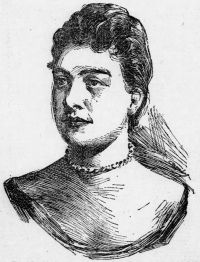 Mrs. John King Van Rensselaer,
The Devil's picture-books
(1890)
Mrs. John King Van Rensselaer,
The Devil's picture-books
(1890)
“ THE CLASSIFICATION OF PACKS OF CARDS INTO SUITS. EVER since the fifteenth century evidences of the existence and popularity of cards have been found in Italy, Spain, Germany, and France.The names, colours, emblems, number, and form change with the countries or caprices of the card-makers; but what are termed Cartes Tarots or Cartes Françaises are always the original cards which came from the East, and which are in a greater or less degree faithful imitations of the still more ancient game of Chess. ”
 Lady Adelaide Cadogan,
Lady Cadogan's Illustrated Games of Solitaire or Patience
Lady Adelaide Cadogan,
Lady Cadogan's Illustrated Games of Solitaire or Patience
“ The foundations follow suit. Only cards in the highest or lowest rows are available, until a card from any other row is released, by the removal of cards either above or below it, the principle being that no card can be used that is not free either from the top or the bottom. Small crosses are placed on the tableau to mark the cards that are available. ”
Mrs. John King Van Rensselaer,
Prophetical, Educational and Playing Cards
“ The standard pack has ten pip and four court cards, or fifty-six in all, which are headed by a King, a Queen, a Cavalier and a Knave, and these cards all have names given to them according to the country where they are used. Cards for all parts of the world are made in Paris and local preferences are closely followed, although most countries manufacture their own cards, and a considerable revenue is gained by taxing the product [Pg 30] as well as the import of cards. ”
Thomas Wright, A History of Domestic Manners and Sentiments in England During the Middle Ages
“ From this time the mention of cards becomes frequent. They formed the common amusement in the courts of England and Scotland under the reigns of Henry VII. and James IV.; and it is recorded that when the latter monarch paid his first visit to his affianced bride, the young princess Margaret of England, “he founde the quene playing at the cardes.”It must not be forgotten that it is partly to the use of playing cards that we owe the invention which has been justly regarded as one of the greatest benefits granted to mankind. The first cards, as we have seen, were painted with the hand. ”
Paul Pierce, Dinners and Luncheons: Novel Suggestions for Social Occasions
“ Cards for stag affairs have Old English pictures on a soft gray background; souvenir postals make interesting guest cards; tiny fans, playing cards, ribbons, cards cut out of water-color paper imitating flower pots with flowers in bloom, cards decorated with sketches of brides and bridegrooms, kodak pictures of familiar scenes, boats, different sports—you can scarcely go amiss on your cards—the more original they are the better. The card is laid on the napkin at dinner or luncheon, or if it has an easel-like back is fastened to the wineglass. ”
Lady Adelaide Cadogan,
Lady Cadogan's Illustrated Games of Solitaire or Patience
“ You continue to deal out fresh rows following the same rules, and must never make combinations until each deal is complete. If the game succeeds, the final tableau will show the cross of aces in the centre, surrounded by a circle of twenty-four court cards. ”
Mrs. John King Van Rensselaer,
The Devil's picture-books
(1890)
“ There are fifty cards in the pack, composed of five different suits; namely, Faces, Flags, Eagles, Stars, and Shields, “the honour cards being called the upper ten.”The directions for dealing, cutting, etc. are given, and are exactly the same as those in common use among all card-players, be they bent on gambling or only on innocent amusement.The publisher goes on to state that “many things will serve for counters, as kernels of corn, or coffee, or old cards cut up. For those who prefer something better the publisher of these cards has provided an ample supply at a small expense.” ”

“ Young girls use smaller cards than older ladies. A gentleman's card is long and narrow, from 2-7/8 to 3-1/4; inches long, and from 1-1/4 to 1-5/8 inches high. All visiting cards are engraved on white unglazed bristol board, which may be of medium thickness or thin, as one fancies. A few years ago there was a fad for cards as thin as writing paper, but one seldom sees them in America now. The advantage of a thin card is that a greater quantity may be carried easily. ”
Mrs. John King Van Rensselaer,
Prophetical, Educational and Playing Cards
“ But when these learned men studied the histories of the European countries for the first printed or legal record of Playing Cards, and decided on the fourteenth century as the date of their birth, they never looked into the haze of the past to the period when cards were not bits of pasteboard, but of very different character. ”
Lady Adelaide Cadogan,
Lady Cadogan's Illustrated Games of Solitaire or Patience
“ The four black kings and the four red aces form the foundation cards, the aces ascending in sequence to kings, the kings descending in sequence to aces. The red cards, representing Europeans and Asiatics, should inhabit the northern hemisphere; the black cards, representing Australians and Africans, the southern; but it is obvious that, in dealing and refilling vacancies, cards will often be found in the wrong hemispheres, and while there they cannot be used in any way. ”
Various, Cassell's Book of In-door Amusements…
“ Take the whole pack of fifty-two cards, and let them be well shuffled by as many persons as care to do so. Explain that if during your absence any one present will deal out the cards, faces downwards, into packs made up according to instructions, you will upon your return tell the aggregate number of pips shown on the bottom cards of the packs, the court cards being considered as equal to ten pips and the ace as equal to one pip. ”
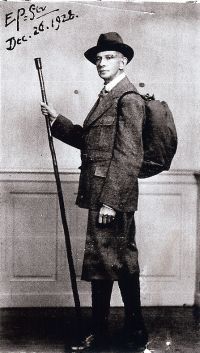 Edward Prime-Stevenson,
The Square of Sevens: An Authoritative Method of Cartomancy with a Prefatory Note
Edward Prime-Stevenson,
The Square of Sevens: An Authoritative Method of Cartomancy with a Prefatory Note
“ It must open and alone abide as it is; and the Seven Master-Cards, counted downward on the Square's left Edge, make what is called the Master-Column.If you have no other card of the same Suit as your right-ward card—or none save those of the Master-Column—let it lie. But if you can lay it on another, not a Master-Card, of any degree in the Suit—for observe the degree here matters not—so do. And then mark if, leftward and toward the Master-Card of the Row, lies another of the same Suit. If so, take up the two cards you laid together; and lay them on this third one. Look again and carefully ”
Mrs. John King Van Rensselaer,
Prophetical, Educational and Playing Cards
“ The fortune-telling packs issued by the card makers of the day generally bear French pips, since these symbols are the ones familiar to manufacturers in France, England, and America. They have, in addition, badly drawn, inartistic [Pg 367] pictures that are foolish and meaningless, since they are neither heraldic nor symbolic, and they are only intended for amateurs, since the true fortune-teller or Gypsy of to-day prefers the cards with the ancient pips of Money, Swords, Rods, and Cups, together with the Atouts. ”
Various, The Strand Magazine, Vol. 05, Issue 25…
“ The idea that playing cards had their origin in the later years of Charles VI. of France may be disposed of at once as a popular error, though it is true that the earliest [Pg 78] authentic examples which still exist are parts of the two packs of cards which were produced for the amusement of that King, by the hands of Jacques Gringonneur, and of which seventeen are preserved in the Bibliothèque Nationale of Paris. ”
Wiljalba Frikell, Hanky Panky (1872)
“ On running over the cards, you easily discover the drawn cards, the even cards being in the heap of odd cards, and the odd cards in the heap of even cards.TO MAKE TWO PERSONS DRAW THE SAME CARD OUT OF TWO PACKS. You arrange with your confederate that he shall select a certain card, say the tenth from the top, in a prepared 292pack. From a second pack you force a similar card on an innocent member of the company. ”
Wiljalba Frikell, Hanky Panky (1872)
“ If the person should say, that the card he thought of is among the first shown to him, dextrously remove the four cards put at the bottom of the pack, in order that the two, one of which is the card he thought of, may be the lowermost of the pack, and you may then either show him his card, or make him draw it out himself, as above explained. ”
Wiljalba Frikell, Hanky Panky (1872)
“ TO GUESS THE SPOTS ON A CARD. Take a whole pack, consisting of 52 cards, and desire some person in company to draw out any card, at pleasure, without showing it. Having assigned to the different cards their usual value, according to their spots, call the knave 11, the queen 12, and the king 13. Then add the spots of the first card to those of the second; the last sum to the third; and so on, always rejecting 13, and keeping the remainder to add to the following card. It may be readily seen that it is needless to reckon the kings, which are counted 13. ”
Clarence Squareman, My Book of Indoor Games
“ If at last an ace be played, the neighbor of the one who plays it must pay him four cards; if a king three cards, if a queen two, and if a jack one. The one who played the court card also takes all the cards that have been played, and puts them under his own pack. If, however, in playing for a court card, one of the players puts down another court card, then his neighbor must pay him, and he takes the whole pack instead of the previous player. ”
Mohammed Ali, Telling Fortunes by Cards
“ The cards are well shuffled, the [Pg 147] consultant keeping his thoughts all the time fixed upon whatever wish he may have formed; the cards are cut once, and the card cut is noted; they are shuffled again and dealt out into three parcels—each of these being examined in turn, and if it is found that the card turned up next, either the one representing the dealer or the person who is consulting him—the ace of hearts or the nine of hearts, it is said that the wish will be granted. ”
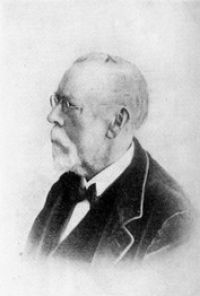 Professor Hoffmann,
Modern Magic: A Practical Treatise on the Art of Conjuring
Professor Hoffmann,
Modern Magic: A Practical Treatise on the Art of Conjuring
“ Fig. 57. These mechanical cards are used in various ways. Such a card may be introduced with good effect in the trick of the “rising cards,” before described. The king of spades, we will suppose, is one of the cards drawn. The changing card is made one of those which rise from the pack, but is so arranged as to appear as the king of hearts. When the king of spades is called for, this card rises. The performer feigns to be taken by surprise, and asks the person who drew the card whether he is sure he is not mistaken, and that the card he drew was not the king of hearts. ”
Lady Adelaide Cadogan,
Lady Cadogan's Illustrated Games of Solitaire or Patience
“ Any aces showing are picked out and placed by themselves above the layout for foundations. These aces are built on in sequence and suit up to kings. The moment any card in the layout is uncovered by playing away the bottom of the row, the next card in that vertical row is turned face up. Cards in the layout are built upon in descending sequence—K, Q, J, down to 4, 3, 2—and must alternate in color; red on black, black on red. If there be more than one card at the bottom of a row, all must be moved together or not at all. Spaces are filled with kings only. ”
Anonymous, Everybody's Book of Luck
“ In the case of a lady, the key card is the queen of the suit shown by the card which she picked from the pack at the outset. When it is a man who is seeking his fortune, the key card is the king of the suit indicated by the card he picked originally.Having found the key card in the lay-out, count nine, eighteen, twenty-seven, thirty-six and forty-five spaces from it, and pick up the cards so placed. Remember that in counting, a line must be always begun from the right; also that it may be necessary to revert to the first or subsequent rows in order to obtain the full set of four cards. ”
Playing Cards (1874)
“ In Germany, hearts, bells, leaves, and acorns were generally adopted; in Spain, swords, cups, batons, and coins prevailed as devices for cards.Various materials have been adopted in the production of playing cards. At South Kensington Museum, besides cards printed from etched steel and copper-plates, wood blocks, and by lithography, we find a pack of silk embroidered cards. A pack of white metal engraved cards were shown at this institution, if we remember rightly, some year or so ago. ”
Professor Hoffmann,
Modern Magic: A Practical Treatise on the Art of Conjuring
“ The single court card being conspicuous among so many plain cards, and there being nothing apparently to create a suspicion of design about the arrangement it is ten to one that the person will note that particular card,112 which we will suppose to be the knave of hearts. ”
George H. Sandison, How to Behave and How to Amuse…
“ To turn down the corners of the card has become almost obsolete, except, perhaps, where a lady wishes it understood that she called in person. The plainer the card the better. A small, thin card for a gentleman, not glazed, with his name in small script and his address well engraved in the corner, is in good taste. A lady’s card should be larger, but not glazed or ornamented. Style of Cards.Ladies’ cards should be nearly square (about 21⁄2 x 3 inches) , of smooth-finished card-board, medium weight, pearl-white in color, and the engraving plain script. ”
Mrs. John King Van Rensselaer,
The Devil's picture-books
(1890)
“ Forty-nine in number, they are divided into twelve suits of four each, with one card which is a trifle smaller than the others, and which has a plain white face and is used as a “Joker.” On the other cards are painted flowers or emblems appropriate to the twelve months of the year; each card is distinct and different from its fellows, even when bearing the same emblem, and they can be easily distinguished and classified not only by the design they bear, but also by a character or letter which marks nearly every card, and which seems to denote the vegetable that represents the month. ”
Professor Hoffmann,
Modern Magic: A Practical Treatise on the Art of Conjuring
“ Second Method.—Proceed as above, but instead of opening the pack to get sight of the card, bring it secretly to the bottom by the pass, and offer the cards to be shuffled, holding them at the upper end between the thumb and first and second finger of the right hand, and slanting from you at an angle of 45°, as in Fig. 15. As the faces are towards you, you have a full view of the card. Even if it should suggest itself to the audience that you are able to see the bottom card, as they are not aware that the chosen card is now in that position, there is nothing to excite their suspicion. ”
Mrs. John King Van Rensselaer,
Prophetical, Educational and Playing Cards
“ Thanks to the lovers of woodcuts, prints, and engravings, the history of European Playing Cards has been preserved. Through these it has been investigated, as it would have been impossible in any other way, since the men who are devoted to the card table are not usually of an investigating turn of mind, while those who prophesy with cards prefer the occult and mysterious to the scientific. ”
Wiljalba Frikell, Hanky Panky (1872)
“ If the person say his card is among those you first drew from the bottom, you must dextrously take up the four cards that you put under them, and placing those on the top, let the other two be the bottom cards of the pack, which draw in the manner before described. 266 HOW TO CHANGE CARDS TO PICTURES. Take a pack of cards, and paint the backs of one half of the pack with what figures you think fit, as men, birds, women, flowers, &c. Also, paint the faces of the other half of the cards in the same manner ”
Emil H. Richter, Prints: A Brief Review of Their Technique and History
“ Cards exquisitely painted or charmingly engraved attest the favor accorded the game by people of rank and wealth, but in making cards for the use of the people at large, cheapness of production far outweighed any æsthetic considerations which might have existed. ”