Human property

Definition and stakes

Paul Janet,  Elements of Morals

“ With the fundamental duty not to attempt the life of other men, is connected, as corollary, the duty not to injure them bodily by blows or wounds, or by dangerous violence done to their health, and, conversely, to assist them in illness.
2. Duties relating to property.—It is evident [11] that man cannot preserve his life and render it happy and comfortable without a certain number of material objects which are his. The legitimate possession of these goods is what is called property. [12] The right of property rests in one respect on social utility, and in the other on human labor.
”
Source: Gutenberg

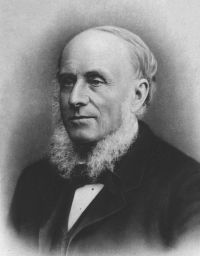
Portrait of Pierre-Joseph Proudhon Pierre-Joseph Proudhon,  What is Property? (1876)

“ There has been progress in the regulation of the right; there has been no revolution.
These, then, are the three fundamental principles of modern society, established one after another by the movements of 1789 and 1830: 1. Sovereignty of the human will; in short, despotism. 2. Inequality of wealth and rank. 3. Property—above JUSTICE, always invoked as the guardian angel of sovereigns, nobles, and proprietors; JUSTICE, the general, primitive, categorical law of all society.
”
Source: Wikisource

Portrait of David Hume David Hume,  Treatise of Human Nature/Book 3… (1739)

“ In the mean time, we may content ourselves with observing, that the same love of order and uniformity, which arranges the books in a library, and the chairs in a parlour, contribute to the formation of society, and to the well-being of mankind, by modifying the general rule concerning the stability of possession. And as property forms a relation betwixt a person and an object, 'tis natural to found it on some preceding relation; and as property is nothing but a constant possession, secur'd by the laws of society. ”
Source: Wikisource

Get perspective with Kwize: daily news enlightened by great literature