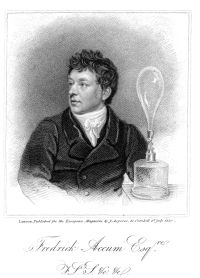
Hydrogen gas

Definition and stakes

Aaron A. Warford,  How to become a scientist (1900)

“ Hydrogen gas is the lightest substance known, being fifteen times lighter than atmospheric air. It is colorless and transparent, incapable of supporting combustion or respiration, but is itself combustible. Hydrogen, as its name implies (being derived from two Greek words, signifying the generator of water) , is a constituent of water in the proportion of one-ninth by weight, and is always obtained by decomposing that fluid, by presenting to it some body to take up its other ingredient, oxygen, and so set the hydrogen at liberty. ”

Source: Gutenberg

N. Hawkins,  Maxims and Instructions for the Boiler Room

“ Hydrogen is an invisible gas, and the lightest known body in the world, being many times lighter than oxygen. It is combustible and gives out much heat. In our gas establishments it is made in large quantities and combined with carbon for illuminating streets, shops and dwellings. It is the source of all common flame. When united with sulphur in coal mines it becomes explosive. By passing a current of steam through a hot iron tube partly filled with filings, hydrogen gas is given off and burns with a pale yellow flame. ”
Source: Gutenberg

Portrait of Antoine Laurent Lavoisier Antoine Laurent Lavoisier,  Elements of Chemistry,

“ As it possesses so great affinity with caloric as only to exist in the state of gas, it is consequently impossible to procure it in the concrete or liquid state, independent of combination.
To procure hydrogen, or rather hydrogen gas, we have only to subject water to the action of a substance with which oxygen has greater affinity than it has to hydrogen; by this means the hydrogen is set free, and, by uniting with caloric, assumes the form of hydrogen gas.
”
Source: Gutenberg

Get perspective with Kwize: daily news enlightened by great literature