Hyperemia

Definition and stakes

Toby A. Appel,  Bloodletting Instruments in the National Museum of History and Technology

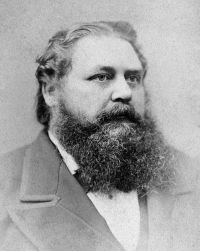
“ August Bier, professor at the University of Bonn, developed another sophisticated theory supporting the use of blood-suction devices, known as the theory of hyperemia, meaning “excess of blood.” According to the doctrine, lesions are always accompanied in nature by hyperemia, “the most widespread of auto-curative agents.” [162] If we, therefore, wish to imitate nature, we create an artificial hyperemia. Bier recommended several means of increasing the blood supply of an affected part, including hot-air baths, suction devices such as Junod’s boot, and dry cupping. ”
Source: Gutenberg

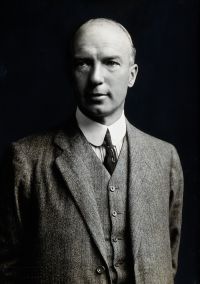
Edward Adams,  Surgery, with Special Reference to Podiatry

“ Active hyperemia increases the arterial blood to any part of the body, thus favoring the absorption of chronic exudates, infiltrates, adhesions, etc. Dry, hot air permits the use of a high degree of temperature without injury or pain to the respective part.
For neuritis of the foot, ulcers, especially diabetic, perforating and varicose, and for the stiffness following a chronic inflammation, or after a fracture, the arterial form of hyperemia gives good results.
”
Source: Gutenberg

James Campbell Todd,  A Manual of Clinical Diagnosis

“ Renal Hyperemia.—Active hyperemia is usually an early stage of acute nephritis, but may occur independently as a result of temporary irritation. The urine is generally decreased in quantity, highly colored, and strongly acid. Albumin is always present—usually in traces only, but sometimes in considerable amount for a day or two. The sediment contains a few hyaline and finely granular casts and an occasional red blood-cell. In very severe hyperemia the urine approaches that of acute nephritis.
[p. 133]
Passive hyperemia occurs most commonly in diseases of the heart and liver and in pregnancy.
”
Source: Gutenberg

Get perspective with Kwize: daily news enlightened by great literature