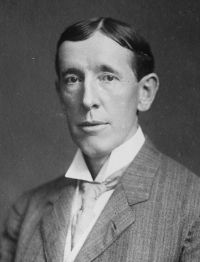
Congestion, a symptom marked by the abnormal buildup of bodily fluids or substances, has been examined in medical, literary, and practical contexts. Edith Wharton conveys its sensory weight in urban traffic, while W. H. Harbaugh defines it medically as an "unnatural accumulation of blood," highlighting its pathological significance.
Florence Scovel Shinn connects physical and mental stagnation, portraying congestion as a metaphor for accumulated burdens. Whether in traffic jams or capillary blockages, the theme underscores the tension between movement and obstruction, revealing its importance in both bodily processes and societal structures.
 Edith Wharton,
A Motor-Flight Through France
(1908)
Edith Wharton,
A Motor-Flight Through France
(1908)