Integral calculus

Definition and stakes

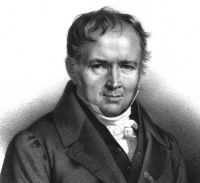
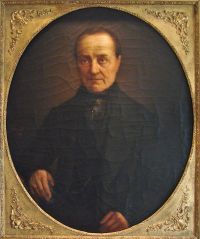
Portrait of Auguste Comte Auguste Comte,  The philosophy of mathematics

“ The differential calculus is evidently the logical basis of the integral calculus; for we do not and cannot know how to integrate directly any other differential expressions than those produced by the differentiation of the ten simple functions which constitute the general elements of our analysis. The art of integration consists, then, essentially in bringing all the other cases, as far as is possible, to finally depend on only this small number of fundamental integrations. ”
Source: Gutenberg

Portrait of Auguste Comte Auguste Comte,  The philosophy of mathematics

“ It would be a real error, though a common one, to assign to the differential calculus, in order to explain its peculiar, direct, and necessary influence, the destination of forming the differential equations, from which the integral calculus then enables us to arrive at the finite equations; for the primitive formation of differential equations is not and cannot be, properly speaking, the object of any calculus, since, on the contrary, it forms by its nature the indispensable starting point of any calculus whatever. ”
Source: Gutenberg

Get perspective with Kwize: daily news enlightened by great literature