Iron law of wages

Definition and stakes

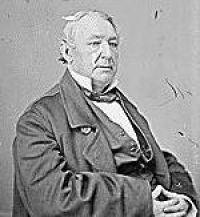
Portrait of J. Ellis Barker J. Ellis Barker British Socialism

If the Iron Law of Wages were correct, wages would be almost uniform. The Iron Law of Wages can possibly apply only to one small class of workers, the lowest and least skilled labourers, provided that unemployment is so great among them that they abandon collective bargaining and underbid one another down to the level of subsistence. When workers are organised, the Iron Law of Wages does not apply. The level of wages depends, broadly speaking, on supply and demand. Wages rise when two employers run after one workman; wages fall when two workmen run after one employer.
Source: Gutenberg

Helen Campbell Women Wage-Earners: Their Past…

Modern processes involve so much of this order of waste that often there is doubt if work is worth having or not, and the unskilled laborer is either rejected or receives only a boy's wage.
The various schools of political economists differ widely as to the facts which have formulated themselves in what is known as the iron law of wages; this meaning that wages are said to tend increasingly to a minimum which will give but a bare living. For skilled labor the law may be regarded as elastic rather than iron.
Source: Gutenberg

Get perspective with Kwize: daily news enlightened by great literature