Isomerism

Definition and stakes

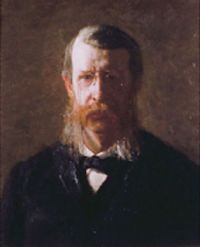
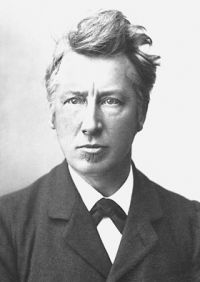
Portrait of Jacobus Henricus van 't Hoff Jacobus Henricus van 't Hoff,  1911 Encyclopædia Britannica (1911)

“ Before entering into detail it may be useful to consider the nature of isomerism from a general standpoint. It is probable that the whole phenomenon of isomerism is due to the possibility that compounds or systems which in reality are unstable yet persist, or so slowly change that practically one can speak of their stability; for instance, such systems as explosives and a mixture of hydrogen and oxygen, where the stable form is water, and in which, according to some, a slow but until now undetected change takes place even at ordinary temperatures. ”
Source: Wikisource

Portrait of Jacobus Henricus van 't Hoff Jacobus Henricus van 't Hoff,  1911 Encyclopædia Britannica (1911)

“ Isomerism.—Certain investigations on isomerism which have become especially prominent in recent times bear on the possibility of the mutual transformation of isomers. As soon as this reversibility is introduced, general laws related to thermodynamics are applicable (see Chemical Action; Energetics) . These laws have the advantage of being applicable to the mutual transformations of isomers, whatever be the nature of the deeper origin, and so bring polymerism, metamerism and polymorphism together. ”
Source: Wikisource

T. E. Thorpe,  History of Chemistry, Volume 2…

“ The special form of stereo-isomerism now referred to, which has been more particularly investigated by Wislicenus, is distinguished as geometrical146 isomerism; not, perhaps, a sufficiently descriptive term, since, comprehensively, all forms of isomerism are really cases of geometrical isomerism. Instances of it are to be met with among the isomeric acids existing as glycerides in certain fats, in cinnamic acid, in stilbene and its derivatives, etc. ”
Source: Gutenberg

Get perspective with Kwize: daily news enlightened by great literature