Allotropy

Definition and stakes

Various,  Encyclopaedia Britannica, 11th Edition…

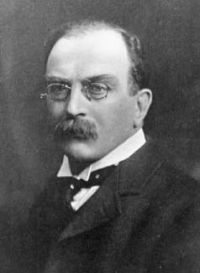
“ The phenomenon of allotropy is not confined to the non-metals, for evidence has been advanced to show that allotropy is far commoner than hitherto supposed. Thus the researches of Carey Lea, E.A. Schneider and others, have proved the existence of “colloidal silver”; similar forms of the metals gold, copper, and of the platinum metals have been described. The allotropy of arsenic and antimony is also worthy of notice, but in the case of the first element the variation is essentially non-metallic, closely resembling that of phosphorus. ”
Source: Gutenberg

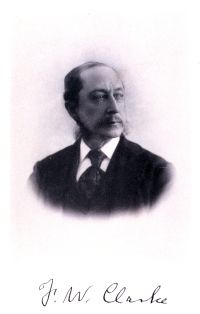
Portrait of Frank Wigglesworth Clarke Frank Wigglesworth Clarke,  Popular Science Monthly (1875)

“ Obstacles must be surmounted, and the worst are not in this direction. The mind unused to speculations of this sort will probably encounter its greatest embarrassment in trying to understand how one substance alone can assume such a diversity of forms. That such a thing is within the limits of possibility, may be illustrated by reference to the facts of allotropy and isomerism. Quite a number of our present elements are known to be capable of existing in a variety of dissimilar modifications. Carbon is found as charcoal, graphite, and diamond ”
Source: Wikisource

Carleton Washburne,  Common Science

“ An alloy is a special kind of solution not quite like an ordinary solution.
You remember that in the opening chapters we often spoke of molecules, the tiny particles of matter that are always moving rapidly back and forth. Well, if you were to examine a molecule of water with the microscope which we imagined could show us molecules, you would find that the molecule of water was made of three still smaller particles, called atoms. Two of these would be atoms of hydrogen and would probably be especially small; the third would be larger and would be an oxygen atom.
”
Source: Gutenberg

Get perspective with Kwize: daily news enlightened by great literature