Land patent

Definition and stakes

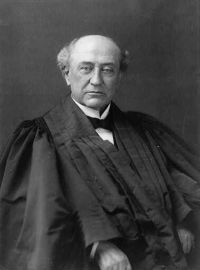
Portrait of Stephen Johnson Field Stephen Johnson Field,  Marsh v. Nichols Shepherd Company…

“ With respect to patents for land, we have had frequent occasion to assert their inviolability against collateral attack, where the land department had jurisdiction, and the land formed part of the public domain, and the law provided for their sale. But we have also held that if the land patented was never the property of the United States, or had been previously sold, or reserved for sale, or the officers had no authority to execute the instrument, the fact could be shown in any action or proceeding whenever the patent is offered in evidence. ”
Source: Wikisource

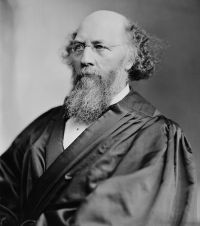
Portrait of Morrison Waite Morrison Waite,  McGarrahan v. Mining Company — Opinion of the Court

“ Thus it appears that a patent for lands must be signed in the name of the President, either by himself or by his duly appointed secretary, sealed with the seal of the General Land-Office, and countersigned by the recorder. Until all these things have been done, the United States has not executed a patent for a grant of lands. Each and every one of the integral parts of the execution is essential to the perfection of the patent. They are of equal importance under the law, and one cannot be dispensed with more than another. ”
Source: Wikisource

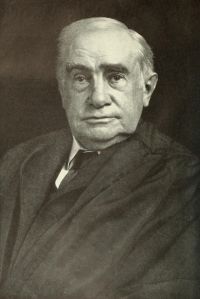
Portal:Supreme Court of the United States,  Burke v. Southern Pacific Railroad Company…

“ But, referring to the clause in the patent, 'excluding and excepting all mineral lands should any such be found in the tracts aforesaid,' the contention is made, first, that the patent shows that the Land Department did not consider or determine whether the lands were mineral or not, and, second, that all lands embraced in the patent which then had been or thereafter should be discovered to be mineral were expressly excepted from the operation of the patent and therefore remained public lands. ”
Source: Wikisource

Get perspective with Kwize: daily news enlightened by great literature