Line engraving

Definition and stakes

Philip Hamerton and Marion Spielmann,  1911 Encyclopædia Britannica, Volume 16… (1911)

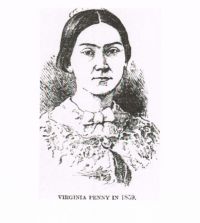
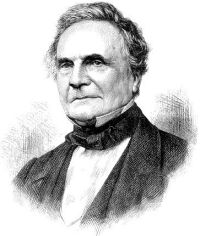
“ In this early metal engraving the lines are often crossed in the shading, whereas in the earliest woodcuts they are not; the reason being that when lines are incised they can as easily be crossed as not, whereas, when they are reserved, the crossing involves much labour of a non-artistic kind. Here, then, we have pure line-engraving with the burin, that is, the engraving of the pure line patiently studied for its own beauty, and exhibited in an abstract manner, with care for natural form combined with inattention to the effects of nature. ”
Source: Wikisource

Philip Hamerton and Marion Spielmann,  1911 Encyclopædia Britannica, Volume 16… (1911)

“ The most important of the tools used in line-engraving is the burin, which is a bar of steel with one end fixed in a handle rather like a mushroom with one side cut away, the burin itself being shaped so that the cutting end when sharpened takes the form of a lozenge, point downwards. The burin acts exactly like a plough; it makes a furrow and turns out a shaving of metal as the plough turns the soil of a field. ”
Source: Wikisource

Thomas George Hill,  The Essentials of Illustration

“ As compared with copper engravings, steel gives a somewhat harder line, whilst copper gives a soft line, but this, of course, does not mean that steel engravings are harsh; the finest work can be done on steel and of remarkable delicacy.
At the present day line engraving is seldom or never used as a means of illustrating scientific work. It is obvious that the average scientist has not the time and he certainly does not possess the skill to make his own plates; the engraver must translate the originals into lines, so that much consultation would be necessary.
”
Source: Gutenberg

Get perspective with Kwize: daily news enlightened by great literature