Linguistic purism

Definition and stakes

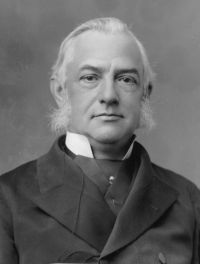
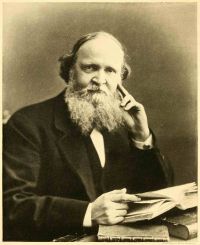
Portrait of William Dwight Whitney William Dwight Whitney,  Language and the Study of Language (1867)

“ Of all the forms of linguistic conservatism, or purism, orthographic purism is the lowest and the easiest; for it deals with the mere external shell or dress of language, and many a one can make stout fight in behalf of the right spelling of a word whose opinion as to its pronunciation even, and yet more its meaning and nice application, would possess no authority or value whatever; hence it is also the commonest, the least reasonable, and the most bigoted. When it claims to be asserting a principle, it is only defending by casuistry a prejudice ”
Source: Wikisource

Elizabeth Mary Wright,  Rustic Speech and Folk-Lore

“ My aim in dealing with the linguistic side of my subject has been to show that rules for pronunciation and syntax are not the monopoly of educated people who have been taught to preach as well as practise them. Dialect-speaking people obey sound-laws and grammatical rules even more faithfully than we do, because theirs is a natural and unconscious obedience. ”
Source: Gutenberg

Gurajada Apparao,  Minute of Dissent (2012)

“ There is a purism which, while it seeks to maintain the integrity of language, in effect stifles its growth; to be too fearful of new words and phrases, new meanings, familiar and colloquial expressions, is little less fatal to the well-being of a spoken tongue than to rush into the opposite extreme. ”
Source: Wikisource

Get perspective with Kwize: daily news enlightened by great literature