“ The precise locality of the Lion's dwelling-place having been discovered, a circular wall of net is arranged round it, or if only a few nets can be obtained, they are set in a curved form, the concave side being towards the Lion. They then send dogs into the thicket, hurl stones and sticks at the den, shoot arrows into it, fling 27 burning torches at it, and so irritate and alarm the animal that it rushes against the net, which is so made that it falls down and envelopes the animal in its folds. ”
Lion's den
Definition and stakes
The theme of “lion's den” has been addressed by authors such as Frederick Courteney Selous, Percy S. P. Handcock, J. H. Patterson, Agnes Herbert and Mrs. R. Lee. It is often associated with terms like mane, animal, lioness, prey and Africa.
Quotes about “lion's den”
 Eleanor Stackhouse Atkinson,
The How and Why Library — Section II
(1915)
Eleanor Stackhouse Atkinson,
The How and Why Library — Section II
(1915)
“ The lion makes his den in a rocky cave hidden by bushes, on the edge of a wide sandy plain where many antelopes, deer, zebra and other grazing animals roam. In one thing he is better than the house cat. ”
“ Sometimes, when he has crept near an encampment, or close to a cattle inclosure, he does not proceed any farther lest he should venture within the radius illumined by the rays of the fire. So he crouches closely to the ground, and, in the semi-darkness, looks so like a large stone, or a little hillock, that any one might pass close to it without perceiving its real nature. This gives the opportunity for which the Lion has been watching, and in a moment he strikes down the careless straggler, and carries off his prey to the den. ”
Thomas Frost, Circus Life and Circus Celebrities
“ Now and again, in a well-ordered zoological collection, some lazy, drowsy old lion, who passes the major part of his time in a corner of his den, blinking at the sunshine, and who is cloyed with abundant meals, and surfeited with cakes and sweetmeats, may exhibit passable good-nature, and allow his keeper to take liberties; but such placability can rarely be expected from animals moved continually from place to place, and ceaselessly pestered into going through movements which they detest. Lions or tigers may have the cunning of that feline race to which they pertain ”
The Juvenile Scrap-book for 1849
“ Thus we went on from one day to another, and the lion began to take great pleasure in me. After some time, the dens were placed in great wagons, and conveyed to another town, where the people came in crowds, curious to behold the lion and the Fox.Though we lived in great harmony, yet, before long, my life became tedious and sorrowful. “Lion,” said I one day, “we must try to obtain our freedom.”“Well said!” replied lion: “can I break these iron bars which keep us within the den?” “That neither of us can do,” I rejoined; “but, where strength is vain, cunning may succeed. Just let us try ”
Charles J. Barnes, New National Fourth Reader
“ The mane is of a dark brown, or of a dusky color, and the tail nearly three feet long, with a bunch of hair at the tip. The lioness, or female lion, is smaller in every way than the male and has no mane. It is in the night-time that the lion goes out from his den to seek for food, and his color is so dark and his movements so silent, that his presence is not known even at the distance of a few yards. ”
“ The retired spots, deep in the forest, where the Lion makes his den, are repeatedly mentioned. See for example, Cant. iv. 8, "Look from the top of Amana, from the top of Shenir and Hermon, from the lions' dens." Also, Jer. iv. 7, "The lion is come up from his thicket, and the destroyer of the Gentiles is on his way." The same Prophet contains several passages illustrative of the Lion's habitation; see ch. v. 6, "Wherefore a lion out of the forest shall slay them;" xii. 8, "Mine heritage is unto me as a lion in the forest;" and lastly, xxv. 38, "He hath forsaken his covert as the lion." ”
 Zane Grey,
The Last of the Plainsmen
Zane Grey,
The Last of the Plainsmen
“ How did they come on a slope where a man could hardly walk? Only one answer seemed feasible. The lion had made his kill one thousand feet above, had pulled his quarry to the rim and pushed it over. In view of the theory that he might have had to drag his victim from the forest, and that very seldom two lions worked together, the fact of the location of the bones as startling. Skulls of wild horses and deer, antlers and countless bones, all crushed into shapelessness, furnished indubitable proof that the carcasses had fallen from a great height. ”
 H. Rider Haggard,
A Tale of Three Lions
H. Rider Haggard,
A Tale of Three Lions
“ At that moment, to my astonishment and alarm, there came an answering roar from the direction of the river, and then another from behind the swell of bush. Evidently there were more lions about. The wounded lioness redoubled her efforts, with the object, I suppose, of summoning the others to her assistance. At any rate they came, and quickly too, for within five minutes, peeping through the bushes of our skerm fence, we saw a magnificent lion bounding along towards us, through the tall tambouki grass, that in the moonlight looked for all the world like ripening corn. ”
James W. Buel, Glimpses of America
“ There are thin slabs of sandstone standing on edge and lifting their heads a hundred feet high, on which the gods or witches have sculptured images of birds, animals, and moving caravans. A herculean lion is crouching on the peak of one, looking towards the north, where a bear and seal are eyeing each other from a lofty perch, uncertain of their safety, and undetermined whether to attack or retreat. ”
Various, St. Nicholas, Vol. 5, No. 2, December…
“ So, on the following morning, in the early dawn, the terrace around the lion's pit was crowded with people. For three days the grand lion had been deprived of food in order that he might be the more ferocious and terrible. His eyes shone like two balls of fire, and he incessantly lashed his flanks with his tail. At one moment he would madly roar, and, in the next, rub himself against the wall, vainly trying to find a chink between the stones in which to insert his claws. ”
G. Maspero, History of Egypt, Chaldæa, Syria…
“ Hewn out of the solid rock at the extreme margin of the mountain-plateau, he seems to raise his head in order that he may be the first to behold across the valley the rising of his father the Sun. Only the general outline of the lion can now be traced in his weather-worn body. The lower portion of the head-dress has fallen, so that the neck appears too slender to support the weight of the head. ”
Charles C. Abbott, Travels in a Tree-top
“ We spend time and money to see the creatures caged in a menagerie, and never see the uncaged ones in the thicket behind the house. Every lion must roar, or we have not seen the show; a lion rampant is everything, a lion couchant, nothing. There was no visible violence in the meadows to-day ”
Enos A. Mills, Watched by Wild Animals
“ But so seldom is he seen, or even heard, that, were it not for his tracks and the deadly evidence of his presence, his existence could not be believed.Though I have camped in his territory for weeks at a time, and ofttimes made special efforts to see him, the number of lions I have seen—except, of course, those treed by dogs—is small.When a mountain lion is frightened, or when pursued by dogs, he is pretty certain to take refuge in a tree. This may be a small tree or a large one. He may be out on a large limb or up in the top of the tree.The lion is a fair runner and a good swimmer. ”
Enos A. Mills, Watched by Wild Animals
“ The lion is a master of woodcraft. He understands the varying sounds and silences of the forest. He either hides and lies in wait or slips unsuspected upon his victim. He slips upon game even more stealthily than man; and in choosing the spot to wait for a victim he usually chooses wisely and, alert waits, if necessary, for a prolonged time. He leaps upon the shoulders and neck of horse, deer, or sheep, and then grabs the victim’s throat in his teeth. ”
 Agnes Herbert,
Two Dianas in Somaliland: The Record of a Shooting Trip
Agnes Herbert,
Two Dianas in Somaliland: The Record of a Shooting Trip
“ One of the most extraordinary features about lions to me is the way so large an animal can obliterate itself; they simply blend into the landscape. Their brownish-yellow skins, so similar in colour to the burnt grass, and their agile bodies, which can crouch and wriggle like any lizard, play parts in the scheme for invisibility. On one occasion Cecily and I surprised a lion in a small nullah. ”
 Louisa May Alcott,
Jo's Boys
(1886)
Louisa May Alcott,
Jo's Boys
(1886)
“ But a time came when her patience gave out; and wearying of being a lion, she became a bear in nature as in name, and returning to her den, growled awfully when ordered out. ”
 Mrs. Jameson,
Sacred and legendary art, volume 1…
(1870)
Mrs. Jameson,
Sacred and legendary art, volume 1…
(1870)
“ George; or sometimes a destroying flood, as in the legend of St. Martha, where the inundation of the Rhone is figured by a dragon emerging from the waters and spreading around death and pestilence,—like the Python of the Grecian myth.The Lion, as an ancient Christian symbol, is of frequent recurrence, more particularly in architectural decoration. Antiquaries are not agreed as to the exact meaning attached to the mystical lions placed in the porches of so many old Lombard churches; sometimes with an animal, sometimes with a man, in their paws. ”
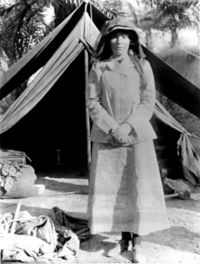 Gertrude Lowthian Bell,
Amurath to Amurath
Gertrude Lowthian Bell,
Amurath to Amurath
“ Here can be seen a sculptured block which used to lie among the earth-heaps until a French engineer built a pedestal for it and set it up above the ruins (Fig. 104) . It is carved in the shape of a colossal lion standing above the body of a man who lies with arms uplifted. The man’s head is broken away and the whole group is only half finished, but the huge beast with the helpless human figure beneath his feet could not have been given an aspect more sinister. It is as though the workmen of the Great King had fashioned an image of Destiny, treading relentlessly over the generations{171} ”
Henry M. Field, From the Lakes of Killarney to the Golden Horn
“ In the amphitheatre, according to the novelist, the people were assembled when the destruction came. The lion had been let loose, but more sensitive than man to the strange disturbance in the elements, crept round the arena, instead of bounding on his prey, losing his natural ferocity in the sense of terror. Beasts in the dens below filled the air with howls, till the assembly, roused from the eager excitement of the combat, at length looked upward, and in the darkening sky above them read the sign of their approaching doom. ”
 Stewart Edward White,
The Land of Footprints
Stewart Edward White,
The Land of Footprints
“ I tell you this that you may realize, as I did not, the size to which a wild lion grows. Either menagerie specimens are stunted in growth, or their position and surroundings tend to belittle them, for certainly until a man sees old Leo in the wilderness he has not understood what a fine old chap he is. This tremendous weight is sheer strength. A lion's carcass when the skin is removed is a really beautiful sight. The great muscles lie in ropes and bands; the forearm thicker than a man's leg, the lithe barrel banded with brawn ”
Mrs. R. Lee, Anecdotes of the Habits and Instinct of Animals
“ We expected every minute to see one or more of them torn to pieces; and yet in their position, one lying under the lion's paw, and the others scrambling towards us, we dared not fire. Fortunately, however, the lion, after steadily surveying us, turned calmly away, drove off the hounds with his heels, as if they had been rats, and bounded over the adjoining thicket like a cat, clearing bushes twelve or fifteen feet high, as if they had been tufts of grass. ”
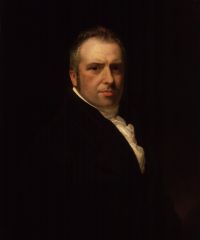 William Hone,
The Every-day Book and Table Book…
William Hone,
The Every-day Book and Table Book…
“ On the 6th of April, 1775, a lion was landed at the Tower, as a present to his late majesty from Senegal. He was taken in the woods, out of a snare, by a private soldier, who, being attacked by two natives that had laid it, killed them both, and brought away the lion. The king ordered his discharge for this act, and further rewarded him by a pension of fifty pounds a year for life. On this fact, related in the Gentleman’s Magazine for that year, a correspondent inquires of Mr. Urban whether “a lion’s whelp is an equivalent for the lives of two human creatures.” ”
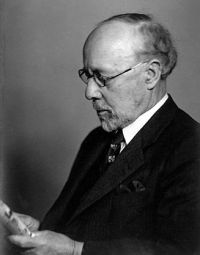 John Garstang,
The land of the Hittites
(1910)
John Garstang,
The land of the Hittites
(1910)
“ From the outer face we pass to the sculptures which decorate the flanking walls of the pilasters in the first doorway.No. iii. The decoration on the left, facing therefore to the east, comprises two subjects: the one a large lion, which occupies two slabs, with its head upon the corner-stone, [655] and the other a monstrous creature holding up a rabbit. The lion [656] faces to the left, looking out therefore from the gateway. The picture is poorly drawn; there is no vigour and little life in the animal, and the artist’s conventions are exaggerated so as to be no longer artistic. ”
“ The shape is right, the attitude is right, the proportions are right, but that indescribable something which makes the Lion of Lucerne the most mournful and moving piece of stone in the world, is wanting. The Lion lies in his lair in the perpendicular face of a low cliff—for he is carved from the living rock of the cliff. His size is colossal, his attitude is noble. ”
Percy S. P. Handcock, Mesopotamian Archaeology
“ The lion is prostrate, his four legs dragging helplessly behind and underneath his massive body, while his face bespeaks the death-agony in which he lies convulsed. Above, on the left, another animal has been incapacitated, if not mortally wounded, by two arrow wounds, one in the neck and the other in the back, while a little lower down to the right, a lioness smitten through the lungs has rolled over helplessly on her back. ”
Percy S. P. Handcock, Mesopotamian Archaeology
“ XIX we see a number of lions thus transfixed; their various positions, some of which are sublimely natural, while others appear rather imaginative, all speak eloquently and in moving terms of that common tragedy to which all the animal world, whether human or bestial must some day become victims,—the tragedy of death. One lion is seen transfixed by four arrows, two of which are deeply lodged in the lion’s neck, a third in the centre of the head, and the last in the middle of the back. ”
J. Hampden Porter, Wild beasts (1894)
“ There is a perfect fog of contradictions about the animal’s strength, leaping power, and his manner of carrying off prey; so that as far as testimony in these matters goes, no one can arrive at any conclusion. A lion stands about thirty-six inches high at the shoulder, and, of course, exceptional individuals may be taller. He can no more go straight with his head twisted over his shoulder than a man could ”
 Frederick Courteney Selous,
African Nature Notes and Reminiscences
Frederick Courteney Selous,
African Nature Notes and Reminiscences
“ Lions, I think, must often lose their prey through the very sharpness of their claws, which cut like knives through the skin and flesh of a heavy animal in motion. I have known several instances of a lion overtaking a horse that had only had a short start. In such a case a lion will not land with a flying leap right on to a horse's back. It gallops close along the ground until it is almost under the horse's tail, and then, rearing itself up on its hind-legs, seizes it on either flank, endeavouring to hold it with the protruded claws of its great fore-paws. ”
Percy S. P. Handcock, Mesopotamian Archaeology
“ At the bottom of this unique scene we have another lion transfixed by some five arrows, most of which are lodged in or about the animal’s head; like the lioness he has sunk Pg 220over on his back, his limbs being contorted almost beyond recognition. To the left we have the full hind-quarters of a lion who is springing up in a frenzy of rage excited by an arrow-wound in the back. Last of all in the bottom left-hand corner another lion is seen in the act of expiring as the result of his wounds. ”
Vishnu Sharma, The Panchatantra (1925)
“ Now in that forest lived a lion named Spotless, who had as hangers-on two carnivorous creatures, a jackal and a crow. One day the lion was roaming the wood alone and encountered the carpenter. The carpenter for his part, on beholding that most alarming lion, whether considering himself already lost or perhaps with the ready wit to perceive that it is safer to face the powerful, advanced to meet the lion, bowed low, and said: "Come, friend, come! Today you must eat my own dinner which my wife—your brother's wife—has provided." ”
Charles J. Barnes, New National Fourth Reader
“ It is only in the deserts and rocky hills of Asia and Africa that they are met with. Those who have visited a menagerie, and have seen a lion within the limits of a narrow iron cage, can form no idea of the majesty of the brute when roaming about freely on his native soil. The voice of the lion is loud and strong. It is likely to strike terror to the bravest heart. ”
Related terms
Authors who wrote about “lion's den”
Frederick Courteney SelousPercy S. P. HandcockJ. H. PattersonAgnes HerbertMrs. R. LeeJ. P. Hyde Price Aesop
Aesop Charles John AnderssonPhil RobinsonJ. Hampden PorterCharles J. Barnes
 Edgar Rice BurroughsJohn GarstangStanley Paul YoungThomas Frost
 C. V. A. PeelVishnu SharmaAndrew A. Anderson
 Sarath Kumar Ghosh
 Clive Phillipps-Wolley