“ Although you still need to do the disambiguation for the multiple letters "from" or "to" the same people. Beeswaxcandle (talk) 03:30, 8 September 2013 (UTC) I'm not sure what you did to fix it. I saw that you moved some of the codes from the Mainspace to the header and footer -- is that all that was needed? I'm going to need to do it the same way for the other two volumes. And yes, I've been trying to figure out what will be necessary for the transclusion of all of these letters. Not only are there duplicates of sender-recipient combinations, but sometimes they appear on the same page. ”
Mainspace
Definition and stakes
The theme of “mainspace” has been addressed by authors such as . It is often associated with terms like space, perception, center, world and mind.
Quotes about “mainspace”
 Bertrand Russell,
Mysticism and Logic and Other Essays
(1917)
Bertrand Russell,
Mysticism and Logic and Other Essays
(1917)
“ In addition to the private spaces belonging to the private worlds of different percipients, there is, however, another space, in which one whole private world counts as a point, or at least as a spatial unit. This might be described as the space of points of view, since each private world may be regarded as the appearance which the universe presents from a certain point of view. ”
 Edwin Abbott Abbott,
Flatland
(1884)
Edwin Abbott Abbott,
Flatland
(1884)
“ And we know that a Circle is a higher Being than a Straight Line, in so far as knowledge and wisdom are more to be esteemed than mere affection. Sphere. It is not for me to classify human faculties according to merit. Yet many of the best and wisest in Spaceland think more of the affections than of the understanding, more of your despised Straight Lines than of your belauded Circles. ”
 Herbert Spencer,
First Principles
Herbert Spencer,
First Principles
“ And from a building up of these, too elaborate to be here detailed, results that abstract of all relations of co-existence which we call Space. It remains only to point out, as a thing which we must not forget, that the experiences from which the consciousness of Space arises, are experiences of force. A certain correlation of the muscular forces we ourselves exercise, is the index of each position as originally disclosed to us; and the resistance which makes us aware of something existing in that position, is an equivalent of the pressure we consciously exert. ”
Bertrand Russell,
Philosophy
(1927)
“ Thus the whole space of your sensible world with all its percepts counts as one tiny region from the point of view of physics.There is no direct spatial relation between what one person sees and what another sees, because no two ever see exactly the same object. Each person carries about a private space of his own, which can be located in physical space by indirect methods, but which contains no place in common with another person’s private space. This shows how entirely physical space is a matter of inference and construction. ”
Bertrand Russell,
Mysticism and Logic and Other Essays
(1917)
“ If this is so, and if, as is generally assumed, position in space is purely relative, it follows that the space of one man's objects and the space of another man's objects have no place in common, that they are in fact different spaces, and not merely different parts of one space. I mean by this that such immediate spatial relations as are perceived to hold between the different parts of the sensible space perceived by one man, do not hold between parts of sensible spaces perceived by different men. ”
 John Locke,
An Essay Concerning Human Understanding…
John Locke,
An Essay Concerning Human Understanding…
“ But this modification of distance we call place, being made by men for their common use, that by it they might be able to design the particular position of things, where they had occasion for such designation ; men consider and determine of this place by reference to those adjacent things which best served to their present purpose, without considering other things which, to another purpose, would better determine the place of the same thing. ”
Bertrand Russell,
Mysticism and Logic and Other Essays
(1917)
“ It is the unperceived ambiguity of the word "place" which, as we shall shortly see, has caused the difficulties to realists and given an undeserved advantage to their opponents. Two "places" of different kinds are involved in every sense-datum, namely the place at which it appears and the place from which it appears. These belong to different spaces, although, as we shall see, it is possible, with certain limitations, to establish a correlation between them. What we call the different appearances of the same thing to different observers are each in a space private to the observer concerned. ”
Bertrand Russell,
Philosophy
(1927)
“ When I say that there is space in our percepts, I mean nothing at all difficult to understand. I mean—to take the sense of sight, which is the most important in this connection—that in what we see at one time there is up and down, right and left, inside and outside. ”
“ You have been alloted sector 2645 of space in parsec three."In the next ten minutes we shall transmit a detailed study of a star system to you. Using only the raw materials of space and the mental techniques taught you in your studies, you will reproduce a reasonable facsimile of the system in the space sector you have been assigned. Have you any questions?""How complete a facsimile must it be, Instructor?""It must be reasonably correct as to physical makeup. All life forms must also be reproduced." ”
 F. H. Bradley,
Ethical Studies — Essay I.
(1876)
F. H. Bradley,
Ethical Studies — Essay I.
(1876)
“ We have imaged to ourselves a collection of points in space, and that means we see the collection itself, as covering a given area, with other spaces and collections outside of it. Are we to say that the mind is in space? ”
Roscoe R. Rau, Selling Home Furnishings: A Training Program
“ Imagine this to be a console table. Equidistant from this rectangle, in a straight line, draw two small squares (one on each side of the rectangle) to represent a pair of chairs. If you successively place a circle over the rectangle to represent a mirror, you will clearly see the bisymmetric balance. The effect of formality becomes more marked as you add more units to the group. While too many formal groupings will make the room seem stiff and unlivable, at least one formal grouping may be desirable in every room since formal balance affects the mind with a sense of stability and repose. ”
George Herbert Betts, The Mind and Its Education
“ The psychologists have even quarreled concerning whether we possess an innate sense of space, or whether it is a product of experience and training. Fortunately, for our present purpose we shall not need to concern ourselves with either of these controversies. For our discussion we may accept space for what common sense understands it to be. As to our sense of space, whatever of this we may possess at birth, it certainly has to be developed by use and experience to become of practical value. In the perception of space we must come to perceive distance, direction, size, and form. ”
 Alexander Maclaren,
Expositions of Holy Scripture: St…
Alexander Maclaren,
Expositions of Holy Scripture: St…
“ In any circle, the nearer the points of the circumference are to the centre, the closer they will necessarily be to one another. As we draw nearer, each for himself, to our Centre, we shall feel that we have approximated to all those who stand round the same centre, and draw from it the same life. ”
Ethel D. Puffer, Psychology of Beauty
“ What it contains of universal significance, the demand for space-unity, based on the state of the eye in a union of rest and action, ignores all but one of the possible sources of rest and action for the eye, that of accommodation, and all the allied activities completely. ”
Bertrand Russell,
Our Knowledge of the External World…
(1914)
“ So far from one all-embracing space being given, there are several spaces for each person, according to the different senses which give relations that may be called spatial. Experience teaches us to obtain one space from these by correlation, and experience, together with instinctive theorising, teaches us to correlate our spaces with those which we believe to exist in the sensible worlds of other people. ”
 Emil du Bois-Reymond,
Popular Science Monthly
(1874)
Emil du Bois-Reymond,
Popular Science Monthly
(1874)
“ But if with the dynamists we conceive of the substratum as being only the middle point of the central forces, then the substratum does not occupy space, for a point is the very negation of space in space. Hence we have nothing from which the central forces spring; nothing that could be inert, like matter. ”
 Vernon Lee,
The Beautiful: An Introduction to Psychological Aesthetics
Vernon Lee,
The Beautiful: An Introduction to Psychological Aesthetics
“ With cubic existence (and its correlative three-dimensional space) , with weight and texture we have therefore got from the contemplated shape to a thought alien to that shape and its contemplation. The thought, to which life and its needs and dangers has given precedence over every other: What Thing is behind this shape, what qualities must be inferred from this aspect? After the possibility of occupying so much space, the most important quality which things can have for our hopes and fears, is the possibility of altering their occupation of space; not our locomotion, but theirs. ”
 Denman W. Ross,
A theory of pure design: harmony…
Denman W. Ross,
A theory of pure design: harmony…
“ In ascertaining just where the center is, in any case, we depend upon visual sensitiveness or visual feeling, guided by an understanding of the principle of balance: that equal attractions, tensions or pulls, balance at equal distances from a given center, that unequal attractions balance at distances inversely proportional to them. Given certain attractions, to find the center, we weigh the attractions together in the field of vision and observe the position of the center. ”
 Henri-Louis Bergson,
Matter and Memory
(1911)
Henri-Louis Bergson,
Matter and Memory
(1911)
“ Thus space furnishes us at once with the diagram of our near future, and, as this future must recede indefinitely, space which symbolizes it has for its property to remain, in its immobility, indefinitely open. ”
 Ray Cummings,
Beyond the stars
(1963)
Ray Cummings,
Beyond the stars
(1963)
“ We will emerge from it into some tremendous greater emptiness, some greater space. As much greater as the space of a bedroom interior would be to the head of a pin lying on a bureau! What matter whether we emerge on one side of the pinhead or the other? ”
 David Graham Phillips,
The Grain of Dust: A Novel
David Graham Phillips,
The Grain of Dust: A Novel
“ There are alcoves, rows on rows, shelves on shelves, with the exactest system everywhere prevailing, with the attendants moving about in list-bottomed shoes, fulfilling without the least hesitation or mistake the multitude of directions from the central desk. It is like an admirably drilled army, where there is the nice balance of freedom and discipline that gives mobility without confusion ”
 David Hume,
Philosophical Works, v. 2 (of 4…
David Hume,
Philosophical Works, v. 2 (of 4…
“ For a like reason we feel a difficulty in mounting, and pass not without a kind of reluctance from the inferior to that which is situated above it; as if our ideas acquired a kind of gravity from their objects. As a proof of this, do we not find, that the facility, which is so much studied in music and poetry, is called the fall or cadency of the harmony or period; the idea of facility communicating to us that of descent, in the same manner as descent produces a facility? ”
 Alexander Bain,
Practical Essays
Alexander Bain,
Practical Essays
“ Space includes more than this simple contrast of the resisting and the non-resisting; it includes what we call the Co-existing or Contemporaneous, the great aggregate of the outspread world, as existing at any moment, a somewhat complicated attainment, which I am not now specially concerned with. It sufficiently illustrates the limitation of our knowledge by our sensibilities, from the nature of space, to fasten attention on the double and mutually supplementing experience of Matter and Void ”
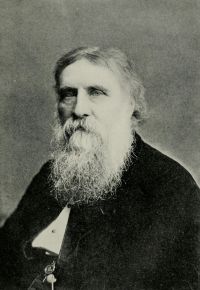 George MacDonald,
Robert Falconer
George MacDonald,
Robert Falconer
“ One room opened into another through the length of the place, revealing a vista of machines, standing with an air of the last folding of the wings of silence over them, and the sense of a deeper and deeper sinking into the soundless abyss. ”
 Jessie Eldridge Southwick,
Expressive Voice Culture, Including the Emerson System
Jessie Eldridge Southwick,
Expressive Voice Culture, Including the Emerson System
“ If the ideal is not reached by the effort it will be known by the sense of incompleteness. Why is the nares anteri the ruling center of tone direction? The dominant or ruling center of any organism is that point which, if controlled, will involve the regulation of all that is subordinate to it. For example, the heart is the dominant center of the circulatory system; the brain is the dominant center of the nervous system; the sun is the dominant center of the planetary system. ”
William James, The Principles of Psychology, Volume 2…
“ But in all this nothing has been said of the comparative measurement of one sensible space-total against another, or of the way in which, by summing our divers simple sensible space-experiences together, we end by constructing what we regard as the unitary, continuous, and infinite objective Space of the real world. ”
Portal:Anonymous texts, The Urantia Book (1955)
“ World Number One, the headquarters sphere, together with its six tributary satellites, is devoted to the study of universal life, life in all of its known phases of manifestation. Here is located the college of life planning, wherein function teachers and advisers from Uversa and Havona, even from Paradise. And I am permitted to reveal that the seven central emplacements of the adjutant mind-spirits are situated on this world of the Life Carriers. ”
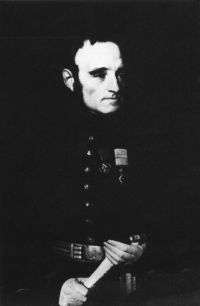 George Gawler,
The Essentials of Good Skirmishing
George Gawler,
The Essentials of Good Skirmishing
“ VI. In all systems of movement composed of many distinct bodies, there must be a common centre of direction, connexion and extension, or unity of purpose and effect must cease, and confusion, dispersion or concentration ensue. Such a centre there is in the minutely regular mighty moving system of the universe ”
Jonathan Lawhead, Lightning in a Bottle — Chapter 5 (2014)
“ After all, the choice of a state space in which to represent a system is just a choice of how to describe that system, and so to notice that a system’s behavior is constrained in one space is just to notice that the system’s behavior is constrained period, though the degree of constraint can vary. ”
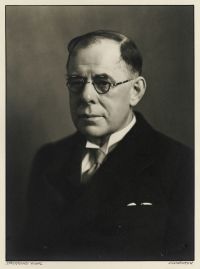 A. E. Taylor,
Elements of metaphysics
(1903)
A. E. Taylor,
Elements of metaphysics
(1903)
“ This unending repetition of the synthesis of perceived spaces seems to be the foundation of what appears in theory as the Infinity of Space.Precisely similar is the synthesis by which we mentally construct a single time system for the events of the physical order. Now means for me the content which occupies the centre of attentive interest. As attention is concentrated on the different stages in the realisation of an interest, this centre shifts; what was central becomes first marginal and then evanescent, what was marginal becomes central. ”
Th. Ribot, The evolution of general ideas (1899)
“ For the sake of clearness and precision, let us designate the primitive concrete data, the result of perception, as extension, and the concept, the result of abstraction, as space—properly so called.I. At the outset what is given us by intuition is extension under a concrete form. What first becomes known to us is not space but a limited and determined extension—what the child can hold in its hand, reach by a movement of its arms, later on the room which it crosses with uncertain steps ”
Alexander Campbell Fraser, Thomas Reid — Chapter VI (1898)
“ It seems to me as easy to contrive a machine which should compose a variety of epic poems and tragedies, as to contrive laws of motion by which unthinking particles of matter should coalesce into a variety of organised bodies.' He suggests that the organisation is the issue of constant and uniform divine activity. ”
Various, The Atlantic Monthly, Volume 13…
“ Because the room which they call a front-parlor is made expressly so that you never shall know. They sit in a back-room,—work, talk, read, perhaps. After the servant has let you in and opened a crack of the shutters, and while you sit waiting for them to change their dress and come in, you speculate as to what they may be doing. From some distant region, the laugh of a child, the song of a canary-bird, reaches you, and then a door claps hastily to. Do they love plants? ”
 Alfred North Whitehead,
The Concept of Nature
(1920)
Alfred North Whitehead,
The Concept of Nature
(1920)
“ But if space be absolute—namely, if it have a being independent of things in it—the course of the argument is hardly changed. For things in space must have a certain fundamental relation to space which we will call occupation. ”
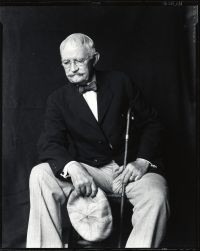 Henry Rankin Poore,
Pictorial Composition and the Critical Judgment of Pictures
Henry Rankin Poore,
Pictorial Composition and the Critical Judgment of Pictures
“ A pivotal space then will be found, a neutral ground in the farther stretch from which may be created so much attraction as to upend the foreground, or in the nether reach toward us there may be such attraction as to leave the distance without its weight in the convention of parts. The group with insufficient attraction back of it topples toward us, to be sustained within the harmonious circuit of the picture only by such items of attraction behind it as will recover a balance which their absence gave proof of. ”
