Megalith

Definition and stakes

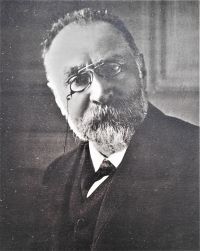
Portrait of Charles Seignobos Charles Seignobos,  History of Ancient Civilization

“ Their vases were poorly burned, turned by hand, and adorned with but few lines. Like the cave-men, they used knives and arrows of flint; but they made their axes of a very hard stone which they had learned to polish. This is why we call their epoch the Polished Stone Age. They are much later than the cave-men, for they know neither the mammoth nor the rhinoceros, but still are acquainted with the elk and the reindeer. [2]
Megalithic Monuments.—Megalith is the name given to a monument formed of enormous blocks of rough stone. Sometimes the rock is bare, sometimes covered with a mass of earth.
”

Source: Gutenberg

Walter Johnson,  Byways in British Archaeology

“ While feeling persuaded that our megalithic monuments were never alined with such nicety that the orientation can be expressed in seconds, one can still understand that they may have been set out with greater accuracy than is commonly supposed. When we recollect, too, that many of our megaliths had at first probably a sepulchral purpose, we shall see no sufficient reason why they should not have been planned, at any rate, as skilfully as funeral earthworks. ”
Source: Gutenberg

T. Eric Peet,  Rough Stone Monuments and Their Builders

“ We have, in fact, no evidence on which to judge the question. Perhaps it is least unreasonable to suppose that the idea of the rock-tomb was brought into the megalithic area by the same people who introduced the megalithic monuments, and did not result from contact with the Eastern [157] Mediterranean. Similarly we ought perhaps to disclaim any direct connection between the corridor-tombs of the megalithic area and the great tholoi of Crete and the Greek mainland. ”
Source: Gutenberg

Get perspective with Kwize: daily news enlightened by great literature