“ When you find yourself suddenly precipitated into an abyss of moral suffering, after the terrible shock which stuns, which bruises even the most delicate fibres of your heart, that which is, above all, most frightful, is this sudden night, black and profound, of the soul, which does not permit one to see even the thousand wounds by which it is torn. ”
Moral suffering
Definition and stakes
The theme of “moral suffering” has been addressed by authors such as Friedrich Nietzsche, Arthur Schopenhauer, Émile Zola, Giacomo Leopardi and James Allen. It is often associated with terms like vice, pain, misery, soul and poverty.
Quotes about “moral suffering”
 B. H. Roberts,
The Seventy's Course in Theology…
“ When they fall below their ideals, when they consciously violate their rule of righteousness, it is followed by suffering, by sense of shame, by sorrow; and, indeed, the great bulk of the sorrows of this world spring from sin, the transgression of the moral law, and there is no escaping its penalty—suffering. ”
Cora May Williams, A Review of the Systems of Ethics Founded on the Theory of Evolution
“ All pain, the sight of which is endured without the taking of active measures for its alleviation, vitiates the sympathies; and, on the other hand, a certain hardness of heart is necessary to the endurance of mere existence, at the present time; a certain selfishness to the enjoyment even of a life spent in moral effort; for perfect sympathy would make life unbearable in sight and hearing of the suffering of many of our fellow-creatures. ”
John Abercrombie, The Philosophy of the Moral Feelings
“ For the man who exercises it realizes to himself the feelings of poverty,—the agonies of bereavement, the impressions of the bed of death;—and thus, without the pain of suffering, he may reap a portion of those important moral benefits which suffering is calculated to yield. ”
“ But mere plodding toil and mere intellectual preoccupation do not suffice, the discharge of the moral duties in the light of the moral perfection to which they point alone can really sustain and console us.In alleviating the misery of{100} others our own misery will be alleviated; in healing there is cure.When we endure some heavy affliction we are apt to say, “Oh, there is no suffering like my suffering. There is no one who bears such a load as mine.” This is a mistake—the guilty suffer more than the afflicted. Better a thousand times death than shame. ”
Various, The Arena, Volume 4, No. 24, November…
“ In my former paper I spoke of suffering where the wretchedness sprang from sin at the head of the social fountain. But I now wish to notice especially misery, degradation, and moral eclipse, resulting directly from giant evils, which are tolerated in all our large cities, though known to every thoughtful person, from judge to artisan, from clergyman to sexton, from editor to reporter, from wealthy matron to the humble sewing woman. Every earnest thinker knows that there are evils feeding the furnaces of physical, mental, and moral destruction ”
 Johann Wolfgang von Goethe,
The Sorrows of Young Werther
(1774)
“ The suffering may be moral or physical; and in my opinion it is just as absurd to call a man a coward who destroys himself, as to call a man a coward who dies of a malignant fever." ”
 Leslie Stephen,
The English Utilitarians, Volume 2…
“ If I know that any conduct will produce more happiness than misery that is a moral reason for adopting it. A 'moral sense' which should be radically inconsistent with that criterion, which should order me to inflict suffering as suffering, or without some ulterior reason, would be certainly at fault. ”
 Albert Taylor Bledsoe,
A Theodicy, or, Vindication of the Divine Glory
“ Secondly, the sufferings of the innocent serve as a foil to set off and enhance the blessedness of eternity. They are but a short and discordant prelude to an everlasting harmony. Thirdly, difficulties and trials, temptations and wants, are indispensable to the rise of moral good in the soul of the innocent; for if there were no temptation to wrong, there could be no merit in obedience, and no virtue in the world. Suffering is, then, essential to the moral discipline and improvement of mankind. ”
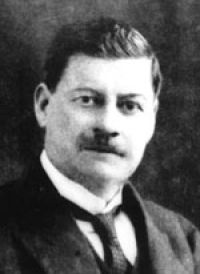 Charles Eliot,
Hinduism and Buddhism, An Historical Sketch…
“ The cause of evil or suffering is removed by purifying the heart and by following the moral law which sets high value on sympathy and social duties, but an equally high value on the cultivation of individual character. ”
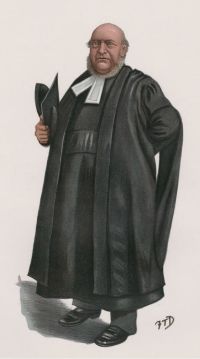 Thomas Fowler,
Progressive Morality: An Essay in Ethics
“ Especially is this the case with the pleasures and pains attendant on the exercise of the moral feelings. A man who is tormented with the recollection of having committed a great crime will, as the phrase goes, 'take pleasure in nothing;' while, similarly, a man who is enjoying the retrospect of having done his duty, in some important crisis, will care little for obloquy or even for the infliction of physical suffering. ”
Regina Maria Roche, The Children of the Abbey: A Tale
“ Had I attended to the admonitions of wisdom and experience, I should have checked my wanderings from prudence, and preserved my happiness from being sacrificed at the shrine of vanity; then, instead of being a solitary in the world, I might have had my little fireside enlivened by the partner of my heart, and, perhaps, my children’s children sporting around; but suffering is the proper tax we pay for folly; the frailty of human nature, the prevalence of example, the allurements of the world, are mentioned by many as extenuations for misconduct. ”
 Walter Pater,
Marius the Epicurean — Volume 2
“ And I had come across the incident just when it would figure to me as the very symbol of our poor humanity, in its capacities for pain, its wretched accidents, and those imperfect sympathies, which can never quite identify us with one another; the very power of utterance and appeal to others seeming to fail us, in proportion as our sorrows come home to ourselves, are really our own. We are constructed for suffering! ”
 Charles Dickens,
A Tale of Two Cities
(1859)
“ Physical diseases, engendered in the vices and neglects of men, will seize on victims of all degrees; and the frightful moral disorder, born of unspeakable suffering, intolerable oppression, and heartless indifference, smote equally without distinction. ”
Robert F. Horton, The Expositor's Bible: The Book of Proverbs
“ Who is it that lives in an atmosphere of perpetual strife and loud quarrellings? "Whose is groaning?"—that sustained sigh of desponding and irremediable misery. "Whose are causeless wounds?"—not only the bruise and the gash which result from furious sparrings or unforeseen falls, but also wounds of the spirit, self-loathing, and shame, the thought of what might have been, the realization of a ruined home, and of suffering wife and little ones, and the conviction that the evil can now never be undone. ”
William Sidney Walker, Gustavus Vasa
“ Thou hast not yet the height of woe attain'd, Nor every cup of human sorrow drain'd.⎧ Thy path of suffering has been trod alone;⎨ No following friend, no consort, hast thou known,⎩ To double all thy sorrows with their own: No artful foe has doom'd thy humble name To public enmity, or public shame; [Pg 180] And last, and worst of all, the pangs of woe Hell can inflict, or vengeful Heaven bestow, Relentless Conscience has not shed on thee Her poison'd darts,—her stings of misery! Thy virtue shone thro' the dim vale of earth, And toils and dangers proved thy blameless worth. ”
 Marah Ellis Ryan,
Told in the Hills: A Novel
“ I tell you the greater part of the suffering in the world is caused not by wicked intents and hard hearts, but by the careless desire to shirk unpleasant facts, and the soft-heartedness that will assuage momentary pain at the price of making a life-long cripple, either mentally, morally, or physically. ”
Lady Sarah Davison Nicolas, The cairn (1846)
“ Temper.When moralists, religionists, and philosophers of all sorts, set about reasoning on the phenomena of the world we live in, and contemplating the mass of human misery to be found therein, trace it to fearful crimes, they overlook one little cause of suffering which blights more happiness, and neutralises a greater portion of God’s bounteous favours, than all the heinous enormities of our depraved race put together. This hateful, stealthy, heart-destroying blight is often found, where every thing like atrocious vice is utterly unknown, and where many of the highest virtues flourish. ”
 Carl Schurz,
Harper's Weekly Editorials by Carl Schurz…
“ To be sure, there is much poverty, distress, and suffering in this world — more than enough to move a good heart to pity. All the more should we be careful to base our schemes of relief upon a correct diagnosis of the evil. ”
 George Eliot,
George Eliot's Life, as Related in Her Letters and Journals…
“ My own experience and development deepen every day my conviction that our moral progress may be measured by the degree in which we sympathize with individual suffering and individual joy. ”
Milan C. Edson, Solaris Farm: A Story of the Twentieth Century
“ All conditions of life which promote right living, ethical culture and moral growth, nourish and call forth emotions of truth and honesty, pure pleasure, adoration, worship, hope, affection, love and all the higher and nobler characteristics, build up life and increase its capacity for happiness. Through the action of an equally inexorable and unswerving law, the misery and crime which poverty breeds, with its bitterness of hate, grief and despair, and all the train of other evil emotions engendered thereby, are poisonous in their nature; they tear down and destroy life. ”
 Friedrich Wilhelm Nietzsche,
Beyond Good and Evil
“ The discipline of suffering, of GREAT suffering—know ye not that it is only THIS discipline that has produced all the elevations of humanity hitherto? The tension of soul in misfortune which communicates to it its energy, its shuddering in view of rack and ruin, its inventiveness and bravery in undergoing, enduring, interpreting, and exploiting misfortune, and whatever depth, mystery, disguise, spirit, artifice, or greatness has been bestowed upon the soul—has it not been bestowed through suffering, through the discipline of great suffering? ”
 William Mackintire Salter,
Nietzsche the thinker
(1917)
“ It was really a right to cruelty: only to one with cruel instincts does suffering yield a pleasure equal or superior to that of a material compensation—to such an one, indeed, suffering is the equivalent par excellence. ”
Bertha Thomas, George Sand (1889)
“ But the despair and disgust of life, to which both these and her private letters give such uncompromising and eloquent expression, indubitably reflect her feelings at this moral crisis—the feelings of one who having openly braved the laws of society, to become henceforward a law unto herself, recognises that she has only found her way to fresh sources of misery. ”
James Anson Farrer, Military Manners and Customs
“ For if our regard for the sufferings of others is proportioned to our regard for our own sufferings, inasmuch as our self-love is the foundation and measure of our powers of sympathy, a man’s disregard for the sufferings of others—in other words his cruelty—is likely to be the exact reflection of his disregard for suffering in his own person, or, in other words, of his physical courage. ”
 Frederick Douglass,
My Bondage and My Freedom
(1855)
“ Their eyes are forever open to human misery. They walk amid desecrated affections, insulted virtue, and blasted hopes. They have grown intimate with vice and blood; they gloat over the wildest illustrations of their soul-damning and earth-polluting business, and are moral pests. ”
 Dorothy Canfield Fisher,
The home-maker
(1924)
“ No circle in any hell would have contained more concentrated suffering than was crowded into his every conscious moment—horrible, brute, physical suffering, tearing at every nerve, suffering that degraded him, that left him no humanity. ”
 Jonathan Edwards,
Sinners in the Hands of an Angry God
“ How dreadful is the state of those who are daily and hourly in danger of this great wrath and infinite misery! But this is the dismal case of every soul that has not been born again, however moral and strict, sober and religious, they may otherwise be. ”
 Frances Wright,
A few days in Athens
(1850)
“ Fatal impressions, vicious example, operating on the plastic frame of childhood, may have perverted all the fair gifts of nature, may have distorted the tender plant from the seedling, and crushed all the blossoms of virtue in the germ. Say, shall we not compassionate the moral disease of our brother, and try our skill to restore him to health? But is the evil beyond cure? Is the mind strained into changeless deformity, and the heart corrupted in the core? ”
 Arthur Schopenhauer,
The World as Will and Idea (Vol…
“ The sufferings which in the vehemence and ardour of his will he inflicts upon others are the measure of the suffering, the experience of which in his own person cannot break his will, and plainly lead it to the denial of itself. ”
S. H. Hammond, Wild Northern Scenes; Or, Sporting Adventures with the Rifle and the Rod
“ When and where the career of these germs of being, starting from points so wide asunder, are to meet, and how the balances of good and evil, of suffering and enjoyment of sinning and retribution, are to be adjusted at last? ”
 Don Marquis,
Hermione and her little group of serious thinkers
(1916)
“ And nothing but opposition, opposition, opposition now! Only we advanced thinkers know what it is to suffer! To go through fire for our ideals! And what is physical suffering by the side of spiritual suffering? ”
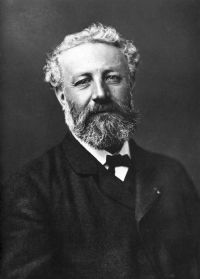 Jules Verne,
The Survivors of the Chancellor…
(1875)
“ I must be pardoned for giving these distressing details; but how otherwise can I depict the misery, moral and physical, which we are enduring? And with it all, I dare not venture to hope that we have reached the climax of our sufferings. ”
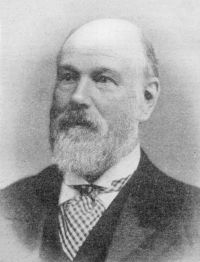 Philip Henry Pye-Smith,
Popular Science Monthly
(1880)
“ To many unaffectedly compassionate hearts there is a peculiar pang in thinking of suffering which is deliberately inflicted, with only the justification of duty, instead of the excuse of ignorance or passion. ”
 Haldane MacFall,
The Masterfolk
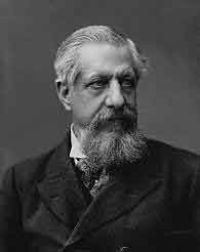
“ Through a great and profound pity for the suffering and the weak and the losers in the brutal struggle for life, one could oppose one’s self to the cruel order of things. In this sympathy and pity alone could we raise a foundation of ethics that could demand justice against the design—which opposed itself to the triumphant brutality of the life’s struggle. ”
 Sir Edwin Arnold,
The Light of Asia
“ The body by the mind being thus stripped For glory of much suffering, and the bliss Which they shall win—say holy books—whose woe Shames gods that send us woe, and makes men gods Stronger to suffer than hell is to harm. Whom sadly eyeing spake our Lord to one, Chief of the woe-begones: "Much-suffering sir These many moons I dwell upon the hill— Who am a seeker of the Truth—and see My brothers here, and thee, so piteously Self-anguished; wherefore add ye ills to life Which is so evil?" ”
 Albert Parker Fitch,
Preaching and Paganism
“ In the moment when sympathy takes the bitterness out of another's sorrow and my suffering breaks the captivity of my neighbor's sin—then, when because "together," with sinner and sufferer, we come out into the quiet land of freedom and of peace, we perceive how the very heart of God, upon which there we know we rest, may be found in the vicarious suffering and sacrifice called forth by the sorrow and the evil of mankind. ”
 Émile Durkheim,
The Elementary Forms of the Religious Life
“ This is how curing or preventive virtues come to be attributed to the movements which one makes, to the cries uttered, to the blood shed and to the wounds inflicted upon one's self or others; and as these different tortures necessarily make one suffer, suffering by itself is finally regarded as a means of conjuring evil or curing sickness. ”
 Catharine Esther Beecher,
A Treatise on Domestic Economy…
(1845)
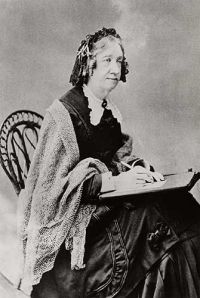
“ Persons who are called to constant and protracted suffering and privation, are forced to subdue and conceal emotion; for the free expression of it would double their own suffering, and increase the sufferings of others. ”
 Fanny Kemble,
Records of Later Life
“ It may be more difficult to formulate that species of anguish in words, and it may seem a less positive and substantial grief than some others, but the plagues of the soul are real tortures, and I set few sufferings above them, few difficulties and few pains beyond those that have their source not in the outward dispensation of events, but in the inward conditions of our physical and moral constitutions. ”
Matthew Henry, Matthew Henry's Commentary on the Whole Bible… (1700s)
“ It is not simply the suffering, but the cause, and not only the cause, but the spirit, which makes the martyr. A man may suffer in a bad cause, and then he suffers justly; or in a good cause, but with a wrong mind, and then his sufferings lose their value. ”
 Émile Zola,
The Three Cities Trilogy: Lourdes…
“ How evil life must be if it were indeed necessary that such imploring cries, such cries of physical and moral wretchedness, should ever and ever ascend to Heaven! ”
Harper's New Monthly Magazine, February…
“ There we see human nature in all its unvailed and degraded nakedness—the vile passions, the brutal coarseness, the corroding malice, the undisguised licentiousness. Oh, ye who look on and abhor, who pass like the Pharisee, and condemn the wretch by the wayside, pause, and look within: education, circumstances, have refined and elevated your thoughts and actions; but blessed are those who shall never know by fearful experience how want and degradation can blunt the finest sympathies, and change, nay, brutalize the moral being. ”
Related terms
Authors who wrote about “moral suffering”
 Friedrich NietzscheArthur SchopenhauerÉmile Zola
 Giacomo Leopardi
 James AllenCatharine Esther Beecher
 Romain Rolland
 Miguel de Unamuno
 Maurice MaeterlinckWilliam Mackintire Salter
 Fyodor DostoyevskyFriedrich Wilhelm NietzscheBaron Thomas Babington Macaulay MacaulayGeorge Eliot
 Felix Adler
 W. Somerset MaughamWalter Pater
 Anna Katharine Green
 Eugène SueVarious
