“ In giving instruction on moral duty, the subject should be taken up generally, in reference to imaginary cases, or cases which are unknown to most of the scholars. If this is done, the pupils feel that the object of bringing up the subject is to do good; whereas, if questions of moral duty are only brought up, from time to time, when some prevailing or accidental fault in school calls for it, the feeling will be that the teacher is only endeavoring to remove from his own path a source of inconvenience and trouble. ”
Moral teacher
Definition and stakes
The theme of “moral teacher” has been addressed by authors such as Charles A. McMurry, George D. Strayer, Johann Friedrich Herbart, Felix Adler and G. A. Johnston. It is often associated with terms like education, pupil, morality, conscience and ethics.
Quotes about “moral teacher”
Charles A. McMurry, Special Method in the Reading of Complete English Classics
“ It is in literature, also, and in those lives and scenes from history which literary artists have worked up, that the teacher can best develop his own moral ideals and strengthen the groundwork of his own moral character. The stream will not rise above its source, and a teacher's moral influence in a school will not reach above the inspirations from high sources which he himself has felt. Those teachers who have devoted themselves solely to the mastery of the texts they teach, who have read little from our best writers, are drawing upon a slender capital of moral resource. ”
 John Hamilton Moore,
The Young Gentleman and Lady's Monitor…
John Hamilton Moore,
The Young Gentleman and Lady's Monitor…
“ To walk with circumspection and steadiness in the right path, at an equal distance between the extremes of error, ought to be the constant endeavour of every reasonable being; nor can I think those teachers of moral wisdom much to be honoured as benefactors to mankind, who are always enlarging upon the difficulty of our duties, and providing rather excuses for vice, than incentives to virtue. ”
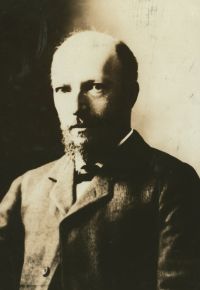 Felix Adler,
The Moral Instruction of Children
Felix Adler,
The Moral Instruction of Children
“ It is in the power of the teacher to train the moral judgment and to increase the moral insight of his pupils by leading them to enter into the motives, and to weigh the right and wrong of the actions which history reports. He will also find many an occasion to warn against being dazzled by brilliant success to such a degree as to condone the moral turpitude by which it is often bought. ”
“ In one of these faculties we must be inscribed; the searching examination of one of these teachers we must pass before we can obtain our degree as Learned in the Art of Life.Of most persons it may, perhaps, be said, without exaggeration, that they have a feeling of duty rather than a knowledge of it. When a certain situation presents itself they{50} tend to act in a certain way, but they cannot clearly state the principle or rule which determines their action. The business of the moral teacher is to clarify, to classify, and to enrich the content of the conscience. ”
Paul Janet, Elements of Morals
“ Can one instruct without accustoming young minds to work, to obedience, to correct habits of thought; without putting into their hands good books; without giving them good examples? It is most true that one does not form men with pure and abstract science alone,—it is necessary to add the letters, history, morality, religion. The teacher, besides, should study the character of his pupils, should, through work and moral and physical exercises, put down presumption, correct unmanliness, combat selfishness, anticipate or restrain the passions. ”
 C. S. Lewis,
Mere Christianity
(1952)
C. S. Lewis,
Mere Christianity
(1952)
“ Really great moral teachers never do introduce new moralities: it is quacks and cranks who do that. As Dr Johnson said, ‘People need to be reminded more often than they need to be instructed.’ The real job of every moral teacher is to keep on bringing us back, time after time, to the old simple principles which we are all so anxious not to see ”
C. A. Row, The Supernatural in the New Testament…
“ A moral teacher can only appeal to that in man which we variously designate as conscience, moral sense, or the principles which are the foundation of our moral perceptions. The fact that many men through a long course of evil get morally blinded does not alter the case. ”
Charles A. McMurry, The Elements of General Method…
“ The ability of the school to affect moral character is not limited to the personal influence of the teacher and to the discipline and daily conduct of the children; but instruction itself, by illustrating and implanting moral ideas, and by closely relating all other kinds of knowledge to the historical series, can powerfully affect moral tendency and strength. ”
P. V. N. Myers, History as past ethics; an introduction to the history of morals (1913)
“ And it was her happy lot to become the teacher to mankind of the truth of an alone and righteous God, and to be the creator of a moral ideal which is to-day the highest ethical standard of all the races of the Western world, and the most vital moral force at work in universal history. ”
 James Hutchins Baker,
Education and life
(1900)
James Hutchins Baker,
Education and life
(1900)
“ If the subject matter and the instruction are adapted to the pupil’s need, if conceptions are clearly grasped, if healthy interest is aroused and the attention turns spontaneously to the work, the pupil’s growth will be in every way beneficent. One who regards the moral development of his pupils will conscientiously study the method of his teaching, and learn whether the source of neglect and rebellion lies there.The personality of the teacher is one of the most important factors in ethical training. It is ethics teaching by example; it is the living embodiment of conduct. ”
Charles A. McMurry, The Elements of General Method…
“ Their ever-recurring emphatic refrain has been "the example of the teacher," and, to tell the truth, there is no better means of instilling moral ideas than the presence and inspiration of a high-toned teacher. We know, however, that teachers need moral stimulus and encouragement as much as anybody. It will not do to suppose that they have reached the pinnacle of moral excellence and can stand as all-sufficient exemplars to children. The teacher himself must have food as well as the children. ”
Charles A. McMurry, Special Method in the Reading of Complete English Classics
“ We need not make premature moralists of children, or teach them to pass easy or flippant moral judgments upon others. But we wish their interest in these characters to be deep and genuine, their eyes wide open to the truths of life, and their intuitive moral judg [Pg 130] ments to ripen in a healthy and hearty social environment. To this end the teacher will need to use all his skill in questioning, in suggestion, in frank and candid discussion. In short, he needs just those qualities which a first-class teacher needs in any field of study. ”
Porter Lander MacClintock, Literature in the Elementary School
“ From these facts the wise teacher takes his hints and builds his plans. He will give these younger children very little of what is known in mature classes as character-study—which so easily in these same older classes, degenerates into gossip and the merely idle or pernicious attributing of motives. He will help the child, on the whole, to judge from his deeds whether a man is good or bad, helpful or hindering. But no deed is all mere activity; back of it lie motives and passions, and beyond it lie moral and social results. ”
G. A. Johnston, An Introduction to Ethics, for Training Colleges… (1915)
“ But the most potent factor in all moral education has still to be mentioned. It is the personality of the teacher. The teacher can scarcely hope to exert an influence on the hidden springs of conduct of his pupils, unless he possesses the mysterious power of personality. ”
Charles A. McMurry, Special Method in the Reading of Complete English Classics
“ Or is he to consider it the greatest opportunity of his life to prudently guide young people to the correct perception of what is beautiful and true in human life? Why, indeed, should he suppress his own enthusiasm for these ideals? Why should not his personality be free to express itself in matters of moral concern, as well as in intellectual and æsthetic judgments? So long as the teacher throws the pupils back upon their own self-activity and thinking power, there need be no danger of moral pedantry or of moral dyspepsia. ”
 Dorothea Beale,
Work and Play in Girls' Schools
Dorothea Beale,
Work and Play in Girls' Schools
“ A right judgment and presence of mind.The moral temperament of each child is an even more complex study than the mental peculiarities; praise, for instance, is a tonic for one and poison for another. The teacher [380] must have presence of mind to criticise on the spur of the moment, with due regard to the child’s moral digestion, to the abstract question of justice in the class as a whole, and to maintaining a high, and yet not depressing, standard of work. One child requires to be repressed and one to be encouraged to do itself justice. ”
Georg von Gitzycki, Popular Science Monthly (1885)
“ We may apparently, however, presume that that which is practically the most wholesome will endure in the character, provided the teacher does not trust too much to the innate moral instincts, but recognizes that, while his child has the qualities requisite to his becoming a moral man under favorable conditions, this is not sure to be the case if those conditions are wanting, and therefore exercises extreme care in moral instruction. ”
“ To illustrate this, let us suppose two teachers wishing to explain to their pupils the same subject, and taking the following opposite methods of doing it. One, at the close of school, addresses his charge as follows:"The moral character of any action, that is, whether it is right or wrong, depends upon the motives with which it is performed. Men look only at the outward conduct, but God looks at the heart. In order, now, that any action should be pleasing to God, it is necessary it should be performed from the motive of a desire to please him. ”
Felix Adler,
The Moral Instruction of Children
“ The study of history can thus be made the means of enlightening the conscience as well as of awakening generous aspirations—but, let me hasten to add, only in the hands of a teacher who is himself morally mature, and fully imbued with the responsibilities of his task. ”
G. A. Johnston, An Introduction to Ethics, for Training Colleges… (1915)
“ If the boy or young man is seriously troubled and anxious about this question, can ethics help him by suggesting any principles on which he may decide? There is no other moral matter on which advice and guidance is more frequently sought. The teacher finds that his boys are very ready to consult him on this question, and if he is conscientious he is often puzzled what advice to give, and what principles to suggest for the guidance of the boy. ”
Charlotte M. Mason, An Essay Towards a Philosophy of Education…
“ This education of the feelings, moral education, is too delicate and personal a matter for a teacher to undertake trusting to his own resources. Children are not to be fed morally like young pigeons with predigested food. ”
Felix Adler,
The Moral Instruction of Children
“ For if he be reverent, a truly pious soul, humble in his estimate of self, not valuing his petty schoolmaster's authority on its own account, but using it lovingly as an instrument for higher ends, he will be sure to communicate of his spirit to his pupils, and by that spirit will open their hearts, better than by any doctrinal teaching he could give, to the reception of the highest spiritual truths.By all these means—by the culture of the intellect, the taste, and the feelings, by his daily dealings with the young, in work and play—the teacher helps to create in them certain moral habits. ”
G. A. Johnston, An Introduction to Ethics, for Training Colleges… (1915)
“ If these are the only results moral instruction has to show, it stands self-condemned. French moral teaching is too artificial. It has no point of contact with the actual life of the child. Now, if the teacher knows his children, he can make the moral lesson really touch their lives. The pupils should be made to realise that the moral lesson is concerned not with abstract distinctions, but with the actual task of "fighting the good fight," in which they are all engaged. ”
George D. Strayer, A brief course in the teaching process (1911)
“ Many children come to school with bad habits and low ideals. The one thing that every teacher ought to realize as fundamental in moral training [147] is the fact that differences in children must be met by a corresponding difference of appeal on the part of the teacher. ”
Théophile Pascal, Reincarnation: A Study in Human Evolution
“ This mental action is so strong that it colours vividly, if not altogether, the morality of the little ones living beneath its influence, and even older children are still so sensitive to it that whole classes are seen to reflect the moral character of the teacher who has charge of them. ”
James Johonnot, Stories of Heroic Deeds for Boys and Girls
“ In selecting, preparing, and arranging the stories, care has been taken that the thought is such as to be readily understood, and that on the whole it tends to awaken the higher emotions. The moral lesson involved should be absorbed rather than learned, and the teacher should beware of destroying the value of any lesson by dealing out moral pap. ”
 Karl Rosenkranz,
Pedagogics as a System
Karl Rosenkranz,
Pedagogics as a System
“ Education must make it its first aim to awaken in the pupil a sensitiveness to spiritual and ethical distinctions which knows that nothing is in its own nature morally insignificant or indifferent, but shall recognize, even in things seemingly small, a universal human significance. But, yet, in relation to the highest interests of morality or the well-being of society, the pupil must be taught to subordinate without hesitation all that relates exclusively to his own personal comfort or welfare for the well-being of his fellow-men, or for moral rectitude. ”
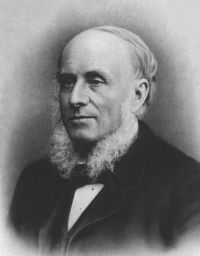 Alexander Bain,
Popular Science Monthly
(1877)
Alexander Bain,
Popular Science Monthly
(1877)
“ But when we approach the subject with an express view to moral culture, we must cross the field of emotional association in general by a new track. The newly-appointed professors of the theory of education are perhaps not yet fully aware that, when they venture upon the troubled arena of moral education, they will not be able to evade the long-standing question. What is the moral faculty? ”
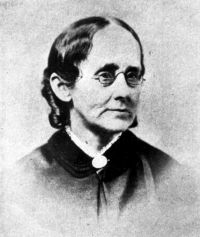 Mary Tyler Peabody Mann,
Guide to the Kindergarten and Intermediate Class…
Mary Tyler Peabody Mann,
Guide to the Kindergarten and Intermediate Class…
“ I am in the habit of speaking of God to children as the Giver of love and goodness, and of the power of thought and action, rather than as the Creator of the outward world, and have found that the tyrannizing unity of the soul's instinct did the rest.In what is called religious education, teachers often do great harm, with the best intentions, to finely strung moral organizations. Encouragement to good should altogether predominate over warning and fault-finding. ”
G. A. Johnston, An Introduction to Ethics, for Training Colleges… (1915)
“ Granted, then, that the ultimate purpose of the school is an ethical one, and that the teachers must themselves be men and women of character, it must now be asked, How is the school to perform this task of moral education? ”
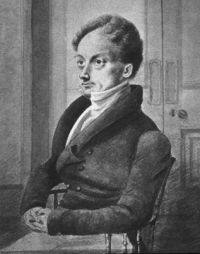 James Mill,
Analysis of the Phenomena of the Human Mind
James Mill,
Analysis of the Phenomena of the Human Mind
“ When Education is good, no point of morality will be reckoned of more importance than the distribution of Praise and Blame; no act will be considered more immoral than the misapplication of them. They are the great instruments we possess for ensuring moral acts on the part of our Fellow-creatures; and when we squander away, or prostitute those great causes of virtue, and thereby deprive them of a great part of their useful tendency, we do what in us lies to lessen the quantity of Virtue, and thence of Felicity, in the world. ”
James Gall, A Practical Enquiry into the Philosophy of Education
“ Let us not then attempt a better method than God has sanctioned; and in our intercourse with the young, let us not only deter them from the commission of evil by the fear of disfavour or the rod, but let us also incite them to virtue, by the hope of approbation and of a future reward.3. In our enquiry into the practical working of the moral sense, we found, not only that there were motives of action employed for encouraging the pupil to virtue, and for deterring him from vice; but we found also, that these motives referred chiefly to God, to a future judgment, and to eternity. ”
Felix Adler,
The Moral Instruction of Children
“ A vast amount of good, I am persuaded, can be done in this way by stimulating the moral nature, by enabling the scholar to detect the finer shades of right and wrong, helping him to trace temptation to its source, and erecting in his mind barriers against evil-doing, founded on a realizing sense of its consequences. ”
Charles A. McMurry, The Elements of General Method…
“ The moral element is largely present among educators as an instinct, but it ought to be evolved into a clear purpose with definite means of accomplishment. It is an open secret in fact, that while our public instruction is ostensibly secular, having nothing to do directly with religion or morals, there is nothing about which good teachers are more thoughtful and anxious than about the means of moral influence. ”
Related terms
Authors who wrote about “moral teacher”
Charles A. McMurryGeorge D. Strayer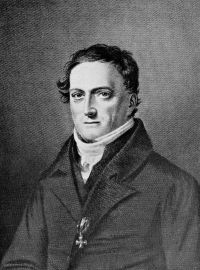 Johann Friedrich HerbartFelix AdlerG. A. JohnstonMary Tyler Peabody Mann
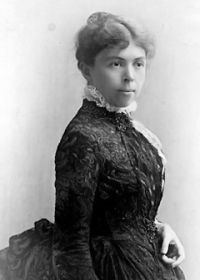 Alice Freeman PalmerDorothea Beale
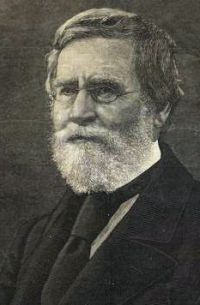 Jacob Abbott
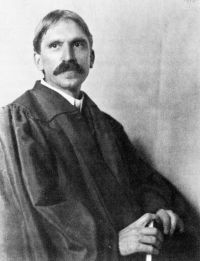 John DeweyCharlotte M. MasonMargaret SlatteryPorter Lander MacClintockJames Gall
 Naomi NorsworthyGeorg von GitzyckiGiovanni GentileKarl Rosenkranz
 Friedrich Nietzsche
 William Edward Hartpole Lecky
Johann Friedrich HerbartFelix AdlerG. A. JohnstonMary Tyler Peabody MannAlice Freeman PalmerDorothea BealeJacob AbbottJohn DeweyCharlotte M. MasonMargaret SlatteryPorter Lander MacClintockJames GallNaomi NorsworthyGeorg von GitzyckiGiovanni GentileKarl RosenkranzFriedrich NietzscheWilliam Edward Hartpole Lecky