Motor neuron

Definition and stakes

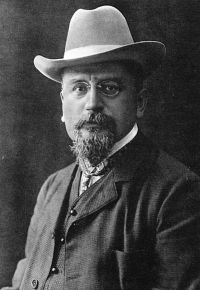
Portrait of Charles Scott Sherrington Charles Scott Sherrington,  1911 Encyclopædia Britannica (1911)

“ The motor cells of the extensor muscles, when preoccupied by cerebral influence, appear refractory. T. Ziehen has noted exaltation of the jerk to follow extirpation of a cortical centre.
Although the cell body or perikaryon of the neuron, with its contained nucleus, is essential for the maintenance of the life of the cell branches, it has become recognized that the actual process and function of “conduction” in many neurons can, and does, go on without the cell body being directly concerned in the conduction. Conduction in Neurons.
”
Source: Wikisource

Ontario. Department of Education,  Ontario Normal School Manuals: Science of Education

“ A neuron may range from 1/300 to 1/3000 of an inch in diameter, and there are several thousand millions of these cells in the nervous system. A developed neuron consists of a cell body with numerous prolongations in the form of white, thread-like fibres. The neuron with its outgoing fibres is the unit of the nervous system. Neurons are supposed to be of three classes, sensory to receive stimulations, motor to send out impulses to the muscles, and association to connect sensory and motor centres. ”
Source: Gutenberg

Portrait of Charles Scott Sherrington Charles Scott Sherrington,  1911 Encyclopædia Britannica (1911)

“ A prominent and practically important illustration of neural tonus is given by the skeletal muscles. These muscles exhibit a certain constant condition of slight contraction, which disappears on severance of the nerve that innervates the muscle. It is a muscular tonus of central source consequent on the continual glow of excitement in the spinal motor neuron, whose outgoing end plays upon the muscle cells, whose ingoing end is played upon by other neurons—spinal, cerebral and cerebellar. ”
Source: Wikisource

Get perspective with Kwize: daily news enlightened by great literature