“ On British charts the nautical mile scale is divided into tenths (that is, cables of 100 fathoms or 600 feet length) ; on the American charts into quarters and eighths. Where the scale covers more than one mile the fractional divisions are shown only for the left-hand mile and the zero of the scale is placed between this and the full mile scale, so that with dividers the full miles and fraction may readily be taken off. The nautical mile in the United States is taken to be the length of a minute of arc of a great circle on a sphere whose surface equals that of the earth ”
Nautical mile
Definition and stakes
Quotes about “nautical mile”
T. D. Hallam, The Spider Web: The Romance of a Flying-Boat War Flight
“ She carried six and a half hours' fuel at a cruising speed of sixty knots, her top speed being eighty. A knot is a speed of one nautical mile an hour, and a nautical mile is 800 feet longer than a statute or land mile, so that full out she could do ninety-two land miles an hour.The working party of twenty men gathered around Old '61 and rolled her out of the shed to the concrete area. Here they chocked her up under the bow and tail with trestles in order to prevent her standing on her nose when the engines were tested. Two engineers climbed up to each engine and started them. ”
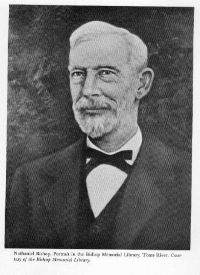
Nathaniel H. Bishop,
Voyage of the Paper Canoe
“ New England gives honest measure on the finger-posts along her highways. The traveller learns by well-earned experience the length of her miles; but in the wilderness of the south there is no standard of five thousand two hundred and eighty feet to a statute mile, and the watermen along the sea-coast are ignorant of the fact that one-sixtieth of a degree of latitude (about six thousand and eighty feet) is the geographical and nautical mile of the cartographer, as well as the "knot" of the sailor. ”
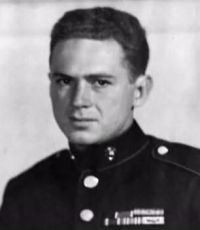
Robert Leckie,
Troubled Waters
“ If it were a racing hull, you might get eight and a half or maybe even nine knots out of it under ideal conditions. For practical purposes, you can figure eight or less. A knot, by the way, is a nautical mile, and it’s a little more than a regular mile. When you say eight knots, you mean eight nautical miles an hour.”“But that’s not fast!” Sandy objected. “You said that’s what a fast racing boat would do!”Jerry smiled. “Believe me, Sandy,” he said, “when your boat is heeling way over and your decks are awash and your sails are straining full of wind, it seems like an awful lot of speed! ”
French Ensor Chadwick,
Ocean Steamships
“ Such a thing could scarcely happen with a screw steamer; but the very bad steering qualities of certain naval ships is due to the fact that the inrush of water at the stern causes currents to flow with the ship, and therefore to produce quite different results with the rudder from those which generally obtain.12 A nautical mile is 6,080 feet, the land mile being 5,280 feet. The knot is a measure of rate of speed per hour. A vessel makes 20 knots when she is travelling at the rate of 20 nautical miles per hour. ”
Thomas Rainey, Ocean Steam Navigation and the Ocean Post
“ Hence, it appears, that for voyages of 1,000 miles and upwards, without re-coaling, the speed of ten nautical miles per hour would involve about double the cost per ton of eight miles, and may, therefore, be regarded as the extreme limit that can be generally entertained for the mercantile purpose of goods' conveyance ”
Arthur James Weise, The Discoveries of America to the Year 1525 (1883)
“ Pigafetta assigned 171⁄2 leagues to a degree. “The land-league is three miles,” he says, “the sea-league is four.” The modern nautical league is one-twentieth of a degree, or three equatorial miles or 3.45785 statute miles. A sea-mile, according to the United States standard, is equal to 1.152664 common statute or land-miles. One degree of longitude at the equator is equal to 69.160 land-miles. A French geographical league, according to Verrazzano’s reckoning, equals 21⁄5 land-miles of the United States standard. [378] Cape Fear is in 33° 48 ́ north latitude. ”
H. A. Wise, Captain Brand of the "Centipede"
“ But yet that slight graze never stopped us a hair’s weight, and, with additional sail, we rushed after our pilot, 219 mile after mile, through reef, ledge, breakers, inlets, and keys, now braced sharp up, and again going free, until at last the fellow, having run us a dance of full ten miles, once more emerged into the open water, close jammed on the wind, steering nearly due east. ”
St. George Rathborne, The House Boat Boys; Or, Drifting Down to the Sunny South
“ So it must always be in making a trip down these inland waters, where one is at the mercy of a capricious current save when a favorite of fortune chances to own a motor boat that scorns the usual drifting process, and speeds along at a ten-mile-an-hour clip, regardless of baffling head winds. ”
Reuben Gold Thwaites,
Historic Waterways—Six Hundred Miles of Canoeing Down the Rock…
“ It so happens then that from either side of an ugly whirling strip of doubting water, parallel with the shorter chute, the flood bursts forth,—to the left plunging impetuously over the apron to be dashed to vapor at its foot; to the right madly rushing into the narrow race, to turn the wheels of the carding-mill half a mile below. This narrow channel, under the bridge and next the shore, of which I have 63 spoken, is the only practicable entrance to the race. ”
William Wood, Flag and Fleet: How the British Navy Won the Freedom of the Seas
“ Of course a raft is a poor, slow, clumsy sort of ship; no ship at all, in fact. But when rafts were the only "ships" in the world there certainly were no trains and nothing like one of our good roads. The water has always had the same advantage over the land; for as horses, trails, carts, roads, and trains began to be used on land, so canoes, boats, sailing ships, and steamers began to be used on water. Anybody can prove the truth of the rule for himself by seeing how much easier it is to paddle a hundred pounds ten miles in a canoe than to carry the same weight one mile over a portage. ”
Kirk Munroe,
Campmates: A Story of the Plains
“ Ten miles! Why, my son, you must have imagined you were travelling on a four-wheeled steamboat all night, instead of an old water-logged prairie schooner. We are not, at this minute, quite a mile from the place where you started on your cruise. ”
Angus B. Reach, Claret and Olives, from the Garonne to the Rhone
“ The travelling by the Canal du Midi is a sleepy and monotonous business enough. Mile after mile, and league after league, the boat is gliding along between grassy or rushy banks, and rows of poplar, and sometimes of acacia trees, the monotonous tramp of the team upon the bank mingling with the endless gurgle of the waters beneath. The towing paths are generally very lifeless. ”
J. E. Heeres, The Part Borne by the Dutch in the Discovery of Australia 1606-1765
“ In the morning of the 5th we set sail again, with a W. wind; course held S.S.W. when we had run on for two miles we got change of weather with variable winds, in the evening we came to anchor in 13 fathom...On the 6th we set sail again before daybreak, the wind being West; course held S.S.W., sailed three miles; about noon, the wind blowing straight for the coast, we cast anchor in 51⁄2 fathom at a mile's distance from the coast, and, in conformity with the resolution, fetched a light anchor from the yacht Aernem. ”
“ On the other hand, on the steep beach, it is the general practice, in a boat of any size, to retain speed right on to the beach, and in the act of landing, whether under oars or sail, to turn the boat’s bow half round towards the direction from which the surf is running, so that she may be thrown on her broadside up the beach, when abundance of help is usually at hand to haul her as quickly as possible out of reach of the sea. In such situations, we believe, it is nowhere the practice to back a boat in stern foremost under oars, but to row in under full speed as above described. ”
William Dampier,
A Voyage to New Holland, Etc. in the Year 1699
“ In the road ships must ride in 30, 40, or 50 fathom water, not above half a mile from the shore at farthest: and if there are many ships they must ride close one by another. ”
Wilmer M. Ely, The Boy Chums Cruising in Florida Waters
“ Luckily, it's happened when it is calm and we are not such a great ways from shore."But although the distance to shore was not so very great, it did not take them long to realize that it was going to take them a long time to cover it. [208] The launch was deep and heavy in the water and with their rude, heavy, ungainly paddles they could only force her forward very slowly."It's going to be after dark when we reach the inlet," the captain said, anxiously. "I do not believe we are making over half a mile an hour." ”
A Cyclopaedia of Canadian Biography…
“ A high tide coming in at night submerges the canoe and cargo lying on the river shore; and for the following days so strong is the current that 15 miles have to be tramped on foot before New-Post comes in sight. To walk 15 miles is nothing in itself, but to walk 15 miles, up to the waist in cold water, piercing one’s feet with the sharp cornered pebbles of the river bottom, and to drag along a boat and its effects through the opposing stream, all this is something. ”
Royal Society, Miscellanea Curiosa, Vol. 3
“ Where it is narrowest, the distance seems to the eye to be scarce a mile over from one shore to another; where broadest, not much above a mile and a half, unless where it runs into the deep Bays, which by reason of their shallowness only harbour Boats. ”
Henry M. Plummer, The boy, me and the cat (1961)
“ Little engine going finely all day and in the calm of a beautiful spring evening we pushed down the little creek, entered the river, set our lights as darkness fell, and hauling along close to navy yard and the big battleships, we dropped anchor at 7 p.m. off the Norfolk Rowing Club. We are a total of 50 days from Miami with 31 sailing days for a distance, as crow flies, of about 1,000 miles. This means over 30 miles a day average, and, the size of boat considered, together with character of water passed through, makes it rather a remarkable record. ”
David Stevenson, Life of Robert Stevenson, Civil Engineer
“ The mizzen-sail, which was bent for the occasional purpose of making the vessel ride more easily to the tide, was immediately set, and the other sails were also hoisted in a short time, when, in no small consternation, we bore away about one mile to the south-westward of the former station, and there let go the best bower-anchor and cable, in twenty fathoms water, to ride until the swell of the sea should fall, when it might be practicable to grapple for the moorings, and find a better anchorage for the ship. ”
“ So far as one could judge from the deck, the island, seen through a telescope, was about a mile broad by three miles long, and, except for an excrescence in the center, entirely flat. Just abreast of the yacht, was a little inlet that seemed to offer a suitable landing place. We had taken our places in the boat and were about to shove off when the skipper called out to us to ask us to make our stay as short as possible, for that, should a heavy gale get up, he feared the anchor would not hold and we might be driven ashore. ”
Freiherr von E. Spiegel, The Adventures of the U-202: An Actual Narrative
“ It is terrifying to hear the shells bursting all around us in the water. It sounds like a triphammer against a steel plate, and closer and closer come the metallic crashes. The rascal is getting our range.There—the fifth shot—the entire boat trembles—then the deceitful daylight disappears from the conning tower window. The boat obeys the diving rudder and submerges into the sea.A reddish-yellow light shines all around us; the indicator of the manometer, which measures our depth, points to eight meters, nine meters, ten meters, twelve meters. ”
Russell Doubleday, A Year in a Yawl
“ Joseph’s Bay. “Eighty miles in one day is not bad going for a thirty-foot boat,” said Ransom, exultingly, after measuring the charts.ON THE GULF COAST.“GRACEFUL PALMS AND STURDY LIVE OAKS.” “Sure not,” chimed in Arthur. “If we could do that every day, the rest of the cruise would be an easy thing.”“Let’s see,” said Frank, counting on his fingers; “eighty miles a day for thirty days would be 2,400 miles; at that rate we have only got about two months’ more cruising, including stops.”“I hate to obstruct this beautiful two months’ trip, but think of yesterday and add a couple of months.” ”
Charles Mair,
Through the Mackenzie Basin
“ But to the harness. This is simply an adjustment of leather breast-straps for each man, tied to a very long tracking line, which, in turn, is tied to the bow of the boat. The trackers, once in it, walk off smartly along the bank, the men on board keeping the boats clear of it, and, on a fair path, with good water, make very good time. Indeed, the pull seems to give an impetus to the trackers as well as to the boat, so that a loose man has to lope to keep up with them. But on bad paths and bad water the speed is sadly pulled down, and, if rapids occur, sinks to the zero of a few miles a day. ”
J. Stephen Jeans, Waterways and Water Transport in Different Countries
“ The rate of speed on a canal is, of course, affected by the size as well as by the number of the locks, by the depth of the waterway, and by the tonnage of the craft that navigates it. On some English canals there is a lock to be passed through about every half mile, and the rate of speed is under a mile per hour. [290] On others, however, a speed of 3 miles may be kept up pretty well. ”
John H. Finley, The French in the Heart of America
“ The amount is estimated at one hundred and fifty-nine cubic miles annually—that is, it would fill annually a tank one hundred and fifty-nine miles long, a mile wide, and a mile high. With its tributaries it provides somewhat more than sixteen thousand miles of navigable water, more than any other system on the globe except the Amazon, and more than enough to reach from Paris to Lake Superior by way of Kamchatka and Alaska—about three-fourths of the way around the globe. ”
E. L. Kolb, Through the Grand Canyon from Wyoming to Mexico
“ The boat was to be turned upstream against an eight-mile current with big sand-waves, beginning about sixty feet from the shore, running in the middle of the river. If the engine ran, and the stern paddle-wheel turned, his reputation was saved. If she was powerful enough to go against the current, it was a triumph and we would start for the Gulf at once. ”
Reuben Gold Thwaites,
Historic Waterways—Six Hundred Miles of Canoeing Down the Rock…
“ We assured him that with these muddy swamp roads, and in our wet condition, nothing but absolute necessity would induce us to take a mile's tramp. The parley ended in our being directed to a small farm-house a quarter of a mile inland, where luckless travelers, belated on the dreary bottoms, were occasionally kept. Making the canoe fast for the night, we strung our baggage-packs upon the paddle which we carried between us, and set out along a devious way, through a driving mist which blackened the twilight into dusk, to find this place of public entertainment. ”
Henry David Thoreau,
The Maine Woods
“ In shooting the rapids, the boatman has this problem to solve: to choose a circuitous and safe course amid a thousand sunken rocks, scattered over a quarter or half a mile, at the same time that he is moving steadily on at the rate of fifteen miles an hour. ”
Thomas Fleming Day, On Yacht Sailing
“ The amount of sail that can be carried off the wind depends largely upon the form of the boat and the height and action of the sea. If the boat is of a good form for running and the water smooth you can carry all the sail her spars will stand and she can be steered under. But if she is a bad runner, a boat that roots—goes down by the head—or chokes up forward, she will do better with less sail. On all boats there is a time when they reach their maximum speed running and when [45] they will go along easier and better with less canvas. ”
The Independent, The Independent/Volume 58/Issue 2948 (1905)
“ As my airship plowed ahead the wind fluttered my coat violently, as on the deck of an Atlantic liner, tho in all other respects it is more like river navigation with a steam-boat. It is not at all like sail navigation and all talk about “tacking” is meaningless. Imagine the air current to be a river running 10 miles per hour. If you go against the current, making 20 miles per hour, your net progress will be but 10 miles per hour. ”
A. J. Kenealy, Boat Sailing in Fair Weather and Foul…
“ In cruising I often sailed Champlain under jib and mizzen alone, with the mainsail stowed and the boom crutched and tied snugly down amidships, especially in the night time when it was very dark and the weather foul. Under this scant canvas with a favorable wind she would sail along at a very fair rate of speed and even make good progress in beating up against quite a sea, and I need not say that it adds greatly to the pleasure of cruising in a small yacht with only one man for your crew to feel that you have your boat in a condition of perfect control. ”