Nerve cord

Definition and stakes

Frank E. Beddard,  The Cambridge natural history, Vol… (1901)

“ The nerve-ring lies at the base of a groove in the skin, which forms a kind of gutter round the mouth; the ventral nerve-cord is visible exteriorly as a light line which marks the ventral surface of the animal. In no place is the ring or cord differentiated in any way, and there cannot be said to be any brain or special sense-organs. Numerous nerves are given off from the ring to the pharynx and intestine, and from the cord to the body-wall. ”
Source: Gutenberg

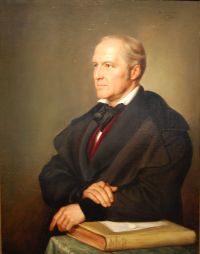
Portrait of Xavier Bichat Xavier Bichat,  General Anatomy, Applied to Physiology and Medicine…

“ Why is there not suffering produced, by the irritation of an insensible part that is at the side of a nerve, or even connected with it, whilst the pain is very acute in an inflamed part, though it is at a distance from every nervous cord? Would the nerves then have also, a sphere of activity for motion? But why should the contiguity of the nerve never be sufficient to produce it in the muscles? ”
Source: Gutenberg

Frank E. Beddard,  The Cambridge natural history, Vol… (1901)

“ The nervous system consists of a well-defined circumoesophageal ring with two dorsal swellings, and, arising from this, a median ventral cord which runs the whole length of the body. The cord consists of three longitudinal strands with ganglionic cells below them; the latter, though they lie within the muscle layer, maintain a connexion with the hypodermis. Behind, the nerve-cord splits in the male, one half passing into each caudal fork. In the adult a pair of black eyes can be detected on the head; the only other sense organs are the tactile bristles mentioned above. ”
Source: Gutenberg

Get perspective with Kwize: daily news enlightened by great literature