Nerve fiber

Definition and stakes

Various,  Popular Science Monthly (1886)

“ Now, the nerve-fiber which conveys the energy of the sensation is a round thread of protoplasm which in all probability connects the nerve-ending with a sensory corpuscle in the spinal cord. These nerve fibers running in nerves are white, whereas, as you know, protoplasm is gray. They are white because each is insulated from its fellow by a white sheath of fatty substance, just as we protect telegraph-wires with coatings. It is not stretching analogy too far to say that nerve force may probably escape unless properly insulated. ”

Source: Wikisource

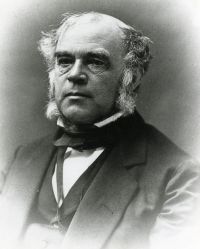
Portrait of Russell Henry Chittenden Russell Henry Chittenden,  Popular Science Monthly (1904)

“ When a stimulus is applied to a nerve, on the other hand, no such manifestations of chemical action are apparent. The muscle to which the nerve is attached contracts, the secreting cell pours forth the product of its activity, etc., but there is no noticeable change in the nerve itself, no recognizable liberation of heat, no change of reaction, no output of carbonic acid, that can be detected. Are we to conclude then that the axis cylinder of the nerve fiber acts simply as a conducting agent without itself undergoing any change? ”
Source: Wikisource

Popular Science Monthly (1881)

“ If we trace the course of the nerve within the muscle, we find that the separate fibers, which enter the muscle in a connected bundle, separate, run among the muscle-fibers, and spread throughout the muscle. It then appears that the single nerve-fibers divide, and this explains the fact that each muscle fiber is eventually provided with a nerve fiber—long nerve-fibers even with two—although the number of nerve-fibers which enter the muscle is generally much less than the number of the muscle-fibers which compose the muscle. ”
Source: Wikisource

Get perspective with Kwize: daily news enlightened by great literature