Nutritional deficiency

Definition and stakes

Eugene Christian,  Encyclopedia of Diet: A Treatise on the Food Question…

“ Modern knowledge now shows us that the most [410] prolific cause of what is commonly known as dis-ease is but the interference with cell activities, either by the deficiency or by the excess of nutritive substances, or by the presence of irritating and disturbing poisons. This condition may be caused by an unbalanced diet containing too much of certain nutritive elements, or too little of others, causing surfeiting on the one hand and starvation on the other. ”

Source: Gutenberg

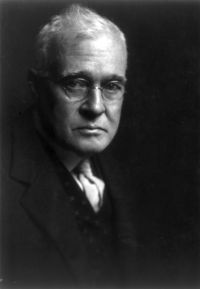
Portrait of Andrew Combe Andrew Combe,  The physiology of digestion considered with relation to the principles of dietetics… (1836)

“ No matter whether the imperfect chyle springs from deficiency or excess, from too weak or too strong food, from constitutional debility or the inroad of disease,—imperfect nutrition is its invariable consequence, and that cannot happen without exposing the system to morbid influences in a greater or less degree, according to the nature of the constitution and other concomitant circumstances. ”
Source: Gutenberg

Dr. Isabelle A. Moser with Steve Solomon,  How and When to Be Your Own Doctor (August, 2003 [Etext# 4343])

“ Many old people live on extremely deficient diets comprised largely of devitalized starches, sugars, and fats, partly because many do not have good enough teeth to chew vegetables and other high roughage foods, and they do not have the energy it takes to prepare more nourishing foods. Virtually all old people have deficiency diseases. As vital force inevitably declines with age, the quantity and quality of digestive enzymes decreases, then the ability to breakdown and extract soluble nutrients from food is diminished, frequently leading to serious deficiencies. ”
Source: Gutenberg

Get perspective with Kwize: daily news enlightened by great literature