Okra

Definition and stakes

Woman's Institute of Domestic Arts and Sciences,  Woman's Institute Library of Cookery…

“ Fig. 9 shows okra pods attached to the herb of which they are a part. Although okra originated in Africa, it is for the most part grown in the southern section of the United States. However, canned okra may be obtained almost anywhere. Okra is low in food value, being only slightly higher than cabbage and most of the greens; nevertheless, it is liked by many persons. It is of a mucilaginous, or gummy, consistency, and if it is not properly cooked it becomes very slimy and is then decidedly unpleasant. Because of its gummy nature, it helps to thicken any dish to which it is added. ”
Source: Gutenberg

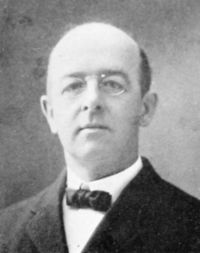
Portrait of William John Hopkins William John Hopkins,  The clammer and the submarine

“ So I fussed around among the peas, and planted more corn and more beans, and more melons, and a row of chard, and two rows of okra, and some other things. I often think that the place for tall green okra is the [Pg 65] flower garden. The blossoms are beautiful, delicate things, more beautiful than most of the hollyhocks. And now and then I stopped my planting—a man has to rest his back—and I leaned on my hoe or my rake or whatever I happened to have in my hand, and I thought my thoughts. ”
Source: Gutenberg

Anonymous,  The Vegetable Garden: What, When…

“ Cultivation for Seed.—If okra is to be grown for seed alone, only one variety should be planted, or if more than one variety is grown each should be separated from the other by at least one-fourth mile to prevent mixing. When several varieties of okra are grown near each other no seed should be saved except that produced by the method of bagging and hand pollination. To secure seed in this way is a rather simple matter when only a small quantity is required, as the pods formed on a single day when the plants are at their best will produce enough seed. ”
Source: Gutenberg

Get perspective with Kwize: daily news enlightened by great literature