Organicism

Definition and stakes

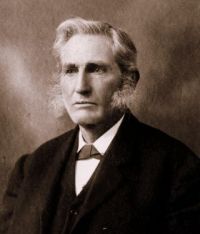
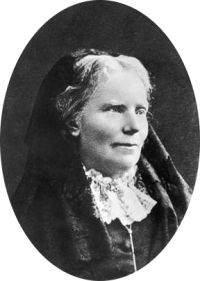
Portrait of Philip Henry Gosse Philip Henry Gosse,  Omphalos: An Attempt to Untie the Geological Knot

“ Perhaps some one will say, "All this might be tenable, supposing the world were an organism. Your argument goes to show that organic essences in every stage of their existence present proofs of pre-existence; but what analogy is there between the lifeless inorganic globe (in which evidences of past processes are apparent, independent of the fossil organisms) , and a living organic being,—plant or animal?"
I answer, The point in the economy of the organic creatures, on which their prochronism rests, is not the organic, but the circular condition of their being.
”
Source: Gutenberg

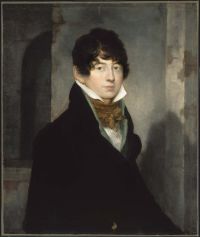
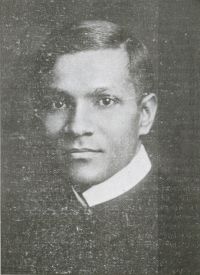
Portrait of Benoy Kumar Sarkar Benoy Kumar Sarkar,  The Science of History and the Hope of Mankind (1912)

“ The operation of the manifold forces of nature, the attempts of each organism to utihse the environment according to its own needs, and the modification of its organs through the assimilation of the surrounding substances—all contribute their quota to its special growth and development. The life and individuality of each single organism are controlled and influenced by the sum-total of all those processes and products of Nature that arise out of the needs of every other organism for growth and development. ”
Source: Wikisource

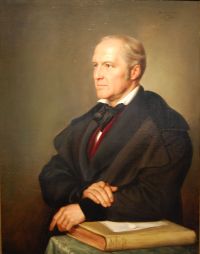
Portrait of Lester Frank Ward Lester Frank Ward,  Popular Science Monthly (1877)

“ Organic being, as such, is the final term to which the generalization must be carried before the true scope of organic evolution can be adequately grasped by the mind. Individuals perish and are decomposed; species become extinct; genera, families, and whole classes, are swept from the earth. The broadest divisions into which the organic kingdoms of Nature have been classified have each their periods of ascendency and decline. But organic evolution ever continues. Progress in organization is the constant result. ”
Source: Wikisource

Get perspective with Kwize: daily news enlightened by great literature