Photolithography

Definition and stakes

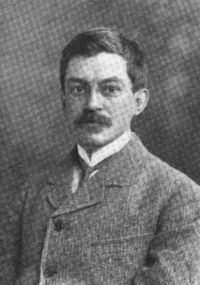
Portrait of W. M. Flinders Petrie W. M. Flinders Petrie Methods & Aims in Archaeology

Another superiority of outline drawings is that they are far more easily looked over and referred to than a much less distinct photograph. And lastly, they cost a third or a quarter of the amount for publication. The proper scope of photographs is stated in the next section.
As drawing is almost always to be reproduced by photolithography, or by zinc block, it is essential to have it entirely in full black and white without any grey or half tones. Hence the contrast should be kept as strong as possible; and only China ink of full blackness should be used for fine lines.
Source: Gutenberg

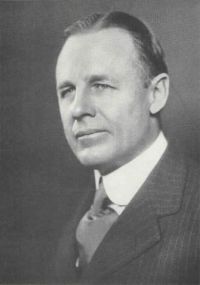
Portrait of Harold Jacoby Harold Jacoby Practical Talks by an Astronomer

Let us imagine that the exposure has been made with an ordinary lens and camera, and that it is a landscape seeming to grow beneath the experimenter's eyes. At first only the most conspicuous objects make their appearance. But gradually the process extends, until finally every tiny detail is reproduced with marvellous fidelity to the original. The photographic plate, when developed in this way, is called a "negative." For in Nature luminous points, or sources of light, are bright, while the developing negative turns dark wherever light has acted.
Source: Gutenberg

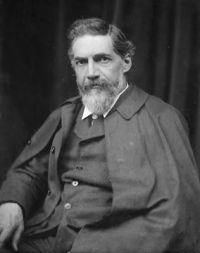
W. T. Wilkinson Photo-engraving, Photo-etching and Photo-lithography in Line and Half-tone

The camera, with the lens out of focus, should be pointed to a large sheet of white paper; insert the dark slide, draw the shutter, uncap the lens, and the light reflected from the white sheet through the lens, through the negative upon the sensitive plate, will result, after development, in a transparent positive of the negative.
The time of exposure will, of course, vary and can only be found by experiment. The operations of development, etc., are carried on as for a negative.
Source: Gutenberg

Get perspective with Kwize: daily news enlightened by great literature