Possessive pronoun

Definition and stakes

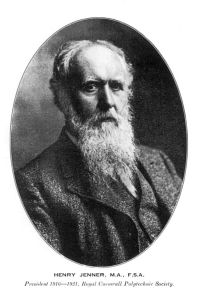
Portrait of Henry Jenner Henry Jenner,  A Handbook of the Cornish Language

“ The genitive of possession is the appositional genitive. This is formed by placing the noun that is in the genitive immediately after the noun which it qualifies, or, if the former has the definite article, or is qualified by a possessive pronoun or prefixed adjective, with only these intervening. No change of initial is made, [81] except the usual change of feminine singular or masculine plural nouns after an, or the changes caused by possessive pronouns, etc. ”
Source: Gutenberg

Portrait of Goold Brown Goold Brown,  The Grammar of English Grammars (1882)

“ Here coming is a noun, and no participle at all. But the author has a marginal note, "A possessive pronoun is equivalent to a genitive;" (ibid.;) and he means to approve of possessives before active participles: as, "Some of these irregularities arise from our having received the words through a French medium."--Ib., p. 116. This brings us again to that difficult and apparently unresolvable problem, whether participles as such, by virtue of their mixed gerundive character, can, or cannot, govern the possessive case; a question, about which, the more a man examines it, the more he may doubt. ”
Source: Wikisource

Get perspective with Kwize: daily news enlightened by great literature