Potato blight

Definition and stakes

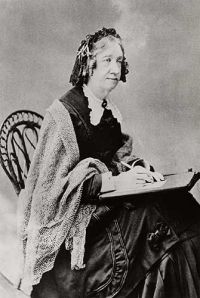
Portrait of Eliza Leslie Eliza Leslie,  Miss Leslie's Complete Cookery

“ When the skins crack in boiling, it is no proof that they are done, as too much fire under the pot will cause the skins of some potatoes to break while the inside is hard.
After March, when potatoes are old, it is best to pare them before boiling and to cut out all the blemishes. It is then better to mash them always before they are sent to table. Mash them when quite hot, using a potato-beetle for the purpose; add to them a piece of fresh butter, and a little salt, and, if convenient, some milk, which will greatly improve them.
”
Source: Gutenberg

Various,  The Atlantic Monthly, Volume 14…

“ For this reason scientific directors bid us beware of the water in which potatoes are boiled,—into which, it appears, the evil principle is drawn off; and they caution us not to shred them into stews without previously suffering the slices to lie for an hour or so in salt and water. These cautions are worth attention.
The most usual modes of preparing the potato for the table are by roasting or boiling. These processes are so simple that it is commonly supposed every cook understands them without special directions; and yet there is scarcely an uninstructed cook who can boil or roast a potato.
”
Source: Gutenberg

W. Mattieu Williams,  The Chemistry of Cookery

“ Steamed potatoes probably lose less of their potash juices than when boiled; but this is uncertain, as the modicum of distilled water condensed upon the potato and continually renewed may wash away as much as the larger quantity of hard water in which the boiled potato is immersed.
Those who eat an abundance of fruit, of raw salads, and other vegetables supplying a sufficiency of potash to the blood, may peel and boil their potatoes; but the poor Irish peasant, who depends upon the potato for all his sustenance, requires that they shall supply him with potash.
”
Source: Gutenberg

Get perspective with Kwize: daily news enlightened by great literature