Power (philosophy)

Definition and stakes

The World's Greatest Books — Volume 13…

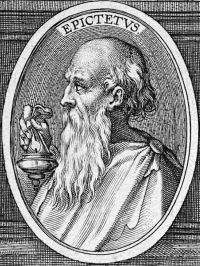
“ I give Thee thanks that Thou hast thought me worthy to have a share in it with Thee; to behold Thy works, and to join with Thee in comprehending Thy administration." Let death overtake me while I am thinking, writing, reading such things as these. Of things, some are in our power, others not. In our power are opinion, pursuit, desire, accession; in a word, whatever are our own actions. Not in our power are body, property, reputation, command; in a word, whatever are not our own actions. ”
Source: Gutenberg

Thomas Brown,  Lectures on the Philosophy of the Human Mind…

“ This simple view of power, as the mere antecedent substance itself, in its relation to its immediate and invariable consequences, without the intervention of any mysterious tie,—since there surely can be nothing in nature, but all the substances which exist in nature,—it was necessary to illustrate, at great length, in consequence of the very false notions, that are generally, or, I may say, universally prevalent on the subject. ”
Source: Gutenberg

Portrait of Georg Wilhelm Friedrich Hegel Georg Wilhelm Friedrich Hegel,  Hegel's Lectures on the History of Philosophy…

“ The virtue, the living nature of power; the fact that subject and object are regarded as one, that is as absolute virtue. With this absolute virtue we have all Being and action, namely the eternal, absolute and pure unity; in one word we have grasped the world within us and we have grasped ourselves in the world, and that indeed not through conceptions and conclusions, but directly through the power which itself constitutes our existence and our rational nature. ”
Source: Gutenberg

Get perspective with Kwize: daily news enlightened by great literature