
“ The Prefecture was situated in a palace of sixteenth century architecture, a noble and stately place of immense size, greatly injured by telegraph and telephone wires stretching all round it, the post-office and the tax offices being situated on the ground floor, and the great central court daubed over with fresh paint and whitewash. ”
Prefecture
Definition and stakes
A prefecture denotes an administrative jurisdiction or subdivision, historically overseen by a prefect, with origins in Roman governance and modern usage in countries such as Japan, Morocco, and France. From ancient Roman praefecturae to contemporary divisions in Japan’s 47 regions, the concept illustrates diverse administrative frameworks.
Authors such as Kencho Suematsu emphasized Japan’s prefectural system, highlighting local assemblies and state-backed education, while Ouida portrayed the architectural and bureaucratic aspects of a prefecture in her narrative. Captain F. Brinkley observed the relationship between central authority and local councils within Japan’s structure. These viewpoints underscore the prefecture’s dual function as both a territorial entity and a center of administrative influence across different cultures and historical periods.
Quotes about “prefecture”
Moritz Busch, Bismarck (1898)
“ The Prefecture of a French provincial town, such, for instance, as that of Versailles or Nancy, is, as a general rule, both more roomy and imposing than the narrow and old-fashioned tenement in which the Chancellor of the German Empire and the officials of the Political Department of the Foreign Office were housed for almost sixteen years. ”
1911 Encyclopædia Britannica, Volume 15… (1911)
“ Each prefecture (urban or rural) , each sub-prefecture, each town and each district (urban or rural) has its local assembly, the number of members being fixed in proportion to the population. There is no superior limit of number in the case of a prefectural assembly, but the inferior limit is 30. For a town assembly, however, the superior limit is 60 and the inferior 30; for a sub-prefectural assembly the corresponding figures are 40 and 15, and for a district assembly, 30 and 8. ”
Kencho Suematsu, A Fantasy of Far Japan; Or, Summer Dream Dialogues
“ I therefore put those three Islands, Hokkaido, Okinawa, and Formosa, outside the scope of the present paper for the sake of convenience. Each prefecture is presided over by a governor appointed by the central Government. It is partly an administrative district of the state and partly a communal district having its communal administration supported by local taxes. For this latter aspect each prefecture has a local assembly, members of which are elected by direct votes of electors of the prefecture. ”
Kencho Suematsu, A Fantasy of Far Japan; Or, Summer Dream Dialogues
“ In each Prefecture one or more Normal Schools are established. The maximum of accommodation of the Prefectural Normal Schools, together with the numbers of the students to be trained therein, is determined by an ordinance of the central Government, and is made obligatory upon the Prefectures. The students who are trained in Normal Schools, both High and Prefectural, are supported by the State or by the Prefecture, as the case may be, on condition that they serve as teachers for a certain number of years. ”
William Walton, Paris, From the Earliest Period to the Present Day…
“ The administration of the Préfecture de Police is divided into three Bureaux, the first of which is closely connected with the cabinet of the Préfet, and the two others constitute the first and the second divisions. The first Bureau is divided into four sections, and the second into two, each of these subdivisions having its special department. The Commissaires de Police are municipal officers appointed in Paris by a decree of the President of the Republic on the nomination of the Minister of the Interior, in the proportion of one for every ten thousand inhabitants. ”
Captain F. Brinkley, Japan: Its History, Arts, and Literature… (1902)
“ Counts, Viscounts, and Barons are elected by their respective orders; each prefecture returns one member representing the highest tax-payers, and the Emperor nominates men of learning or public merit. ”
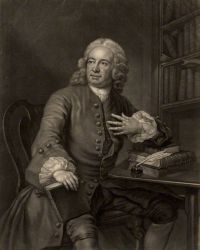 Archibald Bower,
The History of the Popes: From the Foundation of the See of Rome…
Archibald Bower,
The History of the Popes: From the Foundation of the See of Rome…
“ Each Prefecture was subdivided into several Dioceses, and each Diocese into several Provinces. Thus the Prefecture of the East contained Five Dioceses; viz. the East divided into Ten Provinces, Egypt into Six, Pontus into Eleven, Asia into Ten, and Thrace into Six. Under the Prefecture of Illyricum were Two Dioceses; Macedon, consisting of Eight Provinces; and Dacia, consisting of four. The Prefecture of Gaul comprised Three Dioceses, Gaul made up of Seventeen Provinces, Spain of Seven, and Britain of Five. The Prefecture of Italy was divided into Two Vicarages or Lieutenancies ”
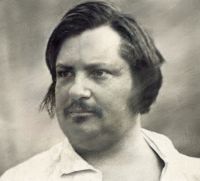 Honoré de Balzac,
Scenes from a Courtesan's Life
Honoré de Balzac,
Scenes from a Courtesan's Life
“ Then you must beg the Countess to secure her husband’s support, for he is a Minister of State, to carry you to the Prefecture of Police. “When you have got there, face to face with the Prefet, make your complaint, but as a man of political consequence, who will sooner or later be one of the motor powers of the huge machine of government. You will speak of the police as a statesman should, admiring everything, the Prefet included. The very best machines make oil-stains or splutter. Do not be angry till the right moment. ”
James George Frazer and an anonymous author, 1911 Encyclopædia Britannica (1911)
“ These towns'were called prefectures (praefecturae) . After the Social War (90-89 B.c.) , when. all Italy had received the Roman franchise, such prefectures ceased to exist in fact, though the name was sometimes retained. ”
 Maurice Leblanc,
Arsène Lupin
(1909)
Maurice Leblanc,
Arsène Lupin
(1909)
“ He was the famous Chief-Inspector Guerchard, head of the Detective Department of the Prefecture of Police, and sworn foe of Arsène Lupin. The policeman at the door of the drawing-room saluted him briskly. He was a fine, upstanding, red-faced young fellow, adorned by a rich black moustache of extraordinary fierceness. "Shall I go and inform M. Formery that you have come, M. Guerchard?" he said. "No, no; there's no need to take the trouble," said Guerchard in a gentle, rather husky voice. "Don't bother any one about me—I'm of no importance." "Oh, come, M. Guerchard," protested the policeman. ”
J. N. Larned, History for ready reference, Volume 1…
“ Article 8. Protests concerning the election of delegates or alternates are decided, subject to an appeal to the Council of State, by the Council of the Prefecture, and, in the colonies, by the Privy Council. Delegates whose election is set aside because they do not satisfy the conditions demanded by law, or because of informality, are replaced by the alternates. In case the election of a delegate and of an alternate is rendered void, as by the refusal or death of both after their acceptance, new elections are held by the Municipal Council on a day fixed by decree of the Prefect. ”
Electoral Law of the National People's Congress and Local People's Congresses of the People's… (2015)
“ The standing committees of people's congresses of provinces, autonomous regions, municipalities directly under the Central Government, cities divided into districts, and autonomous prefectures shall conduct the election of deputies to people's congresses at the corresponding level. In cities divided into districts, municipal districts, counties, autonomous counties, townships, ethnic townships, and towns, election committees shall be established to conduct the election of deputies to people's congresses at the corresponding levels. ”
Roland Truslove, John Allen Howe and Frank R. Cana, 1911 Encyclopædia Britannica (1911)
“ As the prefect in the department, so the sub-prefect in the arrondissement, though with a more limited power, is the representative of the central authority. He is assisted, and in some degree controlled, in his work by the district council (conseil d’arrondissement) , to which each canton sends a member, chosen by universal suffrage. As the arrondissement has neither property nor budget, the principal business of the council is to allot to each commune its share of the direct taxes imposed on the arrondissement by the general council. ”
the New comittee of Constitution, said “Sieyès-Thouret Comittee”, Report on the bases of proportional representation
“ This municipal assembly shall be the Council of Administration, which shall establish for the entire extent of its jurisdiction the rules of the common regime, and shall decide on all that concerns the municipal police, its internal security, sanitary policy, the management and use of municipal revenues, local expenditures, and generally all that is within the jurisdiction of the municipalities.Art. 43. The active power shall be entirely, and for all the extent of the municipal district, in the hands of the mayor and his lieutenant, who shall be elected immediately by the primary assemblies. ”
1911 Encyclopædia Britannica (1911)
“ There is some confusion in administration and accounts, however, and it is sometimes difficult to determine the exact situation. The Federal District is represented in Congress by 2 senators and 10 deputies, and is credited with the rights and privileges of citizenship. On the other hand, the city is a garrison town and a district under the direct administration of the national executive, who appoints its chief executive, controls its police force, and exercises part control over its streets, squares and water front. ”
1911 Encyclopædia Britannica (1911)
“ Many parishes contain more than one township, and this is especially the case in the northern counties, where the separate townships are organized for administrative purposes under an act passed in 1662. In the southern and midland districts the parishes are for the most part subdivided into hamlets or other local divisions known as “ty things,“ “boroughs,” and the like; the distinction between a parish and a subordinate district lies chiefly in the fact that the latter will be found to have never had a church or a constable to itself. ”
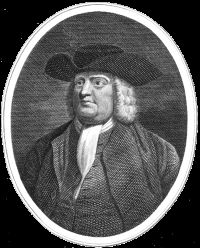 William Penn,
Frame of Government of Pennsylvania
(1683)
William Penn,
Frame of Government of Pennsylvania
(1683)
“ Imprimis, That the government of this province and territories thereof, shall, from time to time, according to the powers of the patent and deeds of feoffment aforesaid, consist of the Proprietary and Governor, and freemen of the said province and territories thereof, in form of provincial Council and General Assembly; which provincial Council shall consist of eighteen persons, being three out of each county, and which Assembly shall consist of thirty-six persons, being six out of each county, men of most note for their virtue, wisdom and ability ”
Borgella & al., Constitution of 1801 (1801)
“ In other parishes, municipal administrations shall be composed of a mayor and two administrators; a substitute commissary of the responsible tribunal shall hold the function of commissary near the municipality gratuitously.Art. 49. Members of these municipal administrations shall be nominated for two years; they may always continue beyond that time. Their nomination devolves to the Governor, who, on a list of at least sixteen individuals, presented by each municipal administration, chooses the persons most appropriate to manage the affairs of each parish. ”
Various, Encyclopaedia Britannica, 11th Edition…
“ This council, which consists for the most part of business and professional men, is elected by universal suffrage, each canton in the department contributing one member. The general council controls the departmental administration of the prefect, and its decisions on points of local government are usually final. It assigns its quota of taxes (contingent) to each arrondissement, authorizes the sale, purchase or exchange of departmental property, superintends the management thereof, authorizes the construction of new roads, railways or canals, and advises on matters of local interest. ”
J. N. Larned, History for ready reference, Volume 1…
“ VI. The Primary School Inspectors; VII. The Archbishops, Bishops, and Vicars General; VIII. The General Paymasters and Special Receivers of Money; IX. The Supervisors of Direct and Indirect Taxes, of Registration of Lands, and of Posts; X. The Guardians and Inspectors of Forests. The Sub-Prefects shall not be elected in any of the arrondissements of the department where they perform their duties. ARTICLE 13. Every imperative mandate is null and void. ARTICLE 14. Members of the Chamber of Deputies are elected by single districts. Each administrative arrondissement shall elect one deputy. ”
J. N. Larned, History For Ready Reference, Volume 7 (1895)
“ The law names certain things which each city charter shall provide, and imposes certain restrictions on the powers of cities. There must be an elected Mayor and a body vested with legislative power; the clerk, treasurer, and assessors, and other officers may be elected or appointed. This permits the establishment of a commission system, or of a Mayor and council with distinct powers. Provision must be made for the levy, collection, and return of State, county, and school taxes, for annual appropriations for municipal purposes, and for a system of accounts. ”
“ The Secretary of State may, at the request of the English Commission or otherwise, direct the council of a district in England to conduct a review of the whole or any part of their district for the purpose of considering whether or not to make recommendations to the Commission for such proposals with respect to the constitution of new parishes, the abolition of parishes or the alteration of parishes in their district as are authorised by section 47 above and what recommendations, if any, to make, and to report to the Commission accordingly within a period specified in the direction. ”
Bertha Meriton Gardiner, The French Revolution 1789-1795 (1921)
“ The eighty-three departments were subdivided into 374 districts. In every department was an elected administrative body for the management of its affairs; in every district an elected administrative body, subordinate to the administration of the department, for the management of affairs special to the district. These bodies were composed each of a general council and a permanent executive, styled the directory. In every district the former divisions, called communes, were left unaltered. ”
F.R.G.S. John Foreman, The Philippine Islands
“ Municipalities are established in the district or sub-district capital towns, and wherever there is a population sufficiently large and enlightened to be entitled to municipal rights.12 A president (mayor) , vice-president, or councillor must be between twenty-six and sixty-five years of age, and must intelligently speak, read, and write Spanish, English, or the principal local dialect. Ecclesiastics, soldiers in active service, and persons receiving emolument from public funds are debarred from these offices. ”
 Frederic Austin Ogg,
The Governments of Europe
Frederic Austin Ogg,
The Governments of Europe
“ Aside from specifying that provincial and communal institutions shall be regulated by law, it contents itself with an enumeration of certain principles—among them direct elections, publicity of sittings of provincial and communal councils, publicity of budgets and accounts—whose application is regularly to be maintained. [771] Of local governmental units there are three: [772] the province, the arrondissement, and the commune. The provinces are nine in number. [773] In each is a council, elected by all resident citizens who are entitled to participate in the direct election of senators. ”
 Henry Walter Bates,
The Naturalist on the River Amazons…
(1863)
Henry Walter Bates,
The Naturalist on the River Amazons…
(1863)
“ The municipal and internal affairs are managed by a provincial assembly elected by the people. Every villa or borough throughout the province also possesses its municipal council, and in thinly-populated districts, the inhabitants choose every four years a justice of the peace who adjudicates in small disputes between neighbours. ”
1911 Encyclopædia Britannica, Volume 28… (1911)
“ Each district elects a supervisor for a term of four years, and the district supervisors constitute a county board of supervisors, which represents the county as a corporation, manages the county property and county business, levies the county taxes, audits the accounts of the county, and recommends for appointment by the circuit court a county surveyor and a county superintendent of the poor. ”
H. R. Wilton Hall, Our English Towns and Villages
“ Towns were always trying to get out of the power of the overlords' reeve or the shire-reeve, and gradually many of them got the right of appointing their own reeve. That right was granted by charter, usually from the king. That is the beginning of our present borough towns. The mayor in them is the chief magistrate. In many country towns two different courts are often held in the same building: the Borough Sessions, at which the mayor presides, deal with offences done in the town; and County Sessions, at which magistrates from the country district round deal with offences outside the borough. ”
Various, Encyclopaedia Britannica, 11th Edition…
“ When a county council is satisfied that a prima facie case is made out as respects any county district not a borough, or as respects any parish, for a proposal for all or any of the things hereafter mentioned, they may hold a local inquiry after giving such notice in the locality and to such public departments as may be prescribed from time to time by the orders of the Local Government Board. ”
William Walton, Paris, From the Earliest Period to the Present Day…
“ The Conseil Général de la Seine, which holds its sessions in its chamber at the Hôtel de Ville, is composed of eighty municipal councillors of Paris and twenty-one general councillors elected by the cantons of the banlieue. The Conseil Municipal, which also sits at the Hôtel de Ville, is elected from the twenty arrondissements of the city, one from each quarter, for four years, and corresponds to the Conseils of the Communes in the departments. The Préfet de la Seine and the Préfet de Police have the right of attendance at its sittings and of being heard whenever they wish. ”
