Prehensile organ

Definition and stakes

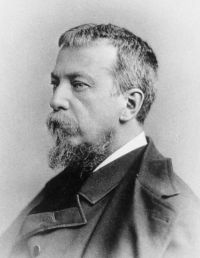
Portrait of Xavier Bichat Xavier Bichat,  General Anatomy, Applied to Physiology and Medicine…

“ From all that I have said, it is evident that in the organs whose capillary system contains in part blood, and in part different fluids, the proportion of the first to the others is infinitely variable; that a thousand causes in a state of health, as in that of disease, by bringing to the organ more or less blood, can fill more or less its capillary system. ”
Source: Gutenberg

John Green Curtis,  Harvey's Views on the Use of the Circulation of the Blood

“ Wherefore, if the leaping point together with the veins and blood, which are all conspicuous as one single organ at the first beginning of the embryo, be accepted as the heart (the parenchyma of which is superadded to the vesicle later in the formation of the embryo) , it is manifest that, accepted in this sense, that is, as an organ composed of parenchyma, ventricles, auricles, and blood, the heart in animals is in very truth, as Aristotle would have it, the principal and first generated part of the body ”
Source: Gutenberg

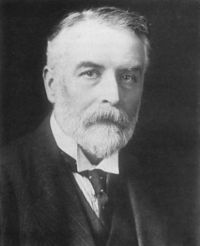
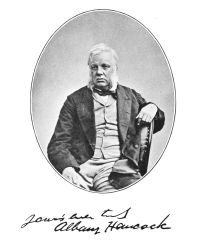
Portrait of Albany Hancock Albany Hancock,  Natural History Review: a quarterly journal of biological science

“ The walls of the organ are composed almost entirely of a soft, tender parenchyma, formed, for the most part, of vascular ramifications, the trunks of which, three or four in number, communicate with the interior of the branchial heart, through the peduncle. The walls of these trunks and of the peduncle are composed of stout, tough membrane. The cavity of the appendage does not communicate with that of the heart, but opens, as we have seen, externally, or into the chamber within which the organ is placed, so that the fluid surrounding it will bathe its inner as well as its outer surface. ”
Source: Wikisource

Get perspective with Kwize: daily news enlightened by great literature