“ Pride was a simple quality when joined with a simple view of life, based on the plain philosophy of property; pride was no simple quality when the hundred paralysing doubts and aspirations of a social conscience also hedged it round. In thus going forth with the full intention of restoring the little model to her position in the household, her pride fought against her pride, and her woman's sense of ownership in the man whom she had married wrestled with the acquired sentiments of freedom, liberality, equality, good taste. ”
Pride (social attitude)
Definition and stakes
The theme of “pride (social attitude)” has been addressed by authors such as Edwin Muir, David Hume, William Penn, Bernard Mandeville and Charles Wagner. It is often associated with terms like happiness, sympathy, dignity, society and virtue.
Quotes about “pride (social attitude)”
John Lord, Beacon Lights of History, Volume 09…
“ The brilliancy of the spectacle would have dazzled him, and he would unhesitatingly have pronounced those titled men and women to be the most fortunate, the most favored, and perhaps the most happy of all people on the face of the globe, since, added to the distinctions of rank and the pride of power, they had the means of purchasing all the pleasures known to civilization, and--more than all--held a secure social position, which no slander could reach and no hatred could affect. ”
 Charles Wagner,
The Simple Life
Charles Wagner,
The Simple Life
“ Do you also teach your children and use yourselves manners toward your servants which show them that you respect their dignity as individuals, as you desire them to respect yours? Here we have continually in our homes an excellent ground for experiment in the practice of that mutual respect which is one of the essential conditions of social sanity. I fear we profit by it too little. We do not fail to exact respect, but we fail to give it. So it is most frequently the case that we get only hypocrisy and this supplementary result, all unexpected,—the cultivation of pride in our children. ”
 Frank A. Fetter,
The Principles of Economics, with Applications to Practical Problems
Frank A. Fetter,
The Principles of Economics, with Applications to Practical Problems
“ Pride, either of family or of calling; the soldier's honor leading him to sacrifice not only his future but his life; the love of social approval, holding men to the most disagreeable tasks—these illustrate how strongly social sentiments oppose the narrower motive of immediate self-interest as generally thought of. Pleasure in work for work's sake, and pride in the result, may act as motives quite as strong in some cases as desire for the product that can [Pg 14] be used. ”
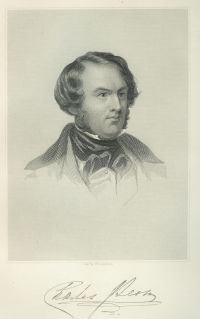 Charles James Lever,
Luttrell Of Arran
Charles James Lever,
Luttrell Of Arran
“ Do you imagine it is only the well-born and the noble who have pride? Do you fancy that we poor creatures of the soil do not resent in our hearts the haughty contempt by which you separate your lot from ours? Do you believe it is in human nature to concede a superiority which is to extend not to mere modes of life and enjoyments, to power, and place, and influence, but to feelings, to sentiments, to affections? In one word, are you to have the whole monopoly of pride, and only leave to us so much as the honour of ‘pertaining’ to you? ”
 C. S. Lewis,
Mere Christianity
(1952)
C. S. Lewis,
Mere Christianity
(1952)
“ In fact, if you want to find out how proud you are the easiest way is to ask yourself, ‘How much do I dislike it when other people snub me, or refuse to take any notice of me, or shove their oar in, or pa-tronise me, or show off?’ The point is that each person’s pride is in competition with every one else’s pride. ”
 Nathaniel Hawthorne,
Doctor Grimshawe's Secret — a Romance
Nathaniel Hawthorne,
Doctor Grimshawe's Secret — a Romance
“ And what I can never understand, is the pride which you positively seem to feel in having men and classes of men above you, born to privileges which you can never hope to share. It may be a thing to be endured, but surely not one to be absolutely proud of. ”
Richard Hurd, The works of Richard Hurd, volume 6…
“ Another way, in which charity operates to the suppression of pride, is, by increasing our good opinion of other men. Pride is an elation of mind upon comparing ourselves with others, and observing how much we excel them in any respect ”
A. L. O. E., The Crown of Success
“ Learning, who will show you the little homes provided for you, and teach you how to furnish them. Mind that you do all that he bids you do; work with cheerful good-will, you will then have reason all your lives to rejoice that you ever knew such a friend. And one more parting word, my children: beware all of the society of Pride ”
Viscount James Bryce Bryce, Promoting good citizenship (1909)
“ Pride in the glorious foretime of the race and in its heroes sustains in the individual man who is called to public duty, the personal pride which makes him feel that all his affections and all his emotions stand rooted in the sense of honour, which is, for the man and for the nation, the foundation of all virtue. ”
 Dwight Lyman Moody,
Moody's Stories: Being a Second Volume of Anecdotes…
Dwight Lyman Moody,
Moody's Stories: Being a Second Volume of Anecdotes…
“ It is a false idea that all pride is confined to the upper classes. You will find it in the lanes and alleys. You will find little dirty, barefooted children who will get a string of shavings, put it round their necks, and strut [Pg 77] down the street as if they were wearing golden beads. Pride is born and grows in the human heart. You do not plant it there; it grows there of itself. ”
 John Gregory,
A Father's Legacy to His Daughters
John Gregory,
A Father's Legacy to His Daughters
“ In short, you may possibly break such a heart, but you can never bend it. Great pride always accompanies delicacy, however concealed under the appearance of the utmost gentleness and modesty, and is the passion of all others the most difficult to conquer. ”
Richard Hurd, The works of Richard Hurd, volume 6…
“ But in the general commerce between man and man, in all offices of civility and society, that is, in cases where the stronger passions and more important interests of men are not directly concerned, as they are in what relates to property and power, the observation is clearly not true. Here, pride is the predominant vice of mankind. And pride is naturally softened and disarmed by placability and meekness. ”
Anonymous, Bashfulness Cured: Ease and Elegance of Manner Quickly Gained
“ What is pride? Is it not self-esteem; self-appreciation and valuation; self-respect and reliance; nobleness, independence and dignity?A proud-spirited person excites in us something of [Pg 21] that feeling of respect and admiration we have for a spirited, mettlesome horse.But to possess true spirit and personal pride, we must possess points of real or imagined merit; of education, accomplishments, personal beauty, or mental, or physical superiority. How can a person of scanty information—ignorant of the world and its doings, carry a proud bearing with a high and noble spirit? ”
Various, The Southern Literary Messenger…
“ But at the same time, there is that within us, which produces happiness from the reflection, that we have done our duty, and that our conduct is praiseworthy, whether we have the esteem of the world or not. We value ourselves for what we consider our real intrinsic merits, and not for the applause of the world—and this is pride.As thus explained, it is very evident that these two great principles, pride and vanity, must have almost omnipotent sway in the formation of character. ”
Emily Sarah Holt, In Convent Walls
“ Those who loved him not called him proud—yea, the very spirit of pride. But the manner they thought pride seemed to me rather a kind of sternness or shortness of speech, as if he wished to have done with the matter in hand. Some people call every thing pride; if man talk much, they say he loves to hear his own voice; if he be silent, he despises his company. Now it seems to me that I often speak and am silent from many other causes than pride, and therefore it may be the like with other folk. Do those which are ever accusing other of pride, do all their actions for that reason? ”
P.-J. Proudhon, What is Property? An Inquiry into the Principle of Right and of Government
“ The social sentiment then takes on a new character, which varies with different persons. In the strong, it becomes the pleasure of generosity; among equals, frank and cordial friendship; in the weak, the pleasure of admiration and gratitude. ”
Paul Janet, Elements of Morals
“ True and false pride.—We should, however, not confound a true and noble pride, without which man is but a thing and a slave, with a passion which looks like it, but which is but its phantom; I mean false pride. True pride is the just feeling man has of his moral dignity, and which interdicts him to humble the human personality in others, or to allow it to be humbled in himself. ”
Charles Greville, The Greville Memoirs, Part 2 (of 3…
“ We may feel an honest pride and a happy confidence in the reflexion that it is by such sterling qualities, by the simple and unostentatious practice of public and private virtue that men may best recommend themselves to the reverence, the gratitude, and the affection of their countrymen, and be remembered hereafter as the benefactors of mankind. ”
Richard Hurd, The works of Richard Hurd, volume 6…
“ And such a principle, as is proper to correct the malignity of pride, we find in that philanthropy, which, by an instinct of the same common nature, disposeth us to consult the happiness, and to conciliate to ourselves the good will and affection, of mankind. This benevolent movement of the mind is, further, quickened by the mutual interest all men have in the exercise of it. For Pride is disarmed by submission; and, by receding from our own pretensions, we take the most likely way to moderate those of other men. ”
Charles James Lever,
The Daltons; Or, Three Roads In Life…
“ Our pride is not in our self-sufficiency, for every step in life teaches us how much we owe to others; but in this, that low in lot, and humble in means, we have kept, and hope still to keep, the motives and principles that guided us in happier fortunes. Yes, you may call us proud, for we are so, proud that our poverty has not made us mean; proud that in a strange land we have inspired sentiments of kindness, and even of affection; proud that, without any of the gifts or graces which attract, we have drawn towards us this instance of noble generosity of which you are now the messenger. ”
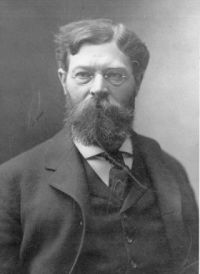 William De Witt Hyde,
Practical Ethics
William De Witt Hyde,
Practical Ethics
“ The virtues which deal with our fellow-men will be rewarded by enlargement of social sympathy, and deeper tenderness of feeling. The virtues which are directed toward family, state, and society, have their reward in that exalted sense of participation in great and glorious aims, which lift one up above the limitations of his private self, and can make even death sweet and beautiful—a glad and willing offering to that larger social self of which it is the individual's highest privilege to count himself a worthy and honorable member. ”
Various, The Knickerbocker, Vol. 10, No…
“ And yet how readily would a noble sentiment respond to your appeal, and come to the rescue, when his virtue was at its greatest need, had it been trained to do so? Pride often concedes what cannot be obtained from a love of justice, while love of approbation will bestow in charity such sums as put benevolence to the blush for her scanty gifts. ”
 George Crabbe,
George Crabbe: Poems, Volume 1…
George Crabbe,
George Crabbe: Poems, Volume 1…
“ None his superior, and his equals few:—But, if that spirit in his soul had place,It was the jealous pride that shuns disgrace:A pride in honest fame, by virtue gain'd, [Pg 210] In sturdy boys to virtuous labours train'd;Pride in the power that guards his country's coast,450And all that Englishmen enjoy and boast; Pride in a life that slander's tongue defied,—In fact, a noble passion, misnamed pride. ”
Edwin Muir, We Moderns: Enigmas and Guesses
“ But if pride were banished even from the remainder of Life, how poor would the artists be left! For every gesture that is beautiful, all free, spirited, swift movement and all noble repose have in them pride. Humility uglifies, except, indeed, the humility which is a form of pride ”
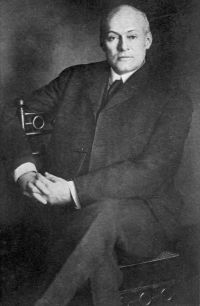 Arthur E. Bostwick,
A Librarian's Open Shelf: Essays on Various Subjects
Arthur E. Bostwick,
A Librarian's Open Shelf: Essays on Various Subjects
“ And anything that tends to lift our interest from the individual to the historical plane—to make us cease from congratulating ourselves personally on some connection with the good and great and substitute a feeling of group pride shared in common by some body to which we all belong, is acting toward this desirable end. The body may be a family; it may be the community or the state; it may be as broad as humanity itself, for we may all be proud of the world’s greatest. ”
Newell Dwight Hillis, The Investment of Influence: A Study of Social Sympathy and Service
“ The sign of ripeness in an apple, a peach, is beauty, and the test of character is gentleness and kindness of heart.One of the crying needs of society is a revival of gentleness and of a refined considerateness in judging others. There is no disposition that cuts at the very root of character like harshness, and there is nothing that blights happiness and breeds discord like unlovingness and severity of judgment. We hear much of industrial strife, social warfare and want of sympathy between the classes. Be it remembered, gentleness alone can be invoked to heal the breach. ”
Edwin Muir, We Moderns: Enigmas and Guesses
“ And without this instinctive pride, these qualities, personality could never have been possible. In the heart of all distinct, valuable and heroic things, pride lies coiled. Yes, even in the heart of humility, of the most refined, spiritual humility. For such humility is not a conformity; it separates and individualizes its possessor as effectually as pride could; it takes its own path and not that of the crowd; and so its source must be in an inward sense of worth, of independence: it is a form of pride. But pride is so closely woven into life that to wound it is to wound life ”
 John Timbs,
Knowledge for the Time
John Timbs,
Knowledge for the Time
“ This universal sympathy, or fellow-feeling, of our social nature, is the principle of the different spirit dominant in different ages, countries, ranks, sexes, and periods of life. It is the cause why fashions, why political and religious enthusiasm, why moral example, either for good or evil, spread so rapidly and exert so powerful an influence. ”
C. S. Lewis,
Mere Christianity
(1952)
“ You value other people enough to want them to look at you. You are, in fact, still human. The real black, diabolical Pride, comes when you look down on others so much that you do not care what they think of you. ”
Emory Adams Allen, The Golden Gems of Life; Or, Gathered Jewels for the Home Circle
“ There are three kinds of dignity which either adorn or deface human character. There is the dignity of etiquette and good manners, which is often of an artificial kind, and is a creature of rules and ceremonies, and not of the heart. The second is the dignity of pride and arrogance. This is a presumptuous dignity arising from self-conceit and egotism. It is thoroughly selfish in its nature. It is more a spirit of haughtiness and cold reserve than of true dignity. Then there is the dignity of compassion and kindness. This is that true dignity which ennobles life. ”
 William Wordsworth,
The Prose Works of William Wordsworth
William Wordsworth,
The Prose Works of William Wordsworth
“ Yes—in spite of pride, hardness of heart, grasping avarice, and other selfish passions, the not unfrequent concomitants of affluence and worldly prosperity, the mass of the people are justly dealt with, and tenderly cherished;—accordingly, gratitude without servility; dispositions to prompt return of service, undebased by officiousness; and respectful attachment, that, with small prejudice to the understanding, greatly enriches the heart: such are the sentiments with which Englishmen of the humblest condition have been accustomed to look up towards their Friends and Benefactors. ”
James Nelson, An essay on the government of children…
“ While he maintains his Dignity, he must be ready to condescend to Inferiors with an humble Deportment where necessary; and be taught to see and feel another’s Woe: [281] which nothing will more inforce, than convincing him of the Instability of all human Grandeur. His Dress and Behaviour should be like his Quality, noble; yet perfectly free from Affectation, Vanity and Pride. He must be taught to know, that ’tis not for himself alone he is to live, but, from the politest Manners, a wise Conduct, and a benevolent Heart, to diffuse Pleasure and Joy to all that know him. ”
Emory Adams Allen, The Golden Gems of Life; Or, Gathered Jewels for the Home Circle
“ But the friendly conversation, the hearty grasp of the hand, the feeling of kindness and good-will which finds expression in the tones, the willingness to do a favor cheerfully,—these constitute true affability, which is not only of value to the possessor, but may almost claim a place among the Christian graces.How many there are who are not in want of assistance of material things, but who are yearning for social recognition, who feel themselves shut out from intercourse with their fellow-beings by the spirit of selfishness which shows itself in a refusal of social privileges! ”
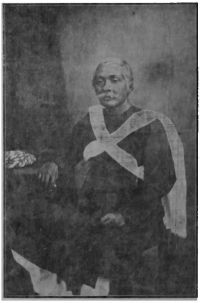 Peary Chand Mitra,
The Spoilt Child: A Tale of Hindu Domestic Life
(1893)
Peary Chand Mitra,
The Spoilt Child: A Tale of Hindu Domestic Life
(1893)
“ Our strength, what is it? Our learning, what is it? Every moment of our lives we are subject to error, evil thoughts and evil deeds: where then is the ground for pride? Such humility as this being implanted in the mind, passion, envy, malice, and pride, all are dwarfed, and the mind becomes simple and sincere. Where this is the case, we derive no pleasure from a display of our own learning or intelligence, our own pride of wealth or place, which can only anger others; neither is our envy excited by the sight of the prosperity of others. ”