Print (art)

Definition and stakes

Emil H. Richter,  Prints: A Brief Review of Their Technique and History

“ But have we ever conjured up, in our mind’s eye, the vision of an engraver, or etcher, or lithographer at work making the print which is so familiar to us? It is a world, indeed, this field on which the energies of thousands upon thousands of men have been expended, expressive of the thoughts of great masters, expressive, yes, eloquent, of the changing mental attitude, the changing customs and interests of successive periods. There is no field, I am tempted to say, in all the realm of art, more comprehensive, more broadening than this subject of prints. ”
Source: Gutenberg

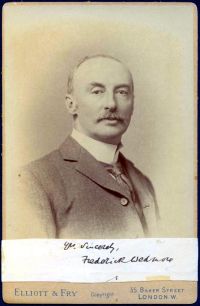
Portrait of Sir Frederick Wedmore Sir Frederick Wedmore,  On books and arts (1899)

“ It will be much fuller of Art than any drawing which ordinary good fortune is to enable you to get for the same outlay. And I say this as one who loves drawings—as one who, notwithstanding his theories, even ventures to live with a few of them; but, if I have a preference in the matter of collecting—well, I suppose it is for prints.
About a print, every point is interesting. Apart from subject, apart too from technical treatment of the copper, there is the delightful question, How does your own impression compare with other people’s?
”
Source: Gutenberg

Edmund G. Gress,  The Art & Practice of Typography

“ Art demands that the print be a part of the paper upon which it is impressed, much as the plant is a part of the earth in which its roots are buried, and utility demands that the print shall be strong and clear that reading may be made easy. The artist-printer lessens the contrast between print and paper by printing with gray ink on gray stock, brown ink on light brown stock, and so forth. The utility printer gets the maximum of contrast by printing with black ink on white stock. ”
Source: Gutenberg

Get perspective with Kwize: daily news enlightened by great literature