Probabilism

Definition and stakes

Alfred Wesley Wishart,  A Short History of Monks and Monasteries

“ The doctrine of probabilism is founded upon the distinctions between opinions that are sure, less sure, or more sure. There are several schools of probabilists, but the doctrine itself practically amounts to this: Since uncertainty attaches to many of our decisions in moral affairs, one must follow the more probable rule, but not always, cases often arising when it is permissible to follow a rule contrary to the more probable one. ”
Source: Gutenberg

Charles J. Callan,  Moral Theology

“ Thus, the old arguments for Probabiliorism mean in the last analysis that the greater probability deprives the opposite side of all solid probability; logically, then, one should conclude that equal probability deprives both sides of all solid probability, since one neutralizes the other. The new arguments are drawn from the principles that in doubt one should decide in favor of the side in possession, that a doubtful law does not oblige, etc.—all of which principles, as we shall see, favor Probabilism. ”
Source: Gutenberg

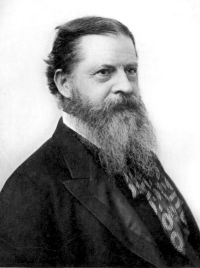
Portrait of Charles Sanders Peirce Charles Sanders Peirce,  Popular Science Monthly (1877)

“ According to the view here taken, these are the only fundamental rules for the calculation of chances. An additional one, derived from a different conception of probability, is given in some treatises, which if it be sound might be made the basis of a theory of reasoning. Being, as I believe it is, absolutely absurd, the consideration of it serves to bring us to the true theory; and it is for the sake of this discussion, which must be postponed to the next number, that I have brought the doctrine of chances to the reader's attention at this early stage of our studies of the logic of science. ”
Source: Wikisource

Get perspective with Kwize: daily news enlightened by great literature