“ What are the racial endowments of these risen negroes whom we are urged by lofty example to invite into our drawing-rooms upon terms of broadest equality—for upon other terms would be a mockery—as eligible associates, companions, suitors, husbands for our sisters and daughters?—for a sensible father or brother does not admit white men to his home on any other basis. Of what essential racial elements and sources is the negro, risen and unrisen alike? ”
Racial hierarchy
Definition and stakes
A racial hierarchy is a system of social stratification based on pseudoscientific notions of racial superiority, historically embedded in legislation such as Nazi Germany’s Nuremberg Laws. Scholars like W.E.B. Du Bois emphasized its impact on U.S. slavery and segregation, while Booker T. Washington explored its ongoing influence on Black Americans’ access to opportunities.
Madison Grant advocated eugenicist perspectives, which stood in contrast to Hubert H. Harrison’s analyses of racial obstacles. Although systems such as Apartheid have been dismantled, discussions about racial inequality continue, underscoring the persistent intricacy of these hierarchies in shaping societal frameworks.
Quotes about “racial hierarchy”
Hubert H. Harrison, The Negro and the nation (1917)
“ For this is all that our intellects can do in the case of a racial problem—to help us to understand. The actual work of adjustment must be fought out or worked out; becomes, that is to say, a struggle to be settled by the contending races with forces more complex than the purely intellectual ones of argument and proof. Let us first consider, then, the conditions under which the relations between the black and white races were established in America. ”
Hubert H. Harrison, When Africa awakes (1920)
“ That point concerns the biological breed of persons who should be selected by Negroes as leaders of their race. We risk the offense this time because efficiency in matters of racial leadership, as in other matters, should not be too tender to these points of prejudice when they stand in the way of desirable results. For two centuries in America we, the descendants of the black Negroes of Africa, have been told by white men that we cannot and will not amount to anything except in so far as we first accept the bar sinister of their mixing with us. ”
Ulrich Bonnell Phillips, American Negro Slavery
“ The racial antipathy felt by the alien whites, along with their cultural repugnance and economic apprehensions, intrenched the negroes permanently in the situation. The most fertile Southern areas when once converted into black belts tended, and still tend as strongly as ever, to be tilled only by inert negroes, the majority of whom are as yet perhaps less efficient in freedom than their forbears were as slaves. ”
Sir Arthur Keith, Nationality and Race from an Anthropologist's Point of View
“ They do not even camouflage the racial barricade which they have erected; they purposely expose it in its nakedness to full view, so that none may fail to see it. The dark natives maintain their tribal and racial frontiers by their inherited organizations, but the surveillance of the social barrier between them and the whites lies with the dominant race. ”
Chicago Commission on Race Relations, The Negro in Chicago: A Study of Race Relations and a Race Riot
“ Lying back of the current opinions about Negroes is a chain of circumstances involving the history of divers racial groups over hundreds of years. Slavery placed a stamp upon Negroes which it will require many more years to erase. ”
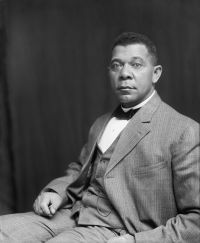 Booker T. Washington,
The Future of the American Negro
Booker T. Washington,
The Future of the American Negro
“ Thus helped, those of both races in the South will soon throw off the shackles of racial and sectional prejudice, and rise above the clouds of ignorance, narrowness, and selfishness into that atmosphere, that pure sunshine, where it will be the highest ambition to serve man, our brother, regardless of race or previous condition. ”
Booker T. Washington,
Up from Slavery: An Autobiography
“ Then, when we rid ourselves of prejudice, or racial feeling, and look facts in the face, we must acknowledge that, notwithstanding the cruelty and moral wrong of slavery, the ten million Negroes inhabiting this country, who themselves or whose ancestors went through the school of American slavery, are in a stronger and more hopeful condition, materially, intellectually, morally, and religiously, than is true of an equal number of black people in any other portion of the globe. ”
Booker T. Washington,
The Future of the American Negro
“ There are those among the white race and those among the black race who assert, with a good deal of earnestness, that there is no difference between the white man and the black man in this country. This sounds very pleasant and tickles the fancy; but, when the test of hard, cold logic is applied to it, it must be acknowledged that there is a difference,—not an inherent one, not a racial one, but a difference [Pg 32] growing out of unequal opportunities in the past. ”
 Madison Grant,
The Conquest of a Continent; or…
Madison Grant,
The Conquest of a Continent; or…
“ Taking the country over, the Whites who have married Indians have not been of a high class. But the total number of Indians in the United States is so small that their future is probably that of being absorbed in the White race through miscegenation, unless it be for a few tribes cultivating a racial purity of their own and, with favorable economic conditions, perpetuating themselves for a long time to come. ”
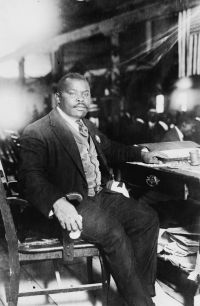 Marcus Garvey,
The Negro's Greatest Enemy
(1923)
Marcus Garvey,
The Negro's Greatest Enemy
(1923)
“ The Struggle of the Future Having had the wrong education as a start in his racial career, the negro has become his own greatest enemy. Most of the trouble I have had in advancing the cause of the race has come from negroes. Booker Washington aptly described the race in one of his lectures by stating that we were like crabs in a barrel, that none would allow the other to climb over, but on any such attempt all would continue^11 to pull back into the barrel the one crab that would make the effort to climb out. Yet, those of us with vision cannot desert the race, leaving it to suffer and die. ”
George Washington Williams, History of the Negro Race in America from 1619 to 1880…
“ Our new government is founded upon exactly the opposite ideas. Its foundations are laid, its corner-stone rests, upon the great truth, that the negro is not equal to the white man; that slavery, subordination to the superior race, is his natural and normal condition. ”
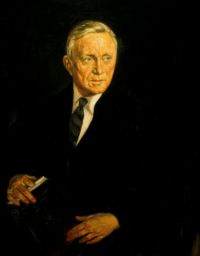 William O. Douglas,
Uphaus v. Wyman (364 U.S. 388)…
William O. Douglas,
Uphaus v. Wyman (364 U.S. 388)…
“ The Constitution favors no racial group no political or social group. ”
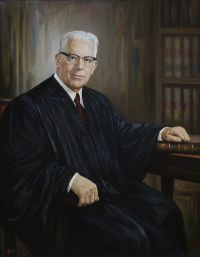 Earl Warren,
Loving v. Virginia — Opinion of the Court
(1967)
Earl Warren,
Loving v. Virginia — Opinion of the Court
(1967)
“ There is patently no legitimate overriding purpose independent of invidious racial discrimination which justifies this classification. The fact that Virginia prohibits only interracial marriages involving white persons demonstrates that the racial classifications must stand on their own justification, as measures designed to maintain White Supremacy. [11] We have consistently denied [p. 12] the constitutionality of measures which restrict the rights of citizens on account of race. ”
Lucius Quintus Cincinnatus Lamar II, Southern Slavery and Southern Slaveholders
“ And this is the ground upon which we of the South place our cherished institutions. We maintain that these justifying circumstances do exist in relation to our institution of negro slavery. They consist in the unfitness of the black race for a condition higher than that of slavery. Our proposition is, that when these two races are brought into contact, the supremacy of the white man must be acknowledged, and his right to govern both races with reference to the happiness of both. This is the principle upon which, until recently, the legislation of all your northern States was founded. ”
 Barack Obama,
A More Perfect Union
(2008)
Barack Obama,
A More Perfect Union
(2008)
“ It's a racial stalemate we've been stuck in for years. And contrary to the claims of some of my critics, black and white, I have never been so naïve as to believe that we can get beyond our racial divisions in a single election cycle, or with a single candidate—particularly a candidacy as imperfect as my own.But I have asserted a firm conviction—a conviction rooted in my faith in God and my faith in the American people—that working together we can move beyond some of our old racial wounds, and that in fact we have no choice. ”
George Washington Williams, History of the Negro Race in America from 1619 to 1880…
“ The negro in a state of slavery is brought up by the master, from early childhood, to strict obedience and to obey implicitly the dictates of the white man, and they are thus led to believe that they are an inferior race. ”
 Hugo Black,
Korematsu v. United States — Opinion of the Court
(1944)
Hugo Black,
Korematsu v. United States — Opinion of the Court
(1944)
“ It should be noted, to begin with, that all legal restrictions which curtail the civil rights of a single racial group are immediately suspect. That is not to say that all such restrictions are unconstitutional. ”
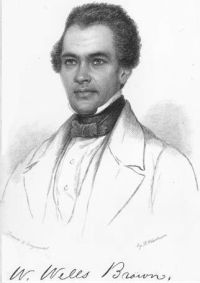 William Wells Brown,
My Southern Home: Or, the South and Its People
William Wells Brown,
My Southern Home: Or, the South and Its People
“ Where there is no law against the mixture of the two races, there is a public sentiment which is often stronger than law itself. Even the wild blood of the red Indian refuses to mingle with the sluggish blood of the negro. This is no light matter, for race hate, prejudice and common malice all die away before the melting power of amalgamation. The beauty of the half-breeds of the South, the result of the crime of slavery, have long claimed the attention of writers, and why not a lawful mixture? ”
George Washington Williams, History of the Negro Race in America from 1619 to 1880…
“ Race lines must be obliterated at the South, and the old theory of the natural inferiority of the Negro must give way to the demonstrations of Negro capacity. A new doctrine must supplant the old theories of pre-slavery days, and every man in the Republic must enjoy a citizenship as wide as the continent, and, like the coin of the Government, pass for his intrinsic value, and no more. ”
George Washington Williams, History of the Negro Race in America from 1619 to 1880…
“ Now, under the elevating and cherishing influence of the American Anti-slavery Society, the colored race, like the white, furnishes Corinthian capitals for the noblest temples. Aroused by the American Anti-slavery Society, the very white men who had forgotten and denied the claim of the black man to the rights of humanity, now thunder that claim at every gate, from cottage to capitol, from school-house to university, from the railroad carriage to the house of God. He has a place at their firesides, a place in their hearts—the man whom they once cruelly hated for his color. ”
Robert H. Terrell, A Glance at the Past and Present of the Negro…
“ The denial of rights guaranteed the Negro by the Constitution and the refusal to grant him the ordinary privileges of a freeman have created what is called the “Negro Problem”—the most prominent, the gravest and the most important question in American affairs. Ten millions of people with African blood in their veins—“an undifferentiated part of the Nation”—are made the objects of the meanest discrimination and the most unjust treatment by a so-called superior race seven times their number. ”
Martin Luther King, Jr., Letter from a Birmingham Jail (16 April 1963)
“ Let us all hope that the dark clouds of racial prejudice will soon pass away and the deep fog of misunderstanding will be lifted from our fear drenched communities, and in some not too distant tomorrow the radiant stars of love and brotherhood will shine over our great nation with all their scintillating beauty. ”
George Washington Williams, History of the Negro Race in America from 1619 to 1880…
“ Here is a picture that every Negro in the country may contemplate with satisfaction and pride. In the stronghold of slavery, under the shadow of the legalized institution of slavery, within earshot of the slave-auctioneer's hammer, amid distressing circumstances, poverty, and proscription, three unlettered ex-slaves, upon the threshold of the nineteenth century, sowed the seed of education for the Negro race in the District of Columbia, from which an abundant harvest has been gathered, and will be gathered till the end of time! ”
Robert H. Jackson, Korematsu v. United States — Dissenting Opinion (1944)
“ But once a judicial opinion rationalizes such an order to show that it conforms to the Constitution, or rather rationalizes the Constitution to show that the Constitution sanctions such an order, the Court for all time has validated the principle of racial discrimination in criminal procedure and of transplanting American citizens. The principle then lies about like a loaded weapon, ready for the hand of any authority that can bring forward a plausible claim of an urgent need. Every repetition imbeds that principle more deeply in our law and thinking and expands it to new purposes. ”
George Washington Williams, History of the Negro Race in America from 1619 to 1880…
“ Apart from the frightful loss of life in the process by which, it is pretended, the Negroes are better provided for than in a state of liberty in their own country, it is this very system that perpetuates, if not causes, the unhappy condition with which the comparative comfort of some of them in slavery is contrasted. ”
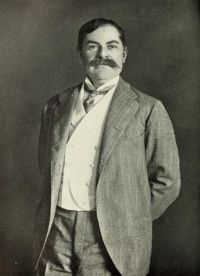 Thomas Nelson Page,
The negro: the southerner's problem
(1904)
Thomas Nelson Page,
The negro: the southerner's problem
(1904)
“ The South does not hold that the Negro race was primarily responsible for this travesty of government. Few reasonable men now charge the Negroes at large with more than ignorance and an invincible faculty for being worked on. ”
Various, The American Missionary — Volume 42…
“ Shall a line be drawn which shall separate the Negroes, and assign them as a race to the position of inferiors irrespective of merit or character, and merely on the ground of race or color?To narrow the discussion, we leave out of view the civil or political aspect of the question and confine ourselves to the religious, and we propose to give a few illustrations. A Negro in every way qualified, in character, piety, and intelligence, applies for membership in a white church. Shall the color-line be drawn and he be refused admission for no other reason than that he is a Negro? ”
Hubert H. Harrison, The Negro and the nation (1917)
“ The barbarity of the most odious slave-code was, under various disguises, applied to the Negro in his new condition of freedom”. Even before the resentment of the national legislature had taken form, the Ku-Klux Klan, the Knights of the White Camelias, the Society of the Pale Faces, and other bands of organized representatives of culture had begun to do their bloody work of terrorizing Negroes into economic and social subjection. ”
John L. Love, The Disfranchisement of the Negro
“ It is, however, to be borne in mind that the apostles of this civilization which is of a peculiarly local type, have ever asserted that its maintenance and future glory are inseparably connected with the subjection of the Negro. Always they have spoken the language of tyranny, which, in spite of its embellishments and jugglings, amounts to this: the social well-being and political privileges of the Negro are inconsistent with the economic interests and political ambitions of a few southern white men. ”
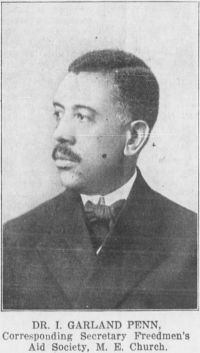 Irvine Garland Penn,
The Afro-American Press and Its Editors
(1891)
Irvine Garland Penn,
The Afro-American Press and Its Editors
(1891)
“ The charge brought against the negro that he has not property, and can be gobbled up by the lower class of whites, is true of a very few. There are as true, noble-hearted men in the negro race as can be found in the white. There is no disfranchisement for the negro. He, as the white man, or one of any nation, has his aim in life, and he intends to reach it. If honesty is equally practiced by the white race, as well as by the negro, there will be no need to disfranchise either party. But bear in mind, that if the white man doesn't tire of the South, the negro will not. ”
George Washington Williams, History of the Negro Race in America from 1619 to 1880…
“ The delegates from the Southern colonies were greatly distressed concerning the probable attitude of the slave element. They knew that if that ignorant mass of humanity were inflamed by some act of strategy of the enemy, they might sweep their homes and families from the face of the earth. The cruelties of the slave-code, the harsh treatment of Negro slaves, the lack of confidence in the whites everywhere manifested among the blacks,—as so many horrid dreams, harassed the minds of slaveholders by day and by night. ”
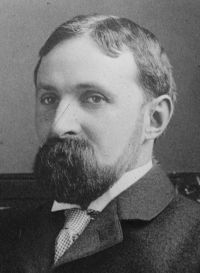 Albert Bushnell Hart,
The Southern South
Albert Bushnell Hart,
The Southern South
“ That the Negroes as a race are impure and unregulated is the judgment of most white observers whether ill-wishers or fair-minded men. Thomas Nelson Page, for instance, declares that the immorality of the negro race has increased since slavery times. ”
Matilda A. Evans, Martha Schofield, pioneer Negro educator (1916)
“ The records of the conduct of Negroes in office, with the exception of the rascality of those in power in the South during the Reconstruction Period, are creditable indeed, to the race from which they sprang. Responsibility for the scandals attaching to the rule of the race in some of the Southern States directly after the war are chargeable not to the Negro but to the corruption of the white men who imposed on the Negro by taking advantage of his ignorance and making him the cat’s paw with which they attempted to extricate themselves from many difficulties without the stain of dishonor. ”
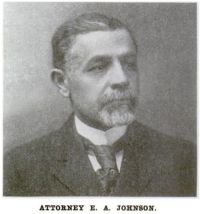 Edward A. Johnson,
Light Ahead for the Negro
Edward A. Johnson,
Light Ahead for the Negro
“ With 30 per cent of the Negro population illiterate, with a criminal record double that of any of the emigrant classes above outlined, with the News Distributing Bureau against it, with no political or social standing—pariahs in the land—with Northern capital endorsing serfdom, with their inability to lose their race identity, on account of their color—we realize how heavy the odds were against the Negro race at that time. ”
Thomas Nelson Page,
The negro: the southerner's problem
(1904)
“ The Negro was invested with absolute power, and turned loose. He selected his rulers. The entire weight of the government—an immense force—was under the misapprehension, born of the passion which then reigned, thrown blindly in the Negroes’ favor; whatever they asserted was believed; whatever they demanded was done; the ballot was given them, and all the forms established by generations of Caucasian patriots and jurists, and consecrated by centuries of Caucasian blood, were solemnly set up and solemnly followed. The Negro at least then selected his own rulers. ”
