Rail yard

Definition and stakes

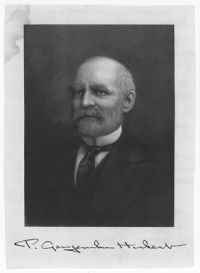
Portrait of George L. Vose George L. Vose,  Handbook of Railroad Construction…

“ When chairs are used, the largest ties shall be selected for the joints. When the joint is made by fishing, there will be no tie directly under the joint.
RAILS. The rails will weigh about sixty pounds per lineal yard. No rail shall be laid on the tangents which is in any way twisted or bent. It shall be the duty of the first party to correct and make true any crooked rails received by him, also to bend to the proper curve, and in such a manner as not to affect the strength of the bar, all rails laid in curves. Punching of rails, and cutting, will also be done by the contractor.
”
Source: Gutenberg

Frank Murphy,  Order of Railway Conductors of America v…

“ It was agreed that a railroad yard is a system of tracks within defined limits over which movements of engines and cars not authorized by timetable or train order may be made, subject to prescribed signals and rules or special instructions. It was further agreed that the 'yard-service employees' or 'yardmen' working in a yard perform such functions as switching, making and breaking up trains, moving and storing cars, inspecting cars and freight, repairing cars, maintaining equipment, sending and receiving messages, keeping records and making reports. ”
Source: Wikisource

Alfred Williams,  Life in a Railway Factory

“ Continuing our perambulation of the yard we encounter the shunters, watchmen, carriage finishers, painters, washers-down, and cushion-beaters. The old canal claims a moment’s attention, then we pass on to the ash-wheelers, bricklayers, road-waggon builders, and the wheel-turning shed. Leaving them behind we come to the “field,” where the old broad-gauge vehicles were broken up or converted, and proceed thence into the din of the frame-building shed and study some portion of its life. ”
Source: Gutenberg

Get perspective with Kwize: daily news enlightened by great literature