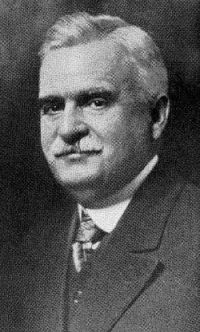
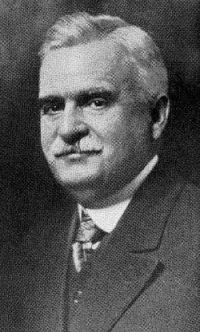
“ No one can possibly be more interested in the prosperity of the railroads than the railroad employes. From every dollar earned by the railroad forty-two cents go directly to pay wages of railway employes, while only twenty-one cents, or one-half that amount, go to pay interest and dividends. In no other country in the world does the railroad employe get so large a share and the security holder so little. Why should not the man who invests his money in railroad stock receive as much return in shape of dividends as the man who invests his in a farm or factory? ”
Railroad stock
Definition and stakes
Quotes about “railroad stock”
William Larrabee, The Railroad Question
“ Henry C. Adams, statistician of the Interstate Commerce Commission, says in his third annual report:"It certainly appears ... that the motive for ownership in railroad stock is quite different from the ordinary motives which lead men to invest in corporate enterprises, thus presenting an additional proof that railways are a business not subject to ordinary business rules."There is no safer business in the world than railroad transportation; there is none that has less elements of uncertainty; none whose returns in the aggregate are less varying. ”
William Z. Foster,
The Railroaders' Next Step—Amalgamation
(1922)
“ It is extremely doubtful if the total number of railroad stockholders will run over 100,000. And the great majority of these are small fry, owning only a share or two apiece. It has been estimated that one per cent of all the stockholdrs own over 50 per cent of all the stock. It is to support in luxury this minority of parasites that the vast army of 1,850,000 railroad workers keep the 235,000 miles of railroads in operation for beggarly wages and under the most unfavorable working conditions. ”
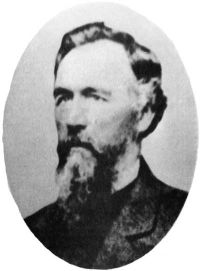
William Larrabee, The Railroad Question
“ In Great Britain, moreover, the expenses of contests and of procuring charters have been very great and have probably averaged $3,000 per mile.English railway men charge Americans with having indulged in stock-watering to a greater extent than any other people in the world. This is probably true, yet the English have not been dull students of this art, and they are far from free of having indulged in this luxury. Much of their railroad stock was issued in a wasteful manner and represents no actual investment, and it is safe to say that from 30 to 40 per cent. ”
William Larrabee, The Railroad Question
“ Of course, many railroads are not dividend-earning, and with these the profits to the managers and those who are allied with them must come from stock fluctuations and from whatever sucking arrangements can be devised whereby their vitality or sustenance can be acquired by the favored few who are in control. ”
George Iles, Popular Science Monthly (1883)
“ As to the growth of subordinate railroad organizations, the quotations of the stock-exchanges and the testimony of those interested in investments not listed on the stock-exchanges prove the great lucrativeness of express, fast-freight line, palace-car, elevating, and stockyard companies. It is a question whether these businesses can be successfully carried on by railroad companies, but, if not, the corporations which give them birth should, if honestly managed, see to it that they retain such interest as to participate in the large profits earned. ”
William Larrabee, The Railroad Question
“ Stock and bond inflation, it may confidently be asserted, has created from five to six thousand millions of dollars of fictitious railroad capital. In 1890 the average liabilities of the railroads in the United States, including the capital stock and the funded and unfunded debt, were $63,600 per mile. According to Mr. Poor's estimate of the average cost of American railroads per mile, more than 50 per cent. ”
Alexander Majors,
Seventy Years on the Frontier
“ Not only the British capitalists made enormous profits, but our railroad corporations and speculators made still greater profits. For every dollar of the bonds they sold to the English capitalists they issued a dollar or more of the railroad stocks, so that in 1876 the amount of railroad stock reached the sum of $2,248,000,000. ”
William Zebina Ripley, Railroads: Rates and Regulations
“ The most important single factor in the production of increasing returns upon a railroad is the density of traffic; that is to say, the amount of business which can be conducted with a given set of rails, terminals and rolling stock. In other words, it is the degree of effective utilization of the plant and equipment. It is too obvious to need demonstration, after what has been set forth concerning the nature of railroad expenditures, that economy of operation and, consequently, profits are more or less directly dependent upon this fact. ”
Alfred Henry Lewis,
The President: A Novel
“ As for the railway, whereas prior to John Harley's introduction as shareholder and director it could get no consideration in the way of freights from those giant corporations which have to do with beef and sugar and oil—it being both slow and crooked as a railroad—thereafter it was given all it could haul at rates even with the best, and its prosperity became such that fifty-five points were added to the quoted value of its stock. ”
Thomas Curtis Clarke,
The American Railway: Its Construction…
“ It is doubtful whether the aggregate plant used in all manufacturing industries can equal it in value. The capital engaged in banking is but a trifle beside it. The world's whole stock of money of every kind—gold, silver, and paper—would purchase only a third of its railroads.Yet these facts by no means measure the whole importance of the railroad in the modern industrial system. The business methods of to-day are in one sense the direct result of improved means of transportation. The railroad enables the large establishment to reach the markets of the world with its products ”
Selected Articles on the Parcels Post
“ It is a monopoly which not only extorts millions upon millions every year from the people, but which enables railroad companies, through their intimate business and financial relations with the express companies, to conceal a very considerable part of their earnings. The express companies are large holders of one another’s stock, and also of railway stock; in turn, the men who control the great railway combinations [92] are themselves big owners of express-company stocks and bonds. The express companies lease from the railroads the right to transport freight over the railroad lines. ”
Henry Ford,
My Life and Work — 16. The Railroads
(1922)
“ Too many railroads are run, not from the offices of practical men, but from banking offices, and the principles of procedure, the whole outlook, are financial--not transportational, but financial. There has been a breakdown simply because more attention has been paid to railroads as factors in the stock market than as servants of the people. Outworn ideas have been retained, development has been practically stopped, and railroad men with vision have not been set free to grow. ”
Stuart Daggett, Railroad Reorganization
“ If, on the other hand, the railroad endeavors to prevent a rise in charges by the use of income bonds or stock, the gain is usually neutralized by the extremely low price obtained.695 In general we may say that sale of a railroad’s securities in time of general depression is impossible except at a ruinous sacrifice; that sales should not be resorted to at all except when the road’s difficulties are acute rather than chronic, as in the case of the Reading in 1896; and that when securities are to be sold the best of the available bond issues should be used and not the worst. ”
Charles DeLano Hine,
Letters from an old railway official…
(1912)
“ Have we not overdone the matter of low working stocks? Is is not more expensive for a railroad to carry too small a working stock of material and supplies than one too large? Is not the problem too extensive to warrant very rigid comparisons as between different roads? ”
James J. Hill,
The Country's Need of Greater Railway Facilities and Terminals
“ Securities have been consolidated, equipment trusts have placed what are practically chattel mortgages on rolling stock, and money cannot be raised except for a short term and at high rates. Ten or fifteen years ago 4 per cent would bring in capital for railroad improvements. Strong properties sold their bonds bearing 31⁄2 per cent interest. Now some of the strongest roads are paying 41⁄2 per cent for new capital. Properties less well known for stability and earning power pay more. The rate has advanced by from 11⁄2 to 2 per cent in little more than ten years. ”
George L. Vose,
Handbook of Railroad Construction…
“ Note.—Reproduction of rolling stock has been proved to be nothing more than repairs, as a locomotive may be fitted with one and another new part until none of the original machine remains. See Lardner’s Railroad Economy.439As the business upon a railroad increases, so does the amount of station accommodation necessary, and also of rolling stock, which increase should be debited to capital, and not to revenue.The permanent investors in a railroad are in favor of having capital maintained, even at the expense of revenue. ”
Edward Hungerford, Our Railroads To-Morrow
“ To-day railroad stocks lie virtually inert within the market. Gun-shy investors in Wall Street, and elsewhere too, will have nothing of them. They know the facts. Despite the [Pg 69] radical advances made in both passenger and freight-rates since the adoption of the much-heralded Transportation Act, earnings have not measurably increased. The slight net return earned in the last ten months of 1920—but 3.3 per cent., as against the expected 6 per cent.—was wiped out by the poor business of the first two months of 1921 ”
George Iles, Inventors at Work, with Chapters on Discovery
“ This economy is reflected in a reduction of rates which are now in America the lowest in the world, and which steadily fall. In capacity for business united with stability of roadbed, mainly due to stronger and stiffer rails and to adapted improvement in rolling stock, railroad progress in the past fifteen years is equal to that of the sixty years preceding. With rails increased to a weight of 100 pounds to the yard there is shown, even in passing over the joints, an astonishing degree of smoothness as contrasted with the jolting action of rails comparatively low and light. ”
William Larrabee, The Railroad Question
“ There are two widely differing theories concerning the [Pg 302] management of railroads in this country; one theory is that profits should be acquired from fluctuations in the stock, and the other is that the profits should be acquired in the old-fashioned way, by performing a useful service and receiving a reward therefor, to be divided among the stockholders in the way of a dividend. ”
Howard Elliott, The Truth About The Railroads (1913)
“ Examples without number could be given of this competition of markets in raw material, in all sorts of manufactured articles, and in products of the mine and farm. In fact, this competition as to markets has been so marked in the case of live-stock that rates have been brought down to such a point that the railroad-owner is hesitating about increasing his investment in cars for the purpose of transporting live-stock, because the margin of possible profit in the business is so small. ”
Howard Elliott, The Truth About The Railroads (1913)
“ It is stated on good authority, that the life-insurance companies doing business in the state of New York hold one eighth of the entire railroad-bond issue of the country. There are about 20,000,000 policy-holders in these companies, and they are very much interested in the soundness of this great investment. There are 16,108 holders of Northern Pacific stock, of which 5675, or 35 per cent, are women, and presumably the same relation obtains in other large railroads. ”
Gustavus Myers,
Great Fortunes from Railroads
“ Thus, for instance, Vanderbilt aiming to get control of a railroad at a low price, might very well have confederates among some of the directors or officials of that railroad who would resist or slyly thwart every attempt at improvement, and so scheme that the profits would constantly go down. As the profits decreased, so did the price of the stock in the stock market. The changing combinations of railroad capitalists were too absorbed in the process of gambling in the stock market to have any direct concern for management. ”
William Larrabee, The Railroad Question
“ The complaint is frequently heard from railroad men that our freight rates are too low, and in support of it the statement is usually made that the greater part of the railroad stocks of the United States pays dividends considerably smaller than the average interest realized by capitalists on money loaned or invested in other enterprises. ”
William Larrabee, The Railroad Question
“ Referring to railroad profits, Mr. Hadley says: "The statement that corporations make too much money is scarcely borne out by the facts. The average return of the railroads of this country is only four per cent., the bondholders receiving an average of four and a half per cent., the stockholders of two and a half per cent. True, much of the stock is water, not representing any capital actually expended; but, even making allowance for this, it is hardly probable that the roads are earning more than five per cent. ”
Edward Hungerford, The Modern Railroad
“ He keeps check on the supplies that he issues. His stock of blank forms, alone, would do credit to a wholesale stationery house in a sizable city; for the railroad is a liberal user of printer’s ink in its own devices. He must be thrifty and he must be economical; he must look to it that the railroad’s money is not wasted in the purchase and use of its supplies. ”
Stuart Daggett, Railroad Reorganization
“ Even the liberal expenditures which have hitherto been made are insufficient, however, for present conditions, and the stockholders have approved a proposal to issue $93,000,000 of new common stock at par for the purpose of extending the Northern Pacific’s mileage and facilities.642The endeavor to stimulate traffic to fill the trains has led to important developments. ”
Walter Renton Ingalls, Current Economic Affairs (1918)
“ Thus it appears that considerably more than three-quarters of a million persons own the railroads of the United States and this does not take into account the very many other persons who own a distributive share in life insurance and other companies that may directly have railroad stocks as part of their assets. ”
Carl Schurz,
U. S. Senate Speeches and Remarks of Carl Schurz
“ It is evident, and, indeed, it is admitted, that by this duty the price of steel rails will be greatly increased. Will not the increase of the price of steel rails necessarily have its effect upon fares, upon freights, and upon everything connected with railroads? It is evident, therefore, that the interest of these one hundred and fifty stockholders, and of the three men, or whatever number there may be, who own the patents, is directly opposed to the interests of thirty or forty million people who are greatly concerned in the cheapness of railroad transportation. ”
Howard Elliott, The Truth About The Railroads (1913)
“ The increase in the value of farm property in all the States named has been from $7,640,940,000 in 1900 to $17,762,401,000 in 1910, or more than $10,000,000,000, — at the enormous rate of $1,000,000,000 per year. Without the rail transportation furnished by the American railroad-owner this great increase in national wealth would have been impossible. In 1880 the capital employed in manufacturing in this country was $2,790,272,606, and in 1905 it was $13,872,035,371, — an increase in twenty-five years of $11,000,000,000 or $440,000,000 a year. ”
Howard Elliott, The Truth About The Railroads (1913)
“ It is over three times the annual gross revenue of the railroads, and it amounts to nearly one half of the existing railway capital represented by stocks and bonds. The question of obtaining the $8,500,000,000 necessary to make railroad facilities equal to the expanding traffic of the country during the next five years, therefore, constitutes the most important problem now confronting business men. ”
Howard Elliott, The Truth About The Railroads (1913)
“ Neither the rate of return actually received on the par value of American railroad bonds and stocks to-day, nor the security which can be offered for additional railroad investments in the future, will make it easy to raise the needed amount of capital. ”