Railway signal

Definition and stakes

William Hemingway Mills,  Railway Construction

“ The position of the signal arms or blades in the daylight, and the colours shown by the lamps at night, form the code of signals for the proper working of the train service; and as the signal arms and lamps are both worked simultaneously by the same gearing, it [Pg 314] is only necessary to light the lamps to put the signals in complete condition for night-working. For some years, when the traffic was small, with trains at low speeds and at considerable intervals, one double-arm semaphore signal-post at a station was made to serve for all purposes ”
Source: Gutenberg

William Hemingway Mills,  Railway Construction

“ The enormous train service on some of these first-rank lines demands the highest efficiency in the signalling and interlocking arrangements, and the use of any devices which will ensure increased facility and safety in the working of the traffic. With a crowd of trains passing a signal-cabin in both directions, and often over four lines of way, it is quite possible for a signalman to make a mistake which cannot be rectified in time to prevent an accident. ”
Source: Gutenberg

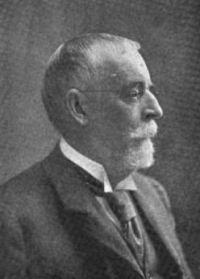
Portrait of Thomas Curtis Clarke Thomas Curtis Clarke,  The American Railway: Its Construction…

“ We lean out of the cab and strain our eyes in vain to see ahead. The head-light reveals a few yards of glistening rail, and the ghostly telegraph poles and switch targets. Were a switch open, a rail taken up, or a pile of ties on the track, we could not possibly see the danger in time to stop. The friendly twinkle of a signal lamp, shining faintly, red or white, tells [191] the engineer that the way is blocked or is clear, and he can only rush along trusting that no one of a dozen men on whom his life depends has made a mistake. ”
Source: Gutenberg

Get perspective with Kwize: daily news enlightened by great literature