Razorbill

Definition and stakes

Edmund Selous,  The Bird Watcher in the Shetlands…

“ The razorbill's mouth, inside, is of a conspicuous light yellow, which, when exposed suddenly to view, contrasts very forcibly with the black of the beak and upper plumage. In dalliance these birds throw the head straight up into the air, and, opening their clean-cut bills, so that one sees the gay interior like a line of bright gamboge, utter a deep guttural note, which is prolonged and has a vibratory roll in it, like the cry of the gorilla when angry—si parva licet componere magnis—as described by Du Chaillu. ”

Source: Gutenberg

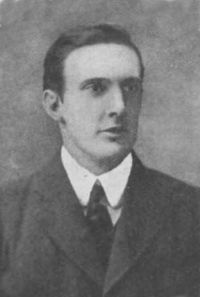
Portrait of William Henry Hudson William Henry Hudson,  British birds (1921)

“ The black and white razorbill, with curiously shaped massive beak, viewed sitting on a rock, its body inclined a little forward, may give us some idea of the great auk’s appearance. It is less [346] than half the size of the vanished bird, but is its nearest living representative. Throughout the year the razorbill is not an uncommon species in the seas that surround the British Islands, but is very much less abundant than the common guillemot, which it most nearly resembles in its habits. That it will become still less common than it is at present is greatly to be feared. ”
Source: Gutenberg

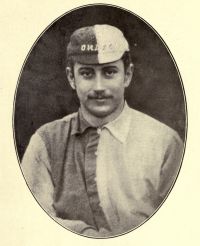
Portrait of Charles Dixon Charles Dixon,  British Sea Birds

“ It dives with the same marvellous celerity as the Guillemot, pursuing its prey through the water, often at a considerable depth, as readily as the swallows chase an insect through the air. It is a very pretty sight to watch the Razorbill in quest of food. This may often be done from the summits of the cliffs, but certainly to better advantage from a boat, in which the birds can be more closely approached, and consequently better observed. A Razorbill in the water is a remarkably striking, if not an actually pretty bird. ”
Source: Gutenberg

Get perspective with Kwize: daily news enlightened by great literature