Reduction (orthopedics)

Definition and stakes

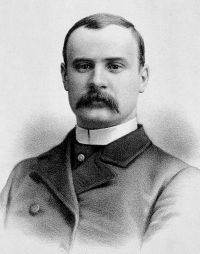
Alexander Miles,  Manual of Surgery Volume Second…

“ The first attempt at reduction may fail, and yet subsequent efforts, at intervals of a few days, may ultimately prove successful; the vigorous traction and twisting of the soft parts, matted together as they are by scar-tissue, causes reactive changes in the vessels and tissues which render them more liable to yield on subsequent attempts at reduction. In old people, and where there is an absence of suffering from pressure on nerves or vessels, it may be wiser to leave the dislocation unreduced, and strive rather by massage and movement to obtain a useful variety of false joint. ”
Source: Gutenberg

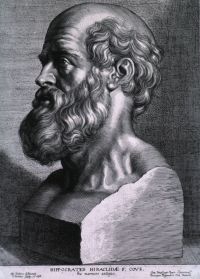
Portrait of Hippocrates Hippocrates,  On the Articulations

“ But, if the dislocation be lateral, the same mode of reduction is to be used; but when you think that the extremity of the bone has cleared the rim, at the same time that extension is made, the bone is to be pushed direct into its place, while another person on the other side of the finger is to take care and make counter-pressure, so that it may not again slip out there. The twisted nooses formed from palm-shoots are convenient for effecting reduction, if you will make extension and counter-extension by holding the twisted string in the one hand and the wrist in the other. ”
Source: Wikisource

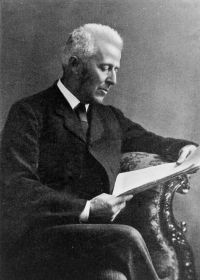
Edward Adams,  Surgery, with Special Reference to Podiatry

“ The movements of a dislocated joint are usually limited. If any movement of the end of one of the bones is felt, it is always at an abnormal point. Pain is referred to the dislocated joint and the patient is unable to use the limb.
Treatment. As a rule, a dislocation should be reduced as soon as the diagnosis is made, and, if necessary, an anesthetic should be administered.
When reduction has been accomplished, the bone often goes back with a snap, the contour of the limb is restored, and the movements of the joint are free again.
”
Source: Gutenberg

Get perspective with Kwize: daily news enlightened by great literature