Religious schism

Definition and stakes

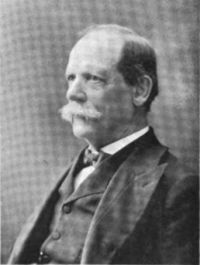
Portrait of H. G. Wells H. G. Wells,  First and Last Things: A Confession of Faith and Rule of Life

“ I count schism a graver sin than heresy.
No profession of faith, no formula, no usage can be perfect. It is only required that it should be possible. More particularly does this apply to churches and religious organizations. There never was a creed nor a religious declaration but admitted of a wide variety of interpretations and implied both more and less than it expressed. The pedantically conscientious man, in his search for an unblemished religious brotherhood, has tended always to a solitude of universal dissent.
”
Source: Gutenberg

Various,  British Quarterly Review, American Edition…

“ We cordially adopt the definitions and allegations of the great Anglican. He describes perfectly the necessity which has constrained and the spirit which has animated the great party, which seems at length to stand on the very borders of that Canaan of religious liberty and equality towards which for three centuries it has been struggling through the wilderness, and in which it hopes to find rest and the free play of its life at last.
'Schism is separation—cutting off; cutting ourselves off from that to which we ought to be united. The root of schism is the separation of man from God.
”
Source: Gutenberg

Portrait of James Harvey Robinson James Harvey Robinson,  1911 Encyclopædia Britannica, Volume 23… (1911)

“ No one Will, of course, question the importance of the schism which created the distinction between Protestants and Catholics, but it must always be remembered that the religious questions at issue comprised a relatively small part of the whole compass of human aspirations and conduct, even to those to whom religion was especially vital, while a large majority of the leaders in literature, art, science and public affairs went their way seemingly almost wholly unaffected by theological problems. ”
Source: Wikisource

Get perspective with Kwize: daily news enlightened by great literature