Rent charge

Definition and stakes

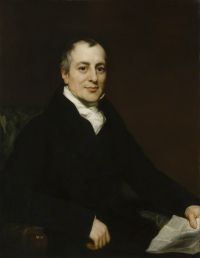
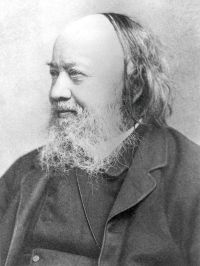
Portrait of John Stuart Mill John Stuart Mill,  Principles of Political Economy (1871)

“ In this country there are no peculiar taxes on other classes, corresponding to, or intended to countervail, the land-tax. The whole of it, therefore, is not taxation, but a rent-charge, and is as if the state had retained, not a portion of the rent, but a portion of the land. It is no more a burthen on the landlord, than the share of one joint tenant is a burthen on the other. The landlords are entitled to no compensation for it, nor have they any claim to its being allowed for, as part of their taxes. ”
Source: Wikisource

1911 Encyclopædia Britannica, Volume 26… (1911)

“ The method of recovering rent charge under the Commutation Acts was distraint where the rent charge is in arrear for twenty one days after the half-yearly days of payment, and entry and possession with power of letting if it is in arrear for forty days, and arrears for two years are so recoverable: this power of distress and entry extends to all lands occupied by the occupier of the land whose tithe is in arrear as owner or under the same landlord; but no action lies against the owner or occupier of the land personally. ”
Source: Wikisource

Portrait of Frank A. Fetter Frank A. Fetter,  The Principles of Economics, with Applications to Practical Problems

“ In the cities, the buyers seeking a fixed income would bid down, or bid up, the value of the rent-charges, which thus came to have a quotable market value. In time, greater and greater amounts were paid by the investors in return for the guarantee of a given income. In rural districts the value of the charges was low, that is, the capital sum was but ten or twelve times the value of the annual rent-charge; while in the cities it rose to twenty and even twenty-five times the annual rent-charge. ”
Source: Gutenberg

Get perspective with Kwize: daily news enlightened by great literature