Sailing yacht

Definition and stakes

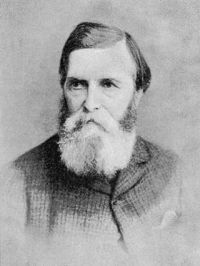
Earl Thomas Brassey Brassey,  Yachting, Vol. 1

“ Though the fashion of the hour has set strongly towards steam-propelled vessels, the beautiful white canvas, and the easy motion when under sail, will long retain their fascination for all pleasure voyaging. It is pleasant to be free from the thud of engines, the smell of oil, and the horrors of the inevitable coaling. Owners who have no love for sailing, and to whom a yacht is essentially a means of conveyance from port to port and a floating home, do well to go for steam. ”
Source: Gutenberg

Douglas Frazar,  Practical Boat-Sailing: A Concise and Simple Treatise

“ A yacht that is well balanced in sails and ballast will, on a wind, habitually carry the tiller a point or two to windward of the line of the keel, and it will need but little movement in any direction to keep her on her course. Sometimes, in sudden squalls, a yacht that carries a weather-helm will luff up into the wind in spite of the helm, so as not to be stopped except by slacking off the main-sheet. The same may occur in yawing with a yacht that carries a lee-helm. The helm may be put hard down, and sometimes the jib-sheet will have to be eased off, before the yacht will come to the wind. ”
Source: Gutenberg

Earl Thomas Brassey Brassey,  Yachting, Vol. 1

“ For when there is any wind at all a sailing cutter can land anywhere where it is safe to take a steam launch, and with a little practice it is as easy to take her alongside a ship's ladder as a six-oared gig. And when a yacht is on a cruise, moving daily from port to port, a sailing cutter takes considerably less time to get ready than a steam launch. Anywhere on the coast she can generally be carried in the davits with her mast stepped and rigged, so that there is nothing to do but to lower the ballast into her and loose the sails, and she is ready to start. ”
Source: Gutenberg

Get perspective with Kwize: daily news enlightened by great literature