Second-class mail

Definition and stakes

Selected Articles on the Parcels Post

“ According to one expert’s estimate, it is possible to carry the second-class mail matter for short distances on dense traffic routes, and in quantity lots to one address, that of a news dealer, for example, as is done for the average daily paper for the part of its circulation that goes by mail, up to 45 miles with little loss even at this low 1c a pound rate, though first-class mail at the rate paid by it can be transported nearly 5,000 miles before the service shows a loss, and post cards over 11,000 miles. ”

Source: Gutenberg

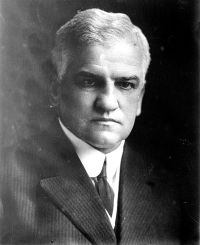
Portrait of William O. Douglas William O. Douglas,  Hannegan v. Esquire — Opinion of the Court

“ There is nothing in the language or history of the Classification Act of 1879 which suggests that Congress in that law made any basic change in its treatment of second-class mail, let alone such an abrupt and radical change as would be entailed by the inauguration of even a limited form of censorship.
The postal laws make a clear-cut division between mailable and nonmailable material. The four classes of mailable matter are generally described by objective standards which refer in part to their contents, but not to the quality of their contents.
”
Source: Wikisource

Mahlon Pitney,  Journal Tribune Company v. United States…

“ Claimant's representative had notified the express company's agent of the purpose to send certain of the papers by express, and pursuant to that notice, until about October, 1908, a porter from the express agent's office went to the platform, took the bundles of newspapers labeled as mentioned, and caused them to be transported by express. During the same period the United States mail transfer clerk took the sacks of papers, ascertained the net weight, and caused them to be transported as second-class mail matter upon the same train. ”
Source: Wikisource

Get perspective with Kwize: daily news enlightened by great literature