Self-conceit
Definition and stakes
Quotes about “self-conceit”
Albert Schwegler, A History of Philosophy in Epitome
“ That which is included in every inclination of the sense is self-love and self-conceit, and of these the former is restricted by the moral law, and the latter wholly stricken down. But that which strikes down our self-conceit and humbles us must appear to us in the highest degree worthy of esteem. ”
swámi A. P. Mukerji, The Doctrine and Practice of Yoga
“ You shall never see a leader of mankind without tremendous faith in himself. But equally truly you shall never see a true man or woman taking delight in having others crawl to dust before them. They feel pained and shocked at such a sight. There is infinite humiliation to them in this sorry spectacle. But Self-Conceit is that original obliquity that leads a man to make a hog of himself. ”
 Augustus J. C. Hare,
The Story of My Life, volumes 1-3
“ Make acts of reparation for all the selfconceit of past life. When thoughts of self-conceit enter, let us shut the gates of our hearts against them, and make an act of profound humility and sorrow, seeing our own nothingness and baseness. We must seek for filial love by laying aside all confidence in self, and placing all our confidence in God alone; for all that proceeds from ourselves is corrupt, and our best actions have no merit unless performed solely for God's greater glory, without regard to ourselves.""August 27, 1865.—Lay at the foot of the cross all secret doubts of God's guidance. ”
 Edward Payson Roe,
A Knight of the Nineteenth Century
“ In the first place, one must give up self-righteousness—not self-respect, mark you—but mere spiritual self-conceit, which is akin to the feeling of some vulgar people who think they are good enough to associate with those who are immeasurably beyond them, but whose superiority they are too small to comprehend. ”
Matthew Henry, Matthew Henry's Commentary on the Whole Bible… (1700s)
“ Self-conceit and self-complacency, and an adoring of our own shadow, are branches of pride, as dangerous as vain-glory and ostentation before men. We find those had their good works remembered to their honour, who had themselves forgotten them: When saw we thee an hungered, or athirst? 3. What is the promise to those who are thus sincere and humble in their alms-giving. Let thine alms be in secret, and then thy Father who seeth in secret will observe them. Note, When we take least notice of our good deeds ourselves, God takes most notice of them. ”
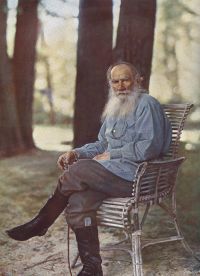 Leo Tolstoy,
On the Significance of Science and Art…
“ And in precisely the same manner, according to the measure of their folly, do they acquire self-conceit, which deprives them forever of all possibility of return to a simple life of toil, to a simple, clear, and universally human train of reasoning. ”
Various, Ante-Nicene Fathers Vol. IX, The Epistles of Clement… (1885)
“ Chapter XXXIX.—There is No Reason for Self-Conceit.Foolish and inconsiderate [1] men, who have neither wisdom [2] nor instruction, mock and deride us, being eager to exalt themselves in their own conceits. For what can a mortal man do, or what strength is there in one made out of the dust? ”
Baron Edward Bulwer Lytton Lytton, Kenelm Chillingly — Volume 04
“ So, too, in the bearing of the man there was a hardy self-confidence, much too simple and unaffected for his worst enemy to call it self-conceit. It was the bearing of one who knew how to maintain personal dignity without seeming to care about it. Never servile to the great, never arrogant to the little ”
 Desiderius Erasmus,
In Praise of Folly
“ Yet self-conceit makes these nimble disputants such doughty champions, that armed with three or four close-linked syllogisms, they shall enter the lists with the greatest masters of reason, and not question the foiling of them in an irresistible way, nay, their obstinacy makes them so confident of their being in the right, that all the arguments in the world shall never convince them to the contrary. ”
Oliver Prescott Hiller, God Manifest (1858)
“ Here, then, we see the grand error, by falling into which the human understanding led man on to pride, self-conceit, self-love, denial of God, and hence into all evils,—namely, the taking for a reality the appearance that he lived of himself, that his faculties, abilities, feelings, and energies, were all his own and self-derived. ”
 Charles Webster Leadbeater,
The Inner Life: volume II — Ninth Section…
“ There will be scope for the keenest intelligence, the greatest ingenuity and ability in every direction; but all these will be useless without the capacity of instant obedience and utter trust in the Master. Self-conceit is an absolute bar to progress in this direction. ”
 Walter Besant,
The Fourth Generation
“ To learn how one is estimated may be very good for one. Self-conceit is an ever-present danger.”“I think, to begin with, that of all young men that I know you are the most self-reliant and the most confident.” ”
 Hartmann Grisar,
Luther, vol. 1 of 6
“ In his case we find a sad confirmation of what is frequently observed in the falling away from truth of highly gifted minds; self-esteem and self-conceit suggest the first thoughts of a turning away from the truth, hitherto held in honour, and then, with fatal strength, condemn the wanderer to keep to the path he has chosen. ”
“ Do you realize, my son, that we ain't got much and that we've saved what we have got by goin' without all our lives? When that's gone, we won't have nothin' left to gamble with a second time. Ain't it a good deal to pay for learnin' the folly of self-conceit? ”
 Plutarch,
Plutarch's Lives, Volume 4 (of 4…
“ Indeed, to imagine that one has already arrived at perfection, argues self-conceit rather than true greatness of character. ”

Emory Adams Allen, The Golden Gems of Life; Or, Gathered Jewels for the Home Circle
“ This may exist entirely independent of self-conceit, the two being by no means necessarily concomitant. He must remember that he can not expect to have people repose confidence in his ability unless he displays confidence in them himself. ”
Robert Aitkin Bertram, The Preacher's Complete Homiletic Commentary on the Books of the Bible…
“ Do not try to deceive yourself by means of them. Pure covetousness is sin, even though you do call it economy, &c. Do not try to deceive others (Matt. v. 19; Mark ix. 42) .—S. G. Buckingham, American National Preacher, xxv. 269–278. Self-Conceit. v. 21. Woe unto them that are wise in their own eyes, and prudent in their own sight.Self-conceit. I. Its signs: dogmatism; contempt of others; scepticism. II. Its causes: ignorance, [1] vanity. III. Its folly: it makes a man ridiculous; leads him into error. ”
 John Bunyan,
The Riches of Bunyan: Selected from His Works
“ Is it not this that rightly rectifies our judgment about ourselves, that makes us to know ourselves, that tends to cut off those superfluous sprigs of pride and self-concitedness, wherewith we are subject to be overcome? ”
 Jean-Jacques Rousseau,
Profession of Faith of a Savoyard Vicar
(1889)
“ If conscience be the offspring of our prejudices, I am doubtless in the wrong, and moral virtue is not to be demonstrated; but if self-love, which makes us prefer ourselves to every tiling else, be natural to man, and if nevertheless an innate sense of justice be found in his heart, let those who imagine him to be a simple uncompounded being reconcile these contradictions, and I will give up my opinion and acknowledge him to be one substance. ”
 King of England Charles I,
Eikon Basilike
“ Its probable some men will now look upon me as my own Counsellour, and having none else to quarrell with under that notion, they will hereafter confine their anger to my self: Although I know they are very unwilling I should enjoy the liberty of my own thoughts, or follow the light of my own Conscience, which they labour to bring into an absolute captivitie to themselves ”
 Alexandre Dumas,
The Count of Monte Cristo
(1888)
“ When you wish to obtain some concession from a man's self-love, you must avoid the appearance of wishing to wound it." "I believe you are right." "I am glad of it." "Then I will go alone." "Go; but you would do better still by not going at all." ”
 F. H. Bradley,
Ethical Studies — Essay VII.
(1876)
“ We intend, so far as possible without reference to others, to ask, and in our own way to develope, the question, What is selfishness, and what self-sacrifice? and to include in that the enquiry, What ground is there for the denial of unselfishness? ”
F. H. Bradley,
Ethical Studies — Essay VII.
(1876)
“ Turning now from the question of content to that of origin, we must consider first the genesis of the good self, not in the world in general, but in the will of the individual: and the question here is, how is it possible for the self to identify itself with what seems to be altogether outside it? How is it that I can feel pleasure in the successes of persons and causes which do not affect my private personality? how can I desire their furtherance, not as means but as an end? How can the content of my will be not myself, as this or that exclusive individual? ”
by James Allen, The Way of Peace — The Two Masters… (1907)
“ If the former, you are chained to self, no matter what religion you may profess; if the latter, you are a candidate for Truth, even though outwardly you may profess no religion. Are you passionate, self-willed, ever seeking to gain your own ends, self-indulgent, and self-centered; or are you gentle, mild, unselfish, quit of every form of self-indulgence, and are ever ready to give up your own? If the former, self is your master; if the latter, Truth is the object of your affection. Do you strive for riches? Do you fight, with passion, for your party? Do you lust for power and leadership? ”
Laura A. Knott, Vesper Talks to Girls
“ Evidently, then, it is your duty to efface yourself and to assert yourself; to humble yourself and to respect yourself; to sacrifice yourself and to preserve yourself. At any rate, it seems clear that self is of importance and that we cannot be complete persons without somehow regarding self.For centuries philosophers have puzzled or disputed over the definition of selfishness. Where shall we draw the line between obligation to self and obligation to others? ”
 Thomas Henry Huxley,
Life and Letters of Thomas Henry Huxley…
“ The world is wide, and there is everywhere room for honesty of purpose and earnest endeavour. Had I failed in attaining my wishes from an overweening self-confidence,—had I found that the obstacles after all lay within myself—I should have bitterly despised myself, and, worst of all, I should have felt that you had just ground of complaint. ”
James Ward, 1911 Encyclopædia Britannica (1911)
“ As one hand washes the other, may not different members of the series of feelings be subject and object in turn? Compare, for example, the state of mind of a man succumbing to temptation (as he pictures himself enjoying the coveted good and impatiently repudiates scruples of conscience or dictates of prudence) with his state when, filled with remorse, he sides with conscience and condemns this “former self”—the “better self” having meanwhile become supreme. ”
Pius a Sp. Sancto, Life of Father Ignatius of St. Paul…
“ Those who are most obviously the slaves of self-will, will, generally, be loudest in their protestations of the purity and excellence of their motives; so that my advice to those who wish to establish in the minds of others a good opinion of their sincerity, would generally be, to say nothing about it, and let their conduct speak for itself. ”
F. H. Bradley,
Ethical Studies — Essay VII.
(1876)
“ The extensive and intensive affirmation of our will, as this ‘I’ or that ‘You,’ whether in bodily well-being, psychical harmony, influence on others, or appropriation of physical or spiritual good things,—all these assert our particular personal existence, and all that opposes the actuality or possibility of these lowers it. Self-sacrifice is knowingly to give up this existence to that which is higher. In it we bestow our will on what, we believe, either will or may lessen the extensive and intensive assertion of our private self. ”
Kanai Tada, The Praises of Amida (1907)
“ Deceit, then, whether it take the form of a fictitiously high estimation of oneself or the reverse, is the seed that produces an ill crop of Suffering. And we, if we would escape from Suffering and gain peace of mind, must rid ourselves of this self-deceit by all means in our power. It is above all things necessary that we possess an honest and up right heart. ”
F. H. Bradley,
Ethical Studies — Note to Essay II.
(1876)
“ Well then, just as we must accept the teaching that ‘all is relative to self,’ but supplement and correct it with the teaching that ‘myself also is relative’; so we must accept the teaching of the selfish theory that I can will myself only, but correct it by the addition ‘and yet the self which is myself, which is mine, is not merely me.’ Hence that all willing is self-realization is seen not to be in collision with morality. ”
E. P. W. Packard, Marital Power Exemplified in Mrs…
“ Henceforth, I am determined to use my own reason and conscience in my investigation of truth, and in the establishment of my own opinions and practice I shall give my own reason and conscience the preference to all others. ”
 Charles Paschal Telesphore Chiniquy,
The Priest, the Woman and the Confessional
“ I can imagine nothing so well calculated to destroy forever one's self-respect, as the modern invention of the confessional. Now, what is a person without self-respect? Especially a woman? Is not all forever lost without this? ”
F. H. Bradley,
Ethical Studies — Essay II.
(1876)
“ No doubt the distinction of separate selves remains, but the point is this. In morality the existence of my mere private self, as such, is something which ought not to be, and which, so far as I am moral, has already ceased. ”
“ Were I asked to give a recipe for the formation of a good manner I should recommend an equal mixture of self-confidence and humility as the first essential, then a considerable desire to please, tempered by the self-respect which preserves from officiousness and that annoying air of “ingratiating” themselves that some men assume in society. ”
G. A. Johnston, An Introduction to Ethics, for Training Colleges… (1915)
“ He identifies himself with the ends which he seeks as a loyal servant of his vocation. Thus his real self becomes his family, or his profession, or his state, or his church. When we understand self in this sense, the conflict between the adherents of self-denial and the partisans of self-assertion very largely disappears. ”
Malcolm Guthrie, On Mr. Spencer's Data of Ethics
“ But it will be seen that the Will or Free Will mentioned here, and defined as self-assertion and determination to please one's self, is self-assertion as opposed to environment—a self-assertion which, irrespective of the qualities or nature of the motives comprised in that self, determines to work out its own pleasure there and then in spite of all opposition. ”
F. H. Bradley,
Ethical Studies — Note to Essay II.
(1876)
“ But, if so, where is the difficulty of my object being one and the same with the object of other people; so that, having filled the form of my personality with a life not merely mine, I have at heart, and have identified with and made one with myself, objective interests, things that are to be, and in and with the existence of which I am not to satisfy my mere private self ”
 Edwin Holt Hughes,
The Bible and Life
“ Sins and trivialities cannot flourish when one thinks so much of oneself; great affections and lasting consecrations seem natural to one so highly endowed. The conception that makes for the dignity of self makes also for the consideration of others. ”
Henry F. Lutz, To Infidelity and Back
“ How many have tried to thrust the leadings of their conscience on others, in and out of creeds. Again, how many good people have become self-righteous and despised those who differed from them because they mistook matters of opinion and expediency as matters of conscience, through failing to recognize the fallible, variable element in their conscience. ”
 Thomas Fowler,
Progressive Morality: An Essay in Ethics
“ Now the feelings of which these classes of acts are the direct object are respectively the self-regarding and the sympathetic feelings, or, as they have been somewhat uncouthly called, the egoistic and altruistic feelings. We have a variety of appetites and desires, which centre in ourselves, including what has been called rational self-love, or a desire for what, on cool reflexion, we conceive to be our own highest good on the whole, as well as self-respect, or a regard for our own dignity and character, and for our own opinion of ourselves. ”
 Orison Swett Marden,
How to Succeed; Or, Stepping-Stones to Fame and Fortune
“ But self-respect must be accompanied by self-conquest, or our strong feelings may prove but runaway horses. He who would command others must first learn to obey, and he who would command his own powers must learn to be submissive to the still small voice within. Discipline the passions, curb pride and impatience, restrain all hasty impulses. Deny yourself the gratification of any desire not sanctioned by reason. Shame and its consequent degradation follow the loss of our own good opinion rather than the esteem of others. ”
Related terms
Authors who wrote about “self-conceit”
F. H. Bradley Mary AstellG. A. Johnston
 Charles Horton CooleyGeorge Herbert Palmerby James AllenKing of England Charles ILaura A. Knottswámi A. P. Mukerji
 Clarence DayMrs. Humphry
 Hermann HesseMalcolm GuthrieWilliam HazlittJoseph Butler
 George EliotMargaret C. ConklingJames Ward
 Amos Bronson AlcottAlbert Schwegler
