“ The social economic system must conform to the principles of equity with the special object of guaranteeing an honourable livelihood to all. Within these limits economic freedom shall be secured to each individual. ”
Social equity
Definition and stakes
The theme of “social equity” has been addressed by authors such as William Pare, Jean-Jacques Rousseau, John Stuart Mill, Herbert Spencer and Edward Bellamy. It is often associated with terms like equality, society, law, justice and liberty.
Quotes about “social equity”
 Abu Hamid al-Ghazālī,
Al-Ghazali letters to Nizamuddin Fakhrul Mulk
Abu Hamid al-Ghazālī,
Al-Ghazali letters to Nizamuddin Fakhrul Mulk
“ Consider yourself no more than any other citizen. In every thing which happens hold fast to the ruling principles of justice and equity, and always keep before your eyes three things - objective thinking, acts conducive to social welfare and truthfulness. Do not forget that one who acts unjustly acts impiously. ”
 Herbert Spencer,
Essays: Scientific, Political, & Speculative…
Herbert Spencer,
Essays: Scientific, Political, & Speculative…
“ It is one deducible from that first principle of equity which, as above pointed out, follows from the laws of life, individual and social; and it is one which the accumulated experience of mankind has so uniformly justified, that it has become a tacitly-recognized doctrine of civil law among all nations. ”
 Fanny Kemble,
Journal of a Residence on a Georgian Plantation…
Fanny Kemble,
Journal of a Residence on a Georgian Plantation…
“ Would he be admitted to an equal share in your political rights?—would he ever be allowed to cross the threshold of your doors?—would any of you give your daughter to his son, or your son to his daughter?—would you, in any one particular, admit him to the footing of equality which any man with a white skin would claim, whose ability and worth had so raised him from the lower degrees of the social scale. ”
 Willem Adriaan Bonger,
Criminality and economic conditions
(1916)
Willem Adriaan Bonger,
Criminality and economic conditions
(1916)
“ The struggle for existence and well-being is regulated by social laws. If these were perfect, each individual could satisfy his wants in an equitable measure, that is to say in the measure of his faculties, his labor, and the service he renders to the community. ”
 Lucy Maynard Salmon,
Progress in the household
Lucy Maynard Salmon,
Progress in the household
“ Certainly to-day we interpret equality to mean that all persons should have the opportunity of making of themselves all that is possible; to jump at the conclusion that reform in domestic service means subscription to the literal interpretation of the preamble of the Declaration of Independence is to make an unwarranted assumption. If, however, we were to accept the doctrine of equality, it would be with an appreciation of what it involves. The establishment of social equality would sometimes mean the elevation of the employer to the natural social and moral position of the employee. ”
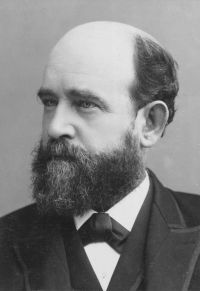 Henry George,
Progress and Poverty (George)…
(1879)
Henry George,
Progress and Poverty (George)…
(1879)
“ If we trace out the laws that govern human life in society, we find that in the largest as in the smallest community they are the same. We find that what seem at first sight like divergences and exceptions are but manifestations of the same principles. And we find that everywhere we can trace the social law, it runs into and conforms with the moral law; that in the life of a community, justice infallibly brings its reward and injustice its punishment. ”
 Jean-Jacques Rousseau,
The Social Contract
(1913)
Jean-Jacques Rousseau,
The Social Contract
(1913)
“ Having had the happiness to be born among you, how could I reflect on the equality which nature has ordained between men, and the inequality which they have introduced, without reflecting on the profound wisdom by which both are in this State happily combined and made to coincide, in the manner that is most in conformity with natural law, and most favourable to society, to the maintenance of public order and to the happiness of individuals? ”
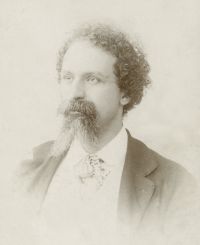 Enrico Ferri,
Socialism and Modern Science (Darwin…
Enrico Ferri,
Socialism and Modern Science (Darwin…
“ Just as soon as through collective ownership every individual shall be assured of fitting conditions of existence, the law of solidarity will become preponderant.When in a family financial affairs run smoothly and prosperously, harmony and mutual good-will prevail; as soon as poverty makes its appearance, discord and struggle ensue. Society as a whole shows us the picture on a large scale. A better social organization will insure universal harmony and mutual good-will. ”
P.-J. Proudhon, What is Property? An Inquiry into the Principle of Right and of Government
“ But, although equality of conditions is a necessary consequence of natural right, of liberty, of the laws of production, of the capacity of physical nature, and of the principle of society itself,—it does not prevent the social sentiment from stepping over the boundaries of DEBT and CREDIT. The fields of benevolence and love extend far beyond; and when economy has adjusted its balance, the mind begins to benefit by its own justice, and the heart expands in the boundlessness of its affection. ”
 Goldwin Smith,
The Civil War in America
(1866)
Goldwin Smith,
The Civil War in America
(1866)
“ Without social fusion, how can we hope for political equality? And without political equality, what security can there be for justice? Kindness and wisdom would cure, in course of time, the slowly receding vices of the slave. Fair wages, paid at set of sun, so that even his shortened vision may see his reward as he works, would in time teach him industry: education, in the course of two or three generations, would raise his intelligence, and give him the power of self guidance. ”
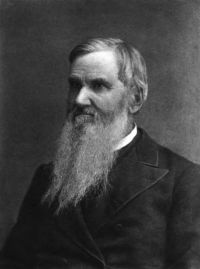 Robert Lewis Dabney,
A Defence of Virginia
Robert Lewis Dabney,
A Defence of Virginia
“ He introduces that feature of political society, for the justice of which we shall have occasion to contend; that although men have all this trait of natural equality that they are children of a common father, and sharers of a common humanity, and subjects of the same law of love; yet, in practice, they shall be subject to social inequalities determined by their own characters, and their fitness or unfitness to use privileges for their own and their neighbours' good. ”
 Leslie Stephen,
Social Rights And Duties: Addresses to Ethical Societies…
Leslie Stephen,
Social Rights And Duties: Addresses to Ethical Societies…
“ The perfect industrial organisation is, I shall assume, compatible with or rather a condition of a perfect organisation of other kinds. In the most general terms we have to consider what are the principles of social organisation, which of course implies a certain balance between the various organs and a thorough nutrition of all, while yet we may for a moment confine our attention to the purely industrial or economic part of the question. How, if at all, does the principle of equality or of social justice enter the problem? ”
Jean-Jacques Rousseau,
The Social Contract
(1913)
“ I shall end this chapter and this book by remarking on a fact on which the whole social system should rest: i.e., that, instead of destroying natural inequality, the fundamental compact substitutes, for such physical inequality as nature may have set up between men, an equality that is moral and legitimate, and that men, who may be unequal in strength or intelligence, become every one equal by convention and legal right. ”
Various, Blackwood's Edinburgh Magazine…
“ The present system of civilized society works, no doubt, for the good of the whole, but assuredly they do not reap an equal benefit with other classes, and on them falls the largest share of its inevitable evils. May we not say that, whatever the social body, acting in its aggregate capacity, can do to redress the balance—whether in education of their children, in sanatory regulations which concern their workshops and their dwellings, or in judicious charity that will not press upon the springs of industry—it is bound to do by the sacred obligation of justice? ”
 Jean-Henri Fabre,
The Life of the Caterpillar
Jean-Henri Fabre,
The Life of the Caterpillar
“ If it suited us to go to school to the Pine Processionary, we should soon see the inanity of our levelling and communistic theories. Equality is a magnificent political catchword, but little more. Where is it, this equality of ours? In our social groups, could we find as many as two persons exactly equal in strength, health, intelligence, capacity for work, foresight and all the other gifts which are the great factors of prosperity? ”
by Sidney Webb and Beatrice Webb, The History of Trade Unionism (1920)
“ They believed that a levelling down of all political privileges, and the opening out of educational and social opportunities to all classes of the community, would bring in its train a large measure of economic equality. ”
Jean-Jacques Rousseau,
The Social Contract
(1913)
“ From whatever side we approach our principle, we reach the same conclusion, that the social compact sets up among the citizens an equality of such a kind, that they all bind themselves to observe the same conditions and should therefore all enjoy the same rights. ”
 Carl Schurz,
Speeches of Carl Schurz
(1865)
Carl Schurz,
Speeches of Carl Schurz
(1865)
“ Their natural tendency was not to produce in the new world a social inequality, which in the old world had heavily weighed upon them but had never existed among themselves. Every institution they founded had in view the equality of the citizens, and by originating a system of public education for all the children of the people, they endeavored to perpetuate that equality which originally was the characteristic feature of their society. ”
Leslie Stephen,
Social Rights And Duties: Addresses to Ethical Societies…
“ The only societies in which there is such an equality are societies in which the level is one of uniform misery, and whose total industrial efficiency is incomparably smaller than that of the more civilised races. ”
John Spargo, Socialism: A Summary and Interpretation of Socialist Principles
“ Now, the problem is to insure equal opportunities of full development to all these diversely constituted and endowed individuals, and, at the same time, to maintain the principle of equal obligations to society on the part of every individual. This is the problem of social justice: to insure to each the same social opportunities, to secure from each a recognition of the same obligations toward all. The basic principle of the Socialist state must be justice; no privileges or favors can be extended to individuals or groups of individuals. ”
 Thomas Henry Huxley,
Critiques and Addresses
Thomas Henry Huxley,
Critiques and Addresses
“ But when men living in society once become aware that their welfare depends upon, two opposing tendencies of equal importance—the one restraining, the other encouraging, individual freedom—the question "What are the functions of Government?" is translated into another—namely, What ought we men, in our corporate capacity, to do, not only in the way of restraining that free individuality which is inconsistent with the existence of society, but in encouraging that free individuality which is essential to the evolution of the social organization? ”
William Pare, Equitable Villages in America
“ Between these two principles, so similar that the difference in the statement would hardly attract a moment's attention unless it were specially insisted upon, lies the essential difference between the present most unsatisfactory condition of society, and the reign of equity, the just remuneration of labour, and the independence and elevation of all mankind. ”
“ It meant that the interest of the many instead of the few, the welfare of the whole instead of that of a part, were henceforth to be the paramount purpose of the social order and the goal of its evolution. ”
Leta S. Hollingworth, Special talents and defects (1923)
“ Or should the welfare of the majority give way as a social ideal to the welfare of the best—the most capable, the most upright, the most enduring? Is it possible to evolve a social order in which the greatest good of all can be well served, since biological inequalities are so very great? ”
 Richard T. Ely,
French and German Socialism in Modern Times
Richard T. Ely,
French and German Socialism in Modern Times
“ For they believe in the natural inequality of men, and regard this inequality as the very basis of association, as the indispensable condition of social order.“They reject the system of community of goods, for this would be a manifest violation of the first of all the moral laws which it is their mission to teach—viz., that in the future each one should rank according to his capacity and be rewarded according to his works. ”
William Forster Lloyd, Two Lectures on the Checks to Population (1833)
“ Systems of equality, with a community of labour and of goods, are highly unfavourable to it. I begin with these, because, in all the objections to such systems, a common principle is involved, the knowledge of which, in its different bearings, will be useful to us afterwards, when we come to examine the encouragements to moral restraint, which, under the existing state of things, are offered to the different classes of society. ”
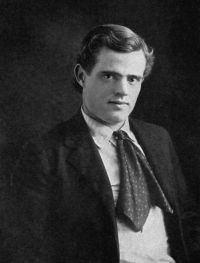 Jack London,
The Cry for Justice: An Anthology of the Literature of Social Protest
Jack London,
The Cry for Justice: An Anthology of the Literature of Social Protest
“ They have power, the people have, and they have needs, great common needs; and they have great common wealth. All your fat, rich franchises, all your great social values, the values added to land and franchise by the presence of the great, common, numerous mass, all the city’s public property—all are theirs, their common property. They own enough in common to meet all their great common needs, and they have an organization to keep for them and to develop for their use and profit all these great needed social values. ”
James W. Lee, The Making of a Man
“ Leaving the school, we find ourselves citizens of the state, members of society. But we do not go into society like an ax-man in a frontier forest to clear a place for his house, his fence, and his field. Methods of conduct are already prescribed, lines of action are already fixed, and the laws which claim our obedience are already formulated. Society is an organism of mutually dependent members; the object of it is the equity of all, the welfare of all, and the liberty of all. Equity, liberty, welfare do not come by accident. Men cannot reach them out of touch and contact with one another. ”
 John Fletcher,
Studies on Slavery, in Easy Lessons
John Fletcher,
Studies on Slavery, in Easy Lessons
“ This arrangement of the conditions of social and civil life, from long habit, may well be said to become constitutional, and necessary to the happiness of that society, although thereby one may seem forced to be a tinker and another a tailor. Hence we infer, inequality among men is the necessary result of the rules of civil life. ”
 Vernon Lee,
Vanitas: Polite Stories
Vernon Lee,
Vanitas: Polite Stories
“ Why should not the whole of society work out harmoniously a new and better social order? After all, he and his chosen friends belonged to the privileged class, and only the privileged class could give the generous initiative required to counteract the selfish claiming of rights from below. ”
Constitution of Socialist Federal Republic of Yugoslavia (1963)
“ Equality of rights, duties and responsibilities of the people in conformity with uniform constitutionality and legality; Solidarity and cooperation of the working people and working organizations, their interest and their unrestricted initiative in developing production and other social and personal activities in behalf of man and his social community; Economic and social security of man. ”
Henry George,
Progress and Poverty, Volumes I and II
“ Thus association in equality is the law of progress. Association frees mental power for expenditure in improvement, and equality, or justice, or freedom—for the terms here signify the same thing, the recognition of the moral law—prevents the dissipation of this power in fruitless struggles. ”
 Guillermo Marín Ruiz,
Translation:Toltec Pedagogy
(2009)
Guillermo Marín Ruiz,
Translation:Toltec Pedagogy
(2009)
“ The social organization system and legal regime, ranging from ancestral family and community principles and ethical and moral standards, passing through production and trade relations, solidarity and social responsibility, forms of community and state administration; up to a very complex system of laws, rules, uses and customs that embodied free work by the community, the stewardships and charges system, which allowed the orderly and balanced community life as well as relationships and exchanges with other communities or states. ”
Geo. T. Fairchild, Rural Wealth and Welfare: Economic Principles Illustrated and Applied in Farm Life
“ Use of wealth individual.—It is necessary to realize that the social organization is maintained solely for the sake of individuals. All study of welfare and illfare is a study of individual human beings. The mutual relations of these human beings in society are means to individual life, growth and enjoyment. Even the total power of a generation in society is dependent upon how the individual wants of individual members of that society are met. ”
“ Truly, it is these secondary consequences, these moral and social reactions of economic equality to create a noble atmosphere of human intercourse, that, after all, have been the greatest contribution which the principle has made to human happiness. ”
William Withington, The Growth of Thought as Affecting the Progress of Society
“ In the first place, leaving individuals to the operation of the common motives, we may labor at the social institutions, to adjust them to the rule, that, each seeking his own, after the common apprehension of present interests, may do so consistently with acting the part of a good citizen—contributing something to the general welfare ”
Leslie Stephen,
Social Rights And Duties: Addresses to Ethical Societies…
“ Briefly, a wholesome social condition implies that every social organ discharges a useful function; it renders some service to the community which is equivalent to the support which it derives; brain and stomach each get their due share of supply; and there is a thorough reciprocity between all the different members of the body. But what kind of equality should be desired in order to secure this desirable organic balance? ”
Related terms
Authors who wrote about “social equity”
William PareJean-Jacques Rousseau John Stuart MillHerbert Spencer
 Edward BellamyHenry GeorgeVariousLeslie StephenCarl Schurz
 Victor HugoHerbert Croly
 Frédéric Bastiat
 James Fenimore CooperEnrico FerriP.-J. ProudhonRobert Lewis Dabneyby Sidney Webb and Beatrice WebbJean-Henri FabreLucy Maynard SalmonWillem Adriaan Bonger
Jean-Jacques RousseauJohn Stuart MillHerbert SpencerEdward BellamyHenry GeorgeVariousLeslie StephenCarl SchurzVictor HugoHerbert CrolyFrédéric BastiatJames Fenimore CooperEnrico FerriP.-J. ProudhonRobert Lewis Dabneyby Sidney Webb and Beatrice WebbJean-Henri FabreLucy Maynard SalmonWillem Adriaan Bonger